
Hanwha XNV-6083R vs i-PRO S66300-Z4: Specification Comparison
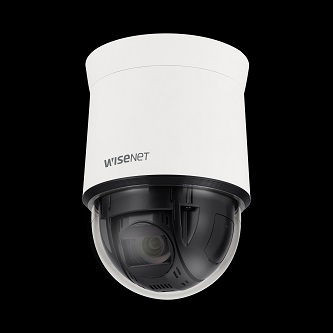
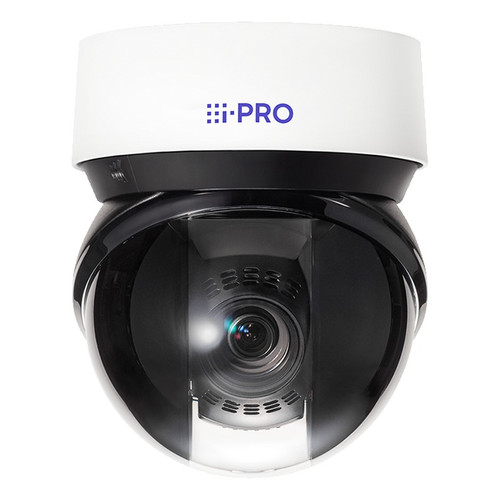
Both the Hanwha XNV-6083R (SKU QNP-6320) and the i-PRO WV-S66300-Z4 are 2MP outdoor PTZ dome cameras targeting large-area surveillance deployments. Each delivers 360° endless pan, optical zoom exceeding 30×, H.265/H.264 compression, ONVIF compliance, and on-board microSD storage. A buyer choosing between them is weighing Hanwha's higher frame rate and lower power draw against i-PRO's longer zoom reach, wider temperature envelope, AI sound classification, IK10 impact rating, and significantly higher WDR ceiling.
In This Guide
How do the imaging specs compare?
Both cameras use a 1/2.8" CMOS sensor at 2MP (1920×1080). The XNV-6083R delivers a specified maximum of 60fps, whereas the S66300-Z4 lists frame rate as variable with no explicit maximum fps figure in the provided specs. On low-light sensitivity, the XNV-6083R is rated at 0.005 Lux (B&W), while the S66300-Z4 is rated at 0.006 Lux (B&W, 50IRE, F1.6, 1/30s) — a difference narrow enough to be operationally negligible. The WDR gap is more pronounced: the XNV-6083R is rated at 120dB, while the S66300-Z4 reaches a specified 144dB (Super Dynamic On, Level 31), a meaningful advantage in scenes with extreme contrast such as entrances with bright backlighting.
On optics, the S66300-Z4 offers 40× optical zoom (4.25–170mm), extendable to 60× at 720p resolution, versus the XNV-6083R's 32× optical zoom (4.44–142.6mm, supplemented by 32× digital zoom for a combined 1024×). The S66300-Z4's longer focal length translates directly into detection-range superiority at telephoto: the i-PRO specifies tele-mode detection (25ppm/8ppf) at 2,199.9m versus 1,921.3m for the Hanwha — roughly a 14% reach advantage at maximum zoom. Both include a built-in gyro-based image stabilizer and auto-iris lens. Neither camera publishes a discrete IR illuminator distance beyond minimum focus; the XNV-6083R lists IR minimum object distance of 1.5m (Wide) / 2.0m (Tele), while the S66300-Z4 lists a focus range starting at 3.0m with no separate IR throw distance spec provided.
What about installation and environment?
The XNV-6083R is rated IP67 and carries no IK impact rating in the provided specs. The S66300-Z4 is rated IP66 and adds IK10 (IEC 62262) impact resistance, making it the stronger choice where physical vandal attack is a concern — a meaningful distinction for exposed pole or wall mounts. The S66300-Z4 also meets NEMA-TS2, relevant for traffic and roadway installations. The Hanwha is finished in white plastic; the i-PRO uses aluminum die-cast with a polycarbonate dome.
Operating temperature range differs significantly. The XNV-6083R is specified for -10°C to +55°C, while the S66300-Z4 covers -50°C to +60°C — a dramatically broader envelope that makes the i-PRO suitable for harsh-climate deployments where the Hanwha cannot operate. On power, the XNV-6083R draws a maximum of 14.5W over PoE+ (IEEE 802.3at, Class 4), whereas the S66300-Z4 requires PoE++ (IEEE 802.3bt) at 37.8W — nearly 2.6× the power budget, demanding PoE++ capable switches or midspans and affecting infrastructure cost. The Hanwha's extensive published accessory ecosystem (hanging, ceiling, wall, pole, parapet, corner, in-ceiling mounts) is well documented; the i-PRO's mounting accessories are not enumerated in the provided specs.
Which fits your VMS and analytics better?
Both cameras support ONVIF Profile S, G, and T, ensuring broad VMS compatibility. The S66300-Z4 additionally supports ONVIF Profile M (metadata/analytics interop), which the XNV-6083R does not list. The i-PRO provides AI-based analytics — face, people, and vehicle detection — plus AI sound classification covering gunshot, yell, vehicle horn, and glass break. It also includes Scene Change Detection (SCD) and Active ClearSight. The XNV-6083R's listed analytics include motion detection, directional detection, virtual line crossing, tampering alerts, and audio detection, but no AI-class object classification is specified. The i-PRO runs on an Ambarella CV25m SoC; the Hanwha's SoC is not disclosed in the provided specs.
Both support microSDXC edge storage up to the card's capacity (Hanwha specifies 256GB max; i-PRO does not state a maximum in the provided specs). Audio handling differs: the XNV-6083R offers selectable mic/line input with a 3.5mm-equivalent port and line output; the S66300-Z4 provides four 3.5mm stereo audio inputs and one audio output, and supports AAC-LC compression (64/96/128kbps) in addition to G.711 and G.726 — giving it superior multi-channel audio capability. The i-PRO cites FIPS 140-2 Level 3 certification for its secure communications; the Hanwha specifies 802.1X, HTTPS, SRTP, AES encryption, firmware encryption, and device certificate (Hanwha Techwin Root CA), but does not list FIPS 140-2 in the provided specs. Alarm I/O: Hanwha provides 4 inputs / 2 outputs; i-PRO provides 3 inputs / 1 output. Concurrent users: Hanwha supports up to 20 unicast users; i-PRO lists up to 14.
Which should you choose: the XNV-6083R or the S66300-Z4?
Our take: The XNV-6083R is the stronger choice when infrastructure is constrained to PoE+ switches, when a higher frame rate (specified 60fps vs. unspecified variable), or when a larger alarm I/O count (4 in / 2 out vs. 3 in / 1 out) and broader concurrent-user support (20 vs. 14) are priorities. The S66300-Z4 is the stronger choice where the environment demands it: its -50°C to +60°C operating range far exceeds the XNV-6083R's -10°C to +55°C, its IK10 vandal rating adds physical impact protection absent on the Hanwha, and its 40× optical zoom yields a telephoto detection range of approximately 2,200m versus 1,921m. The i-PRO also leads on WDR (144dB vs. 120dB), ONVIF Profile M support, AI sound classification, and FIPS 140-2 Level 3 certification. Specify the XNV-6083R for PoE+-only infrastructure or high-frame-rate needs; specify the S66300-Z4 for extreme-temperature, high-impact, or AI-analytics-driven deployments where PoE++ infrastructure is available.
Side-by-Side Comparison
Spec-for-spec, from manufacturer data.
| Specification | Hanwha XNV-6083R | i-PRO S66300-Z4 |
|---|---|---|
| Resolution | 2MP (1920×1080) | 2MP (1920×1080) |
| Image Sensor | 1/2.8" CMOS | Approx. 1/2.8" CMOS |
| Optical Zoom / Focal Length | 32× / 4.44–142.6mm | 40× (60× at 720p) / 4.25–170mm |
| Max Aperture (Wide / Tele) | F1.6 (Wide) / F4.4 (Tele) | F1.6 (Wide) / F4.95 (Tele) |
| Min Illumination (B&W) | 0.005 Lux | 0.006 Lux (50IRE, F1.6, 1/30s) |
| Wide Dynamic Range | 120 dB | 144 dB (Super Dynamic, Level 31) |
| Max Frame Rate | 60fps | Variable (no maximum fps specified) |
| Tele Detection Range (25ppm/8ppf) | 1,921.3m (6,303ft) | 2,199.9m (7,218ft) |
| Pan Speed (Preset / Manual max) | 700°/s preset / 200°/s manual | 700°/s preset / 150°/s manual |
| Tilt Speed (Preset / Manual max) | 300°/s preset / 200°/s manual | 500°/s preset / 150°/s manual |
| IP Rating | IP67 | IP66 |
| IK / Vandal Impact Rating | — | IK10 (IEC 62262) |
| Operating Temperature | -10°C to +55°C | -50°C to +60°C |
| Power Input / PoE Class | PoE+ (802.3at) / Class 4 / 14.5W max | PoE++ (802.3bt) / Class 6 / 37.8W |
| ONVIF Profiles | S, G, T | G, M, S, T |
| AI Analytics | Motion, directional, line crossing, tampering, audio detection | Face, people, vehicle detection; AI sound classification (gunshot, yell, horn, glass break) |
| Alarm I/O | 4 inputs / 2 outputs | 3 inputs / 1 output |
| Concurrent Users | Up to 20 (unicast) | Up to 14 |
| Edge Storage | microSD/SDHC/SDXC, max 256GB | microSDXC (max capacity not specified in provided specs) |
| Video Compression | H.265, H.264 (Main/High), MJPEG | H.265, H.264, MJPEG |
| Audio Compression | G.711, G.726 | G.726, G.711, AAC-LC |
| Secure Communications | HTTPS, SRTP, 802.1X, AES, firmware encryption | FIPS 140-2 Level 3, HTTPS, 802.1X |
| Housing Material | Plastic | Aluminum die-cast / polycarbonate dome |
| Dimensions (approx.) | ø152×218mm / 1,700g (3.75 lb) | ø167×205mm / approx. 3kg (6.6 lb) |
| Warranty | 3-year | 5-year |
Frequently Asked Questions
Which should you choose: the XNV-6083R or the S66300-Z4?
The XNV-6083R is the stronger choice when infrastructure is constrained to PoE+ switches, when a higher frame rate (specified 60fps vs. unspecified variable), or when a larger alarm I/O count (4 in / 2 out vs. 3 in / 1 out) and broader concurrent-user support (20 vs. 14) are priorities. The S66300-Z4 is the stronger choice where the environment demands it: its -50°C to +60°C operating range far exceeds the XNV-6083R's -10°C to +55°C, its IK10 vandal rating adds physical impact protection absent on the Hanwha, and its 40× optical zoom yields a telephoto detection range of approximately 2,200m versus 1,921m. The i-PRO also leads on WDR (144dB vs. 120dB), ONVIF Profile M support, AI sound classification, and FIPS 140-2 Level 3 certification. Specify the XNV-6083R for PoE+-only infrastructure or high-frame-rate needs; specify the S66300-Z4 for extreme-temperature, high-impact, or AI-analytics-driven deployments where PoE++ infrastructure is available.
Is the XNV-6083R or the S66300-Z4 better for low-light performance?
The difference is marginal by spec: the XNV-6083R is rated 0.005 Lux (B&W) and the S66300-Z4 is rated 0.006 Lux (B&W, 50IRE, F1.6, 1/30s). Both share the same F1.6 maximum aperture at wide end. The i-PRO's 144dB WDR versus the Hanwha's 120dB gives the S66300-Z4 a larger practical advantage in high-contrast scenes than the raw lux figures suggest.
Can I power either camera from a standard PoE+ switch?
The XNV-6083R is designed for PoE+ (IEEE 802.3at, Class 4, max 14.5W) and will power from any standard PoE+ port. The S66300-Z4 requires PoE++ (IEEE 802.3bt), drawing 37.8W — nearly 2.6 times more. Standard PoE and PoE+ switches cannot supply sufficient power for the i-PRO; you will need PoE++ capable switches or a suitable midspan injector.
Which camera is better suited for cold-climate or extreme outdoor installations?
The S66300-Z4 is the clear choice, operating from -50°C to +60°C. The XNV-6083R is specified only down to -10°C, which rules it out for arctic, high-altitude, or northern-climate installations where temperatures routinely fall below that threshold. The i-PRO also adds IK10 impact resistance and NEMA-TS2 compliance, further reinforcing its suitability for harsh or traffic-infrastructure environments.
Get a Second Opinion on Your Camera Choice
Share your site layout, coverage goals, and budget. Our team will validate the camera selection, flag anything we would change, and recommend products that match the use case.