
Hanwha XNV-6083R vs i-PRO S66300-Z3: Specification Comparison
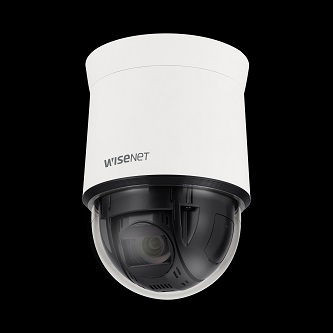
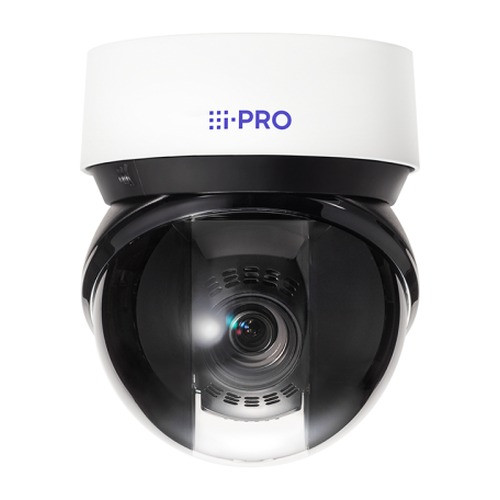
Both the Hanwha XNV-6083R (marketed as QNP-6320) and the i-PRO WV-S66300-Z3 are outdoor 2MP PTZ dome cameras with 32× optical zoom, 60 fps capability, and PoE power delivery. They target the same segment of medium-to-large-area surveillance where continuous pan/tilt/zoom patrol, vandal resistance, and network integration are primary requirements. This comparison covers imaging performance, physical installation and environmental ratings, and VMS/analytics integration to help integrators and IT buyers decide which platform better suits their deployment.
In This Guide
How do the imaging specs compare?
Both cameras use an approximately 1/2.8-inch CMOS sensor and deliver 1920×1080 at 60 fps with 32× optical zoom. The Hanwha XNV-6083R has a focal-length range of 4.44–142.6 mm with a maximum aperture of F1.6 (wide) to F4.4 (tele), while the i-PRO S66300-Z3 spans 4.25–136 mm at the same F1.6–F4.4 aperture range. The i-PRO adds an extended zoom mode reaching 48× at 1280×720 resolution; no equivalent extra-zoom mode is specified for the Hanwha. DORI ranges are nearly identical: at tele, the Hanwha detects to 1,921 m versus 1,833 m for the i-PRO.
In low-light performance the cameras diverge more clearly. The Hanwha specifies 0.05 lux color and 0.005 lux B/W minimum illumination; the i-PRO specifies 0.006 lux (mode not split in the provided spec). The Hanwha claims 120 dB WDR (SSDR); the i-PRO's Super Dynamic reaches up to 144 dB at maximum level. Both cameras include built-in gyro-based digital image stabilization, auto day/night via ICR, defog/fog compensation, and BLC/HLC. The Hanwha also lists a 32× digital zoom for a combined 1024× total; the i-PRO does not specify a digital zoom multiplier beyond its 48× extended optical mode.
What about installation and environment?
The Hanwha XNV-6083R is rated IP67 and carries UL 62368-1 and CE/UKCA safety certifications, with an operating temperature range of −10 °C to +55 °C. It is constructed of plastic and weighs approximately 1,700 g (3.75 lb) in a ø152×218 mm dome body. Power is delivered via PoE+ (IEEE 802.3at, Class 4) at a maximum of 14.5 W typical 12 W. Hanwha specifies a broad accessory ecosystem including hanging, ceiling, wall, pole, parapet, corner, in-ceiling mounts, and a housing box.
The i-PRO S66300-Z3 is rated IP66 and NEMA 4X, and adds IK10 impact resistance (IEC 62262) and a wind-resistance rating of up to 40 m/s (~89 mph) — none of these last two ratings are specified for the Hanwha. Its operating temperature range is significantly wider: −50 °C to +60 °C. It weighs approximately 3 kg in an aluminum die-cast and polycarbonate dome body (φ167×205 mm). Power requires PoE++ (Class 6) at 37.8 W — more than double the Hanwha's draw — meaning PoE++ switches or injectors are mandatory. The i-PRO also carries a NEMA-TS2 rating not listed on the Hanwha.
Which fits your VMS and analytics better?
Both cameras support ONVIF Profiles S, G, and T (the i-PRO also adds Profile M). The Hanwha supports SUNAPI (HTTP API) and the Wisenet open platform; the i-PRO is built on an Ambarella CV25m SoC and supports FIPS 140-2 Level 3 security certification — not specified for the Hanwha. The Hanwha supports up to 20 unicast users and 10 streaming profiles; the i-PRO supports up to 14 simultaneous users. Both offer H.265, H.264, and MJPEG with CBR/VBR control and smart-coding options (Hanwha WiseStream II; i-PRO GOP control).
On analytics, the i-PRO S66300-Z3 specifies an AI analytics suite — AI Video Motion Detection, AI Face Detection, AI People Detection, AI Vehicle Detection, AI Non-Mask Detection, AI Occupancy Detection, AI Scene Change Detection — plus AI sound classification (gunshot, yell, vehicle horn, glass break). The Hanwha XNV-6083R lists motion detection, directional detection, virtual line crossing, tampering alerts, and audio detection, but does not specify AI-class object classification in the provided spec sheet. Both cameras provide microSD/SDXC edge storage (up to 256 GB), audio input and output, and 802.1X network authentication. The Hanwha provides 4 alarm inputs and 2 outputs; the i-PRO provides 3 alarm inputs and 1 output. The i-PRO additionally specifies AAC-LC audio compression not listed on the Hanwha. The Hanwha carries a 3-year warranty; the i-PRO carries a 5-year warranty.
Which should you choose: the XNV-6083R or the S66300-Z3?
Our take: The i-PRO WV-S66300-Z3 is the stronger choice when deployment conditions are harsh, AI-class analytics are required, or long-term total cost of ownership is a priority. Concretely: (1) operating temperature extends to −50 °C vs the Hanwha's −10 °C floor, making the i-PRO suitable for cold-climate or unheated enclosures where the Hanwha is not rated; (2) WDR reaches up to 144 dB versus the Hanwha's 120 dB, offering more headroom in high-contrast scenes; (3) the i-PRO adds IK10 vandal resistance and NEMA 4X/NEMA-TS2 environmental ratings not listed on the Hanwha, plus FIPS 140-2 Level 3 security compliance for government or regulated-infrastructure sites. The Hanwha XNV-6083R is the stronger choice when the site uses PoE+ (Class 4) infrastructure — the i-PRO requires PoE++ (Class 6, 37.8 W) which mandates switch or injector upgrades — or when a Wisenet/SUNAPI VMS ecosystem is already deployed.
Side-by-Side Comparison
Spec-for-spec, from manufacturer data.
| Specification | Hanwha XNV-6083R | i-PRO S66300-Z3 |
|---|---|---|
| Resolution | 2 MP (1920×1080) | 2 MP (1920×1080) |
| Image Sensor | 1/2.8" CMOS | Approx. 1/2.8" CMOS |
| Focal Length / Optical Zoom | 4.44–142.6 mm, 32× optical | 4.25–136 mm, 32× optical (48× extended at 720p) |
| Min. Illumination | 0.05 lux color / 0.005 lux B/W | 0.006 lux (mode not split in spec) |
| WDR | 120 dB (SSDR) | Up to 144 dB (Super Dynamic level 31) |
| Max Frame Rate | 60 fps | 60 fps |
| Video Compression | H.265, H.264, MJPEG | H.265, H.264, MJPEG |
| Pan Range / Speed (Preset) | 360° endless / 700°/s preset | 360° endless / 700°/s preset |
| Tilt Range / Speed (Preset) | −15° to +90° (105°) / 300°/s preset | −20° to +90° (110°) / 500°/s preset |
| IP Rating | IP67 | IP66, NEMA 4X |
| IK / Impact Rating | — (not specified) | IK10 (IEC 62262) |
| Operating Temperature | −10 °C to +55 °C | −50 °C to +60 °C |
| Power Input / PoE Class | PoE+ (802.3at, Class 4) / max 14.5 W | PoE++ / Class 6 / 37.8 W |
| ONVIF Profiles | S, G, T | G, M, S, T |
| AI Analytics | Motion, directional, line crossing, tampering, audio detection | AI VMD, Face, People, Vehicle, Non-Mask, Occupancy, SCD; AI sound classification |
| Edge Storage | microSD/SDHC/SDXC up to 256 GB | microSDXC (capacity not specified in provided spec) |
| Audio I/O | Mic/line in; line out | 4× 3.5 mm stereo in; 3.5 mm stereo out |
| Alarm I/O | 4 inputs / 2 outputs | 3 inputs / 1 output |
| Dimensions | ø152 × 218 mm | φ167 × 205 mm |
| Weight | 1,700 g (3.75 lb) | Approx. 3,000 g (no lb spec provided) |
| Warranty | 3 years | 5 years |
Frequently Asked Questions
Which should you choose: the XNV-6083R or the S66300-Z3?
The i-PRO WV-S66300-Z3 is the stronger choice when deployment conditions are harsh, AI-class analytics are required, or long-term total cost of ownership is a priority. Concretely: (1) operating temperature extends to −50 °C vs the Hanwha's −10 °C floor, making the i-PRO suitable for cold-climate or unheated enclosures where the Hanwha is not rated; (2) WDR reaches up to 144 dB versus the Hanwha's 120 dB, offering more headroom in high-contrast scenes; (3) the i-PRO adds IK10 vandal resistance and NEMA 4X/NEMA-TS2 environmental ratings not listed on the Hanwha, plus FIPS 140-2 Level 3 security compliance for government or regulated-infrastructure sites. The Hanwha XNV-6083R is the stronger choice when the site uses PoE+ (Class 4) infrastructure — the i-PRO requires PoE++ (Class 6, 37.8 W) which mandates switch or injector upgrades — or when a Wisenet/SUNAPI VMS ecosystem is already deployed.
Is the XNV-6083R or S66300-Z3 better for low-light performance?
Based on the provided specs, the Hanwha XNV-6083R specifies a lower B/W minimum illumination of 0.005 lux versus the i-PRO's stated 0.006 lux. However, the i-PRO's Super Dynamic WDR reaches up to 144 dB (versus Hanwha's 120 dB), which can provide better detail in simultaneously bright and dark areas. The i-PRO spec does not split color/B/W illumination values as the Hanwha does, so a direct apples-to-apples low-light comparison is not fully possible from the provided data.
Can I power either camera from a standard PoE switch?
No — only the Hanwha XNV-6083R can be powered from a standard PoE+ (802.3at, Class 4) switch drawing up to 14.5 W. The i-PRO WV-S66300-Z3 requires PoE++ (802.3bt, Class 6) at 37.8 W. Standard PoE (802.3af) is insufficient for either camera. Deployers choosing the i-PRO must verify that their switch or midspan injector supports PoE++ Class 6 output per port.
Which camera has better built-in AI analytics?
The i-PRO WV-S66300-Z3 specifies a broader AI analytics suite: AI Video Motion Detection, AI Face Detection, AI People Detection, AI Vehicle Detection, AI Non-Mask Detection, AI Occupancy Detection, AI Scene Change Detection, and AI sound classification (gunshot, yell, vehicle horn, glass break). The Hanwha XNV-6083R lists motion detection, directional detection, virtual line crossing, tampering alerts, and audio detection in the provided spec, but does not specify AI-class object or sound classification.
Get a Second Opinion on Your Camera Choice
Share your site layout, coverage goals, and budget. Our team will validate the camera selection, flag anything we would change, and recommend products that match the use case.