
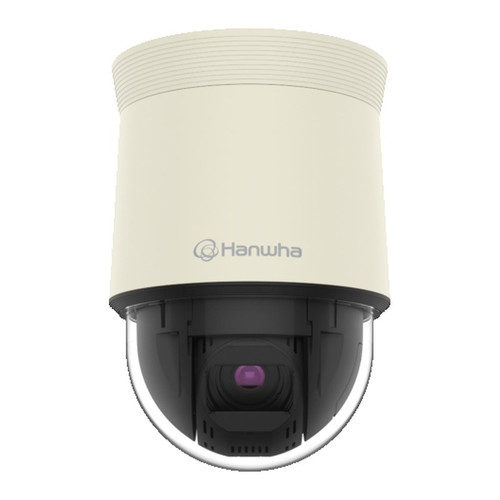
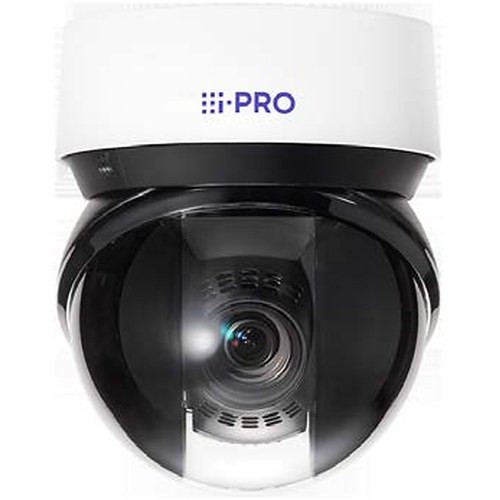
Hanwha XNP-8300RW vs i-PRO S66600-Z3L: Specification Comparison
Both the Hanwha XNP-8300RW and the i-PRO WV-S66600-Z3L are 6MP outdoor AI PTZ IP cameras powered by PoE++ (802.3bt), sharing a 30x optical zoom range and IP66/IK10-rated enclosures aimed at critical infrastructure and perimeter surveillance. This comparison examines how they differ across imaging performance, environmental and installation requirements, and VMS/analytics integration — giving installers and IT buyers the spec-level detail needed to choose between the two platforms.
In This Guide
How do the imaging specs compare?
Both cameras use an approximately 1/2.8-inch CMOS sensor at 6MP (3328×1872) and 30x optical zoom, but their lenses differ: the XNP-8300RW covers 5–150mm (F1.6 wide / F4.56 tele), while the S66600-Z3L covers 4.5–135mm (F1.8 wide / F4.7 tele). The Hanwha's wider maximum aperture of F1.6 vs. F1.8 gives it a marginal low-light advantage — its minimum illumination is rated at 0.13 Lux (color) on the i-PRO versus 0.1 Lux (color, F1.6, 1/30s) on the Hanwha. Both reach 0 Lux in IR mode. The i-PRO's extra digital zoom reaches 78x (at 720p), versus the Hanwha's 32x digital for a combined 960x total; the practical optical envelope is similar.
On WDR, the Hanwha specifies Extreme WDR at 120dB, while the i-PRO's Super Dynamic tops out at 132dB (at level 31). For IR, the i-PRO has a longer stated reach of 280m (High setting) versus the Hanwha's 200m. The Hanwha's DORI figures at tele give a Detect distance of 3,482m vs. 3,050m for the i-PRO, reflecting its longer focal length (150mm vs. 135mm). The i-PRO adds AI Sound Classification (gunshot, yell, vehicle horn, glass break) — a feature not listed in the Hanwha's spec sheet. Both include a built-in gyro-based image stabilizer.
What about installation and environment?
Both cameras carry IP66, IK10 (IEC 62262), and NEMA 4X ratings. The Hanwha additionally holds a NEMA-TS 2 (2.2.8, 2.2.9) traffic-cabinet certification, while the i-PRO lists NEMA-TS2 under 'Other Standard' as well, so both cover traffic-infrastructure deployments. The i-PRO specifies wind resistance up to 40 m/s (~89 mph), a figure not stated in the Hanwha spec sheet. The i-PRO also carries a tamper-resistant enclosure designation not listed for the Hanwha.
Operating temperature is a meaningful differentiator: the Hanwha operates from −40°C to +55°C, whereas the i-PRO operates from −30°C to +60°C (power-on range), with a storage/survival range of −50°C to +60°C. The Hanwha's −40°C operational floor is better suited for cold-climate deployments. On power, the Hanwha draws a typical 20W / max 42W (HPoE IEEE 802.3bt Class 6, Type 3, injector included), while the i-PRO draws 45.9W via PoE++ (IEEE 802.3bt) with an optional DC 54V feed. The Hanwha is physically larger and heavier (Ø184.9×318.8mm / 5.4kg) compared to the i-PRO (Ø167×205mm / ~3kg), which matters for pole or parapet mounting.
Which fits your VMS and analytics better?
Both cameras support ONVIF Profile S, G, M, and T. The Hanwha adds Wisenet open platform (SUNAPI/HTTP API) and lists up to 20 unicast users and 128 multicast users across up to 10 simultaneous streaming profiles. The i-PRO lists up to 14 simultaneous users. The Hanwha stores to dual Micro SD/SDHC/SDXC slots (up to 1TB combined), while the i-PRO provides a single microSDXC slot with no stated capacity ceiling in the provided specs. The Hanwha's onboard RAM is specified at 4GB with 512MB flash; the i-PRO's memory spec is not provided.
For analytics, the Hanwha lists eight AI types: directional detection, fog detection, face detection, motion detection, appear/disappear, enter/exit, object auto-tracking (person/vehicle), and target-lock tracking. The i-PRO lists eight AI video analytics detection types and adds AI Sound Classification (gunshot, yell, vehicle horn, glass break) — an audio-layer capability not mentioned in the Hanwha spec sheet. The i-PRO specifies FIPS 140-2 Level 3 security certification and Ambarella CV22 SoC; the Hanwha cites UL CAP (UL 2900-1) cybersecurity certification. The i-PRO includes four alarm input terminals (2 IN, 1 OUT, 1 AUX OUT) and four audio input jacks (3.5mm stereo); the Hanwha's alarm I/O requires an optional NW I/O Box. The i-PRO carries a stated 3-year warranty; no warranty term is listed in the Hanwha spec sheet.
Which should you choose: the XNP-8300RW or the S66600-Z3L?
Our take: The XNP-8300RW is the stronger choice when cold-climate operation, longer focal reach, and dual-slot edge storage are the deciding factors. Its −40°C operational floor beats the i-PRO's −30°C power-on minimum, its 150mm tele focal length delivers a 3,482m DORI Detect range versus 3,050m, and its dual SD slots (up to 1TB) double the i-PRO's single-slot arrangement. The S66600-Z3L is the stronger choice when IR range, WDR headroom, audio-layer AI, and lighter mounting weight matter most: it reaches 280m IR versus 200m, specifies 132dB Super Dynamic versus 120dB Extreme WDR, adds AI Sound Classification (gunshot, glass break, vehicle horn, yell), and weighs approximately 3kg versus 5.4kg. Alarm I/O on the i-PRO is native (2 IN / 1 OUT / 1 AUX OUT), while the Hanwha requires an optional NW I/O Box — a relevant cost and cabling consideration for outdoor perimeter systems with field devices.
Side-by-Side Comparison
Spec-for-spec, from manufacturer data.
| Specification | Hanwha XNP-8300RW | i-PRO S66600-Z3L |
|---|---|---|
| Resolution | 6MP (3328×1872) | 6MP (3328×1872) |
| Image Sensor | 1/2.8" CMOS | Approx. 1/2.8" type CMOS |
| Lens / Focal Length | 5–150mm DC auto iris (30x optical) | 4.5–135mm motorized (30x optical) |
| Max. Aperture (Wide / Tele) | F1.6 (Wide) / F4.56 (Tele) | F1.8 (Wide) / F4.7 (Tele) |
| Min. Illumination (Color) | 0.1 Lux (F1.6, 1/30s) | 0.13 Lux (30IRE) |
| IR Range | 200m (Wise IR) | 280m (High) / 200m (Medium) |
| WDR | Extreme WDR 120dB | Super Dynamic 132dB (max, level 31) |
| Max Frame Rate | 30 fps | Not specified (listed as High) |
| Video Compression | H.265, H.264, MJPEG, WiseStream II | H.265, H.264, MJPEG |
| IP / Impact Rating | IP66 / IK10 / NEMA 4X / NEMA-TS 2 | IP66 / IK10 / NEMA 4X / NEMA-TS2 |
| Operating Temperature | −40°C to +55°C | −30°C to +60°C (power-on) |
| Power Input / PoE Class | HPoE IEEE 802.3bt Class 6 Type 3 / 42W max | PoE++ IEEE 802.3bt / 45.9W |
| Edge Storage | Dual microSD/SDHC/SDXC (up to 1TB) | Single microSDXC |
| Onboard Alarm I/O | Requires optional NW I/O Box | 2 IN / 1 OUT / 1 AUX OUT (native) |
| Audio | Audio input (with NW I/O Box) | 4× audio in (3.5mm) / 1× audio out (3.5mm) native |
| AI Sound Classification | — | Gunshot, Yell, Vehicle horn, Glass break |
| Cybersecurity Certification | UL CAP (UL 2900-1) | FIPS 140-2 Level 3 |
| ONVIF Profile | S / G / T | G / M / S / T |
| Dimensions (max) | Ø184.9×318.8mm | Ø167×205mm |
| Weight | 5.4kg (11.90 lb) | Approx. 3kg (without attachment) |
| Warranty | Not specified in provided specs | 3 years |
Frequently Asked Questions
Which should you choose: the XNP-8300RW or the S66600-Z3L?
The XNP-8300RW is the stronger choice when cold-climate operation, longer focal reach, and dual-slot edge storage are the deciding factors. Its −40°C operational floor beats the i-PRO's −30°C power-on minimum, its 150mm tele focal length delivers a 3,482m DORI Detect range versus 3,050m, and its dual SD slots (up to 1TB) double the i-PRO's single-slot arrangement. The S66600-Z3L is the stronger choice when IR range, WDR headroom, audio-layer AI, and lighter mounting weight matter most: it reaches 280m IR versus 200m, specifies 132dB Super Dynamic versus 120dB Extreme WDR, adds AI Sound Classification (gunshot, glass break, vehicle horn, yell), and weighs approximately 3kg versus 5.4kg. Alarm I/O on the i-PRO is native (2 IN / 1 OUT / 1 AUX OUT), while the Hanwha requires an optional NW I/O Box — a relevant cost and cabling consideration for outdoor perimeter systems with field devices.
Is the XNP-8300RW or the S66600-Z3L better for low-light performance?
The Hanwha XNP-8300RW specifies a minimum illumination of 0.1 Lux (color, F1.6, 1/30s) versus 0.13 Lux (color, 30IRE) for the i-PRO S66600-Z3L, giving the Hanwha a marginal advantage in near-darkness color mode. Both reach 0 Lux in IR-assisted mode. However, the i-PRO's IR LEDs are rated to 280m (High) versus the Hanwha's 200m, so for scenes beyond 200m in complete darkness the i-PRO illuminates farther.
Which camera can handle colder climates — the XNP-8300RW or the S66600-Z3L?
The Hanwha XNP-8300RW has a rated operational temperature floor of −40°C, whereas the i-PRO S66600-Z3L is rated for power-on operation down to −30°C (with a storage/survival floor of −50°C). For installations in environments that regularly drop below −30°C — such as northern North American or Nordic deployments — the XNP-8300RW's operational specification provides a wider thermal safety margin.
Do both the XNP-8300RW and the S66600-Z3L support alarm I/O without additional accessories?
No. The i-PRO S66600-Z3L includes native alarm terminals — 2 alarm inputs, 1 alarm output, and 1 auxiliary output — plus four audio input jacks and one audio output jack, all built into the camera body. The Hanwha XNP-8300RW's alarm input and alarm output functions require an optional NW I/O Box accessory; without it, alarm trigger and response capabilities are limited to network-based events only.
Get a Second Opinion on Your Camera Choice
Share your site layout, coverage goals, and budget. Our team will validate the camera selection, flag anything we would change, and recommend products that match the use case.