
Hanwha XND-9082RV vs Hanwha XNV-9082R: Specification Comparison
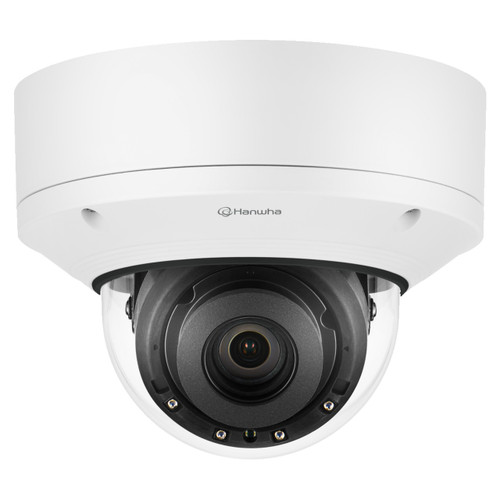
The Hanwha XND-9082RV and XNV-9082R are both 8MP (3840×2160) fixed varifocal dome cameras sharing the same 1/2.8" CMOS sensor, 2.8–8.4mm 3x motorized varifocal lens, 40m WiseIR, and 120dB extremeWDR engine. The meaningful differences lie in environmental hardening and power options: the XND-9082RV is an indoor-rated dome (IP52/IK10) with a built-in microphone, while the XNV-9082R is an outdoor vandal dome rated IP66/IP67/IP6K9K/NEMA4X and IK10+. Buyers cross-shopping these two are typically choosing between an interior retail or banking deployment and an exposed perimeter or industrial site.
In This Guide
How do the imaging specs compare?
Both cameras share an identical imaging core: 1/2.8" progressive CMOS, 3840×2160 resolution at 30fps, minimum illumination of 0.05 Lux color / 0 Lux IR, 120dB extremeWDR, SSNR V digital noise reduction, built-in gyro-based digital image stabilization, and WiseIR rated to 40m (131 ft). The lens specification is likewise identical — 2.8–8.4mm (3x) motorized varifocal, F1.2 (Wide) to F2.8 (Tele), 114° horizontal field of view at wide end, and simple focus control with DC Auto Iris / P-iris.
DORI performance tables are identical across both models: Detect 49.9m (Wide) / 211.0m (Tele), Observe 19.9m / 84.4m, Recognize 10.0m / 42.2m, Identify 5.0m / 21.1m. The one imaging-adjacent difference is the electronic shutter: the XND-9082RV specifies a range of 2–1/12,000s with anti-flicker, while the XNV-9082R specifies 1/12,000s only — the lower bound and anti-flicker designation are absent from the XNV-9082R spec sheet as provided.
What about installation and environment?
Environmental hardening is the defining differentiator. The XNV-9082R is rated IP66, IP67, IP6K9K, NEMA 4X, and IK10+, making it suitable for rain, dust ingress, high-pressure washdowns, salt spray, and elevated physical impact. Its operating temperature range is –50°C to +60°C. The XND-9082RV carries IP52 and IK10 (standard, not IK10+), is intended for indoor use, and operates from –25°C to +60°C — a 25°C narrower cold-end range. The XNV-9082R's –50°C lower limit makes it viable for unheated outdoor enclosures in cold climates where the XND-9082RV is not.
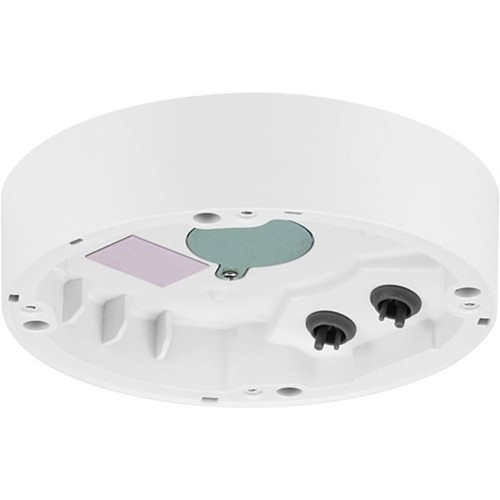
Power options also differ. The XNV-9082R adds 24VAC (accessory) as a third power input alongside PoE IEEE 802.3af Class 3 and 12VDC, which the XND-9082RV does not list. Both draw a maximum of 12.95W. Physically, the outdoor model is larger (ø180×125mm vs. ø160×125mm) and heavier (1,900g vs. 1,600g). Conduit knockout sizes differ: 12.7mm / M20 on the XND-9082RV versus 19.1mm / M25 on the XNV-9082R. Hanging mount accessories are model-specific (SBP-167HMW indoor vs. SBP-187HMW outdoor). Both are rated UL 62368-1 and carry identical EMC certifications.
Which fits your VMS and analytics better?
Network, VMS, and analytics capabilities are nearly identical. Both support ONVIF Profile S/G/T, SUNAPI (HTTP API), Wisenet open platform, and the same protocol stack including SNMPv1/v2c/v3, MQTT, SRTP, 802.1X (EAP-TLS/LEAP/PEAP), and IPv4/IPv6. Both offer up to 10 streaming profiles with 3 virtual channels, unicast to 20 users, and WiseStream II smart codec. Edge storage is identical: dual Micro SD/SDHC/SDXC slots supporting up to 1TB (512GB × 2). RAM and flash are the same at 4GB / 512MB.
The one integration-level difference is the audio input. The XND-9082RV specifies selectable mic-in / line-in / built-in microphone, giving installers a zero-external-hardware audio capture option. The XNV-9082R specifies selectable mic-in / line-in only — no built-in microphone is listed. Both share identical audio output (line out, 1Vrms max), audio compression (G.711 / G.726), and the same full analytics suite: defocus detection, directional detection, digital auto tracking, appear/disappear, enter/exit, loitering, tampering, fog detection, virtual line, audio detection, sound classification, shock detection, face/upper body detection, plus people counting, queue management, and heatmap business intelligence. Alarm I/O is 2 configurable ports on both.
Which should you choose: the XND-9082RV or the XNV-9082R?
Our take: The XNV-9082R is the stronger choice for any outdoor, wet, or high-impact environment; the XND-9082RV is the appropriate selection for controlled indoor deployments. The XNV-9082R's IP67/IP6K9K/NEMA 4X + IK10+ rating versus the XND-9082RV's IP52/IK10 means the outdoor model withstands full water immersion, high-pressure washdowns, and greater mechanical impact — the indoor model does not. The XNV-9082R also operates down to –50°C versus –25°C for the XND-9082RV, a 25°C advantage in cold-climate unheated enclosures. Conversely, the XND-9082RV includes a built-in microphone (the XNV-9082R does not list one), reducing audio infrastructure cost in retail or banking applications where covert or integrated audio capture is needed. Imaging, analytics, VMS integration, edge storage, and maximum power draw are spec-identical between the two models.
Side-by-Side Comparison
Spec-for-spec, from manufacturer data.
| Specification | Hanwha XND-9082RV | Hanwha XNV-9082R |
|---|---|---|
| Resolution | 3840×2160 (8MP) | 3840×2160 (8MP) |
| Image Sensor | 1/2.8" progressive CMOS | 1/2.8" progressive CMOS |
| Max Frame Rate | 30fps @ 8MP | 30fps @ 8MP |
| Focal Length / Zoom | 2.8–8.4mm (3x) motorized varifocal | 2.8–8.4mm (3x) motorized varifocal |
| Min Illumination | 0.05 Lux color / 0 Lux IR | 0.05 Lux color / 0 Lux IR |
| IR Range | 40m (131 ft) WiseIR | 40m (131 ft) WiseIR |
| Wide Dynamic Range | 120dB extremeWDR | 120dB extremeWDR |
| IP Rating | IP52 | IP66 / IP67 / IP6K9K / NEMA 4X |
| IK / Impact Rating | IK10 | IK10+ |
| Operating Temperature | –25°C to +60°C | –50°C to +60°C |
| Power Input / PoE Class | PoE 802.3af Class 3 / 12VDC | PoE 802.3af Class 3 / 12VDC / 24VAC (accessory) |
| Power (Max) | 12.95W | 12.95W |
| Audio Input | Mic-in / Line-in / Built-in microphone | Mic-in / Line-in (no built-in microphone listed) |
| Edge Storage | 2× microSD/SDHC/SDXC, max 1TB (512GB×2) | 2× microSD/SDHC/SDXC, max 1TB (512GB×2) |
| Dimensions | ø160×125mm (ø6.30×4.92") | ø180×125mm (ø7.09×4.92") |
| Weight | 1,600g (3.53 lb) | 1,900g (4.19 lb) |
| Warranty | 3-year | 3-year |
Frequently Asked Questions
Which should you choose: the XND-9082RV or the XNV-9082R?
The XNV-9082R is the stronger choice for any outdoor, wet, or high-impact environment; the XND-9082RV is the appropriate selection for controlled indoor deployments. The XNV-9082R's IP67/IP6K9K/NEMA 4X + IK10+ rating versus the XND-9082RV's IP52/IK10 means the outdoor model withstands full water immersion, high-pressure washdowns, and greater mechanical impact — the indoor model does not. The XNV-9082R also operates down to –50°C versus –25°C for the XND-9082RV, a 25°C advantage in cold-climate unheated enclosures. Conversely, the XND-9082RV includes a built-in microphone (the XNV-9082R does not list one), reducing audio infrastructure cost in retail or banking applications where covert or integrated audio capture is needed. Imaging, analytics, VMS integration, edge storage, and maximum power draw are spec-identical between the two models.
Is the XND-9082RV or XNV-9082R better for low light?
Both cameras are spec-identical for low light: 0.05 Lux minimum illumination in color mode, 0 Lux with IR active, and WiseIR rated to 40m (131 ft). Neither model has a low-light advantage over the other based on the provided specifications.
Can I use the XNV-9082R indoors to get the higher IP rating?
Yes — the XNV-9082R's IP67/NEMA 4X/IK10+ ratings are additive benefits in indoor wet or industrial environments (food processing, car washes, loading docks). The trade-offs are a larger footprint (ø180mm vs. ø160mm), 300g more weight, and the absence of a built-in microphone. There is no performance penalty in imaging or analytics for deploying it indoors.
Does either camera support 24VAC power?
Only the XNV-9082R lists 24VAC (as an accessory input) in addition to PoE 802.3af Class 3 and 12VDC. The XND-9082RV specifies PoE 802.3af Class 3 and 12VDC only; 24VAC is not listed in its provided specifications.
Get a Second Opinion on Your Camera Choice
Share your site layout, coverage goals, and budget. Our team will validate the camera selection, flag anything we would change, and recommend products that match the use case.