
Hanwha QNP-6320H vs i-PRO S66300-Z4: Specification Comparison
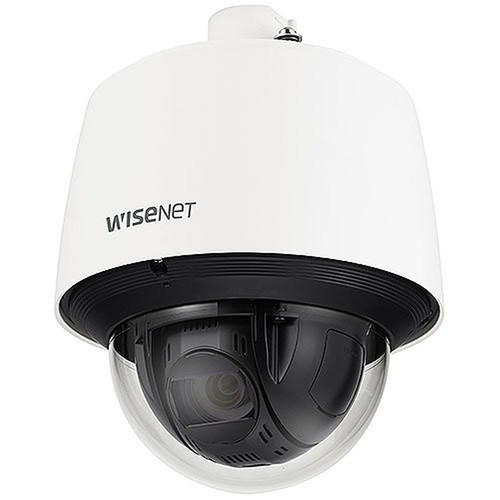
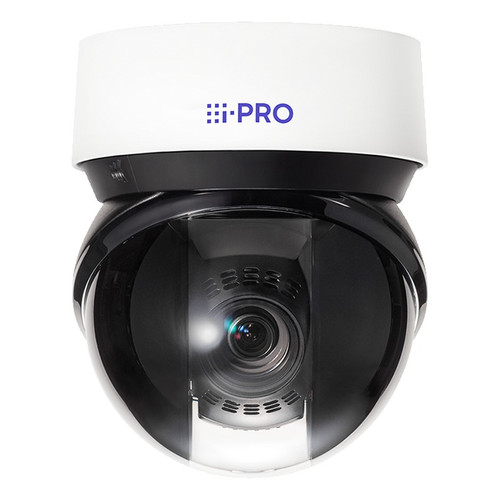
Both the Hanwha QNP-6320H and i-PRO WV-S66300-Z4 are 2MP outdoor PTZ dome cameras designed for wide-area surveillance, making them direct cross-shop candidates for installers evaluating high-speed pan/tilt platforms. The comparison covers sensor and optics performance, environmental and power requirements, and VMS/analytics integration — three dimensions that typically drive specification-stage decisions in perimeter and campus surveillance projects.
In This Guide
How do the imaging specs compare?
Both cameras share a 1/2.8" CMOS sensor and deliver 1920×1080 resolution, but diverge sharply on optics and dynamic range. The QNP-6320H provides a 32× optical zoom (4.44–142.6mm, F1.6–F4.4) with a combined digital/optical total of 1024×, while the WV-S66300-Z4 delivers 40× optical zoom (4.25–170mm, F1.6–F4.95), extendable to 60× at 1280×720. This translates to a measurable tele-detection advantage: the i-PRO reaches 2,199.9m at 25ppm versus the Hanwha's 1,921.3m. Wide dynamic range also favors the i-PRO at a specified 144dB (Super Dynamic, level 31) compared to the Hanwha's 120dB WDR.
Low-light performance is closely matched: the QNP-6320H specifies 0.05 lux color / 0.005 lux B/W, while the WV-S66300-Z4 specifies 0.006 lux B/W at 50IRE, F1.6, 1/30s (color sensitivity is not listed in the provided i-PRO specs). The Hanwha supports 60fps at full 1080p; the i-PRO lists frame rate as 'Variable' with no discrete maximum fps figure provided in the supplied specifications. The QNP-6320H includes a built-in gyro-based digital image stabilizer; the WV-S66300-Z4 also includes a built-in gyro image stabilizer.
What about installation and environment?
Both cameras carry IP66 and IK10 ratings and are approved for outdoor use. The operating temperature range differs meaningfully: the WV-S66300-Z4 is rated −50°C to +60°C, versus the QNP-6320H's −35°C to +55°C — a 15°C cold-end and 5°C hot-end advantage for the i-PRO. The i-PRO also specifies wind resistance up to 40m/s (~89 mph), a figure absent from the Hanwha spec sheet. The WV-S66300-Z4 further carries a NEMA-TS2 rating; the QNP-6320H is rated NEMA 4X.
Power requirements diverge significantly. The QNP-6320H draws a maximum of 23W via PoE+ (IEEE 802.3at, Class 4). The WV-S66300-Z4 requires PoE++ (IEEE 802.3bt), consuming 37.8W — nearly 65% more power. This means the i-PRO mandates a PoE++ capable switch or injector, a potentially significant infrastructure cost or upgrade consideration. On physical size, the Hanwha is larger (ø204.3×265mm, 2,700g) than the i-PRO (ø167×205mm, ~3,000g), which is narrower but heavier per the supplied specs.
Which fits your VMS and analytics better?
Both cameras support ONVIF Profile S, G, T, and M, providing broad VMS compatibility. The QNP-6320H adds Wisenet SUNAPI and Wisenet open platform support, while the i-PRO does not list a proprietary API in the provided specs. For analytics, the WV-S66300-Z4 offers on-board AI analytics including face, people, and vehicle detection, AI sound classification (gunshot, yell, vehicle horn, glass break), and scene change detection — all running on an Ambarella CV25m SoC. The QNP-6320H provides directional detection, enter/exit, virtual line, and tampering analytics, but does not list AI-class object classification in the provided specs.
Audio is only present on the i-PRO: the WV-S66300-Z4 includes four 3.5mm audio inputs, one audio output, and supports G.726, G.711, and AAC-LC compression with half/full duplex modes. The QNP-6320H lists no audio input or output. On-board storage, both support microSD/SDHC/SDXC up to the card's capacity (QNP-6320H specifies max 256GB; i-PRO does not list a maximum). The i-PRO also specifies FIPS 140-2 Level 3 security certification and up to 14 simultaneous users; the Hanwha lists 20 unicast users and does not reference FIPS certification in the provided specs. The QNP-6320H supports 802.1X (EAP-TLS, EAP-LEAP, EAP-PEAP MSCHAPv2); the i-PRO also supports 802.1X but does not detail EAP methods in the provided specs.
Which should you choose: the QNP-6320H or the S66300-Z4?
Our take: The WV-S66300-Z4 is the stronger choice when maximum optical reach, AI-class analytics, built-in audio, and extreme-temperature operation are priorities. Its 40× optical zoom (versus 32×) extends tele detection to 2,199.9m compared to 1,921.3m, and its 144dB dynamic range exceeds the QNP-6320H's 120dB. On-board AI classification (face, people, vehicle, audio event types) runs natively on the Ambarella CV25m SoC — capability the QNP-6320H does not list. However, the WV-S66300-Z4 demands PoE++ at 37.8W versus the QNP-6320H's PoE+ at 23W, requiring infrastructure upgrades in many existing deployments. The QNP-6320H is the more pragmatic choice where existing PoE+ switches cannot be replaced, where a Wisenet VMS ecosystem is already in place, or where 60fps at 1080p is a firm requirement.
Side-by-Side Comparison
Spec-for-spec, from manufacturer data.
| Specification | Hanwha QNP-6320H | i-PRO S66300-Z4 |
|---|---|---|
| Resolution | 1920×1080 (2MP) | 1920×1080 (2MP) |
| Image Sensor | 1/2.8" CMOS | Approx. 1/2.8" CMOS |
| Optical Zoom / Focal Length | 32× optical, 4.44–142.6mm | 40× optical, 4.25–170mm (60× extra zoom at 720p) |
| Max Aperture (Wide / Tele) | F1.6 (Wide) / F4.4 (Tele) | F1.6 (Wide) / F4.95 (Tele) |
| Min. Illumination | 0.05 lux color / 0.005 lux B/W | 0.006 lux B/W (50IRE, F1.6, 1/30s); color not specified |
| Wide Dynamic Range | 120dB | 144dB (Super Dynamic, level 31) |
| Max Frame Rate | 60fps | Variable (discrete max not specified) |
| Tele Detection Range (25ppm) | 1,921.3m | 2,199.9m |
| Pan Speed (Preset / Manual) | 700°/s preset / 0.024–200°/s manual | 700°/s preset / 0.065–150°/s manual |
| Tilt Range | 0°–105° | −20°–+90° |
| Video Compression | H.265, H.264 (Main/High), MJPEG | H.265, H.264, MJPEG |
| IP / IK Rating | IP66 / IK10 / NEMA 4X | IP66 / IK10 / NEMA-TS2 |
| Operating Temperature | −35°C to +55°C | −50°C to +60°C |
| Power Input / PoE Class | PoE+ (IEEE 802.3at), Class 4, max 23W | PoE++ (IEEE 802.3bt), max 37.8W |
| Audio | — | 4× audio in (3.5mm), 1× audio out; G.726/G.711/AAC-LC |
| Edge Storage | microSD/SDHC/SDXC, max 256GB | microSDXC (max capacity not specified) |
| On-board AI Analytics | Directional, enter/exit, virtual line, tampering | Face, people, vehicle detection; AI sound classification |
| ONVIF Profiles | S / G / T | G / M / S / T |
| Dimensions | ø204.3×265mm | ø167×205mm (excl. conduit attachment) |
| Weight | 2,700g (5.95lb) | Approx. 3,000g (without attachment) |
| Warranty | — | 5-year warranty |
Frequently Asked Questions
Which should you choose: the QNP-6320H or the S66300-Z4?
The WV-S66300-Z4 is the stronger choice when maximum optical reach, AI-class analytics, built-in audio, and extreme-temperature operation are priorities. Its 40× optical zoom (versus 32×) extends tele detection to 2,199.9m compared to 1,921.3m, and its 144dB dynamic range exceeds the QNP-6320H's 120dB. On-board AI classification (face, people, vehicle, audio event types) runs natively on the Ambarella CV25m SoC — capability the QNP-6320H does not list. However, the WV-S66300-Z4 demands PoE++ at 37.8W versus the QNP-6320H's PoE+ at 23W, requiring infrastructure upgrades in many existing deployments. The QNP-6320H is the more pragmatic choice where existing PoE+ switches cannot be replaced, where a Wisenet VMS ecosystem is already in place, or where 60fps at 1080p is a firm requirement.
Is the QNP-6320H or WV-S66300-Z4 better for low-light surveillance?
Both cameras are closely matched in low light. The QNP-6320H specifies 0.005 lux B/W; the WV-S66300-Z4 specifies 0.006 lux B/W at 50IRE, F1.6, 1/30s. Color low-light sensitivity is provided for the Hanwha (0.05 lux) but not listed in the supplied i-PRO specifications, so a direct color comparison cannot be made from the available data.
Can I power the WV-S66300-Z4 from the same PoE switch I use for the QNP-6320H?
Not necessarily. The QNP-6320H requires PoE+ (IEEE 802.3at, Class 4, max 23W), which is supported by most mid-range managed switches. The WV-S66300-Z4 requires PoE++ (IEEE 802.3bt, max 37.8W). If your switch only supports PoE or PoE+, you will need a PoE++ capable switch or a dedicated injector rated for the i-PRO before installation.
Which camera is better suited to very cold climates?
The WV-S66300-Z4 is rated for operation down to −50°C, versus the QNP-6320H's lower limit of −35°C. For deployments in arctic or severe winter environments, the i-PRO has a 15°C advantage on the cold end per the supplied specifications.
Get a Second Opinion on Your Camera Choice
Share your site layout, coverage goals, and budget. Our team will validate the camera selection, flag anything we would change, and recommend products that match the use case.