
Hanwha QNP-6250H vs i-PRO X66300-Z3S: Specification Comparison
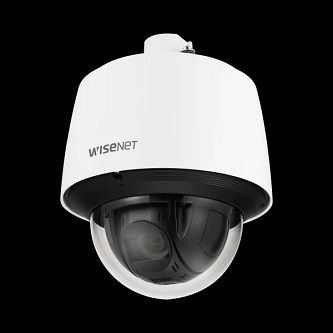
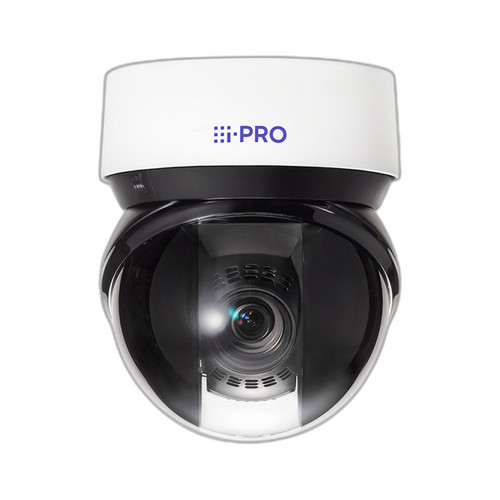
Both the Hanwha QNP-6250H and the i-PRO WV-X66300-Z3S are 2MP outdoor PTZ dome cameras targeting the professional IP surveillance market. The QNP-6250H offers a 25x optical zoom with Hanwha's Wisenet platform, while the X66300-Z3S counters with a 32x optical zoom, an Ambarella CV25m SoC, and a broader onboard AI analytics suite. Installers and IT buyers cross-shopping these units will find meaningful differences in zoom range, dynamic range ceiling, AI depth, audio capability, power class, and warranty term.
In This Guide
How do the imaging specs compare?
Both cameras share a 1/2.8" CMOS sensor and a maximum frame rate of 60 fps at 1920×1080. Their low-light floors are close but not identical: the QNP-6250H is rated at 0.05 Lux color / 0.005 Lux B/W, while the X66300-Z3S is specified at 0.006 Lux B/W (color figure not stated in the provided spec sheet). The X66300-Z3S's WDR ceiling is notably higher—up to 144 dB via its Super Dynamic system (level adjustable 0–31)—versus 120 dB for the QNP-6250H's SSDR/WDR. Both support Auto ICR day/night switching.
On optics, the QNP-6250H covers 4.44–111 mm at 25x optical zoom (F1.6 wide / F3.9 tele), with a digital 32x for a stated 800x combined figure. The X66300-Z3S reaches 4.25–136 mm at 32x optical zoom (F1.6 wide / F4.4 tele), with an extra digital zoom to 48x at 720p. The DORI Tele-Detect range reflects this difference: 1,471 m for the QNP-6250H versus 1,833 m for the X66300-Z3S. At wide angle the two are nearly identical (60.7 m vs. 60.3 m detect). Pan preset speed matches at 700°/s; tilt preset speed differs—300°/s (Hanwha) vs. 500°/s (i-PRO). The Hanwha specifies ±0.2° preset accuracy; i-PRO does not state a figure in the provided specs.
What about installation and environment?
Both units are IP66 and IK10 rated, suitable for outdoor vandal-resistant deployment. The QNP-6250H adds NEMA 4X certification explicitly; the X66300-Z3S lists NEMA 4X in its IP rating field but not in its formal certifications section—verify with i-PRO before specifying where NEMA 4X documentation is required. The X66300-Z3S also carries a wind resistance rating of up to 40 m/s (≈89 mph), a spec not provided for the QNP-6250H.
Power is a meaningful differentiator. The QNP-6250H draws a maximum of 23 W over PoE+ (IEEE 802.3at, Class 4), which is supported by the vast majority of managed switches in the field. The X66300-Z3S requires PoE++ at 37.8 W (Class 6), meaning the supporting switch or midspan must be PoE++ capable—an infrastructure cost and compatibility checkpoint. Operating temperature range is similar: the QNP-6250H is rated −35°C to +55°C, while the X66300-Z3S is rated −50°C to +60°C, giving the i-PRO a modest edge in extreme-cold and extreme-heat environments. The QNP-6250H is physically larger (ø204.3 × 265 mm, 2,700 g) than the X66300-Z3S (ø167 × 205 mm, ≈3,000 g); note the i-PRO is slightly heavier despite its smaller footprint.
Which fits your VMS and analytics better?
Both cameras declare ONVIF Profile S, G, T, and M, providing broad VMS compatibility. The QNP-6250H integrates via SUNAPI (Hanwha HTTP API) and the Wisenet open platform, supporting up to 20 unicast users and 10 streaming profiles, with analytics including directional detection, enter/exit, virtual line, tampering, and motion detection. Privacy masking supports 32 zones (4-point quadrangle) with color and mosaic options. The QNP-6250H has no native audio input or output; audio detection requires the optional SPM-4210 I/O box.
The X66300-Z3S runs on an Ambarella CV25m SoC and adds AI-class analytics natively: face detection, people detection, vehicle detection, non-mask detection, occupancy detection, and AI sound classification (gunshot, yell, vehicle horn, glass break), plus scene change detection. Audio input and output are built in via 3.5 mm jacks (G.726, G.711, AAC-LC), requiring no accessory module. Both cameras support microSD edge storage: the QNP-6250H up to 256 GB (1 slot), the X66300-Z3S from 4 GB up to 512 GB microSDXC. The X66300-Z3S also supports MQTT and NTCIP protocols not listed for the QNP-6250H. The QNP-6250H includes firmware encryption and device certificate (Hanwha Root CA); the X66300-Z3S lists signed firmware.
Which should you choose: the QNP-6250H or the X66300-Z3S?
Our take: The X66300-Z3S is the stronger choice when maximum optical reach, onboard AI analytics depth, built-in audio, and extreme-temperature tolerance are the primary requirements. Its 32x optical zoom yields a DORI Tele-Detect range of 1,833 m versus 1,471 m for the QNP-6250H—a 25% increase in detection distance—and its 144 dB Super Dynamic WDR ceiling exceeds the QNP-6250H's 120 dB by 24 dB. Native AI sound classification and face/people/vehicle/mask analytics are onboard with no accessory required, whereas the QNP-6250H needs an optional SPM-4210 box for audio detection at all. Edge storage capacity is also higher (512 GB vs. 256 GB) and the warranty term is longer (5 years vs. 3 years). The trade-off is real: the X66300-Z3S demands PoE++ Class 6 at 37.8 W, versus PoE+ Class 4 at 23 W for the QNP-6250H—a switch infrastructure upgrade that may add cost. Choose the QNP-6250H where existing PoE+ infrastructure must be preserved and Wisenet/SUNAPI VMS integration is already deployed.
Side-by-Side Comparison
Spec-for-spec, from manufacturer data.
| Specification | Hanwha QNP-6250H | i-PRO X66300-Z3S |
|---|---|---|
| Resolution | 1920×1080 (2MP) | 1920×1080 (2MP) |
| Image Sensor | 1/2.8" CMOS | Approx. 1/2.8" CMOS |
| Optical Zoom / Focal Length | 25x / 4.44–111 mm | 32x / 4.25–136 mm |
| Max Aperture (Wide/Tele) | F1.6 / F3.9 | F1.6 / F4.4 |
| Min. Illumination | 0.05 Lux color / 0.005 Lux B/W | 0.006 Lux B/W (color not stated) |
| Wide Dynamic Range | 120 dB (SSDR/WDR) | Max 144 dB (Super Dynamic) |
| Max Frame Rate | 60 fps @ 1080p | 60 fps @ 1080p |
| DORI Tele-Detect Range | 1,471.3 m (4,827 ft) | 1,833.2 m (6,014 ft) |
| Pan Speed (Preset / Manual) | 700°/s / 0.024°–200°/s | 700°/s / 0.065°–150°/s |
| Tilt Speed (Preset / Manual) | 300°/s / 0.024°–200°/s | 500°/s / 0.065°–150°/s |
| IP / Impact Rating | IP66, IK10, NEMA 4X | IP66, IK10 (NEMA 4X listed in ratings field) |
| Operating Temperature | −35°C to +55°C | −50°C to +60°C |
| Power Input / PoE Class | PoE+ IEEE 802.3at, Class 4 (max 23 W) | PoE++ Class 6 (37.8 W) |
| Edge Storage | MicroSD/SDHC/SDXC, 1 slot, max 256 GB | MicroSDHC 4–32 GB / MicroSDXC 64–512 GB |
| Audio | None built-in (optional SPM-4210 I/O box for audio detection) | Built-in mic input + audio output (3.5 mm), G.726/G.711/AAC-LC |
| Onboard AI Analytics | Directional, enter/exit, virtual line, tampering, motion | Face, people, vehicle, non-mask, occupancy, scene change, AI sound classification |
| ONVIF Profiles | S, G, T (Wisenet open platform / SUNAPI) | G, M, S, T |
| Dimensions (approx.) | ø204.3 × 265 mm, 2,700 g | ø167 × 205 mm, ≈3,000 g |
| Warranty | 3 years | 5 years |
Frequently Asked Questions
Which should you choose: the QNP-6250H or the X66300-Z3S?
The X66300-Z3S is the stronger choice when maximum optical reach, onboard AI analytics depth, built-in audio, and extreme-temperature tolerance are the primary requirements. Its 32x optical zoom yields a DORI Tele-Detect range of 1,833 m versus 1,471 m for the QNP-6250H—a 25% increase in detection distance—and its 144 dB Super Dynamic WDR ceiling exceeds the QNP-6250H's 120 dB by 24 dB. Native AI sound classification and face/people/vehicle/mask analytics are onboard with no accessory required, whereas the QNP-6250H needs an optional SPM-4210 box for audio detection at all. Edge storage capacity is also higher (512 GB vs. 256 GB) and the warranty term is longer (5 years vs. 3 years). The trade-off is real: the X66300-Z3S demands PoE++ Class 6 at 37.8 W, versus PoE+ Class 4 at 23 W for the QNP-6250H—a switch infrastructure upgrade that may add cost. Choose the QNP-6250H where existing PoE+ infrastructure must be preserved and Wisenet/SUNAPI VMS integration is already deployed.
Is the QNP-6250H or the X66300-Z3S better for low-light performance?
Based on the provided specs, the X66300-Z3S is rated at 0.006 Lux B/W (F1.6, 1/30s), while the QNP-6250H is rated at 0.005 Lux B/W. The figures are extremely close and both use F1.6 apertures; a color low-light figure is not stated for the X66300-Z3S in its spec sheet, so a direct color-mode comparison cannot be made from available data.
Can I power either camera from a standard PoE+ switch?
The QNP-6250H is designed for PoE+ (IEEE 802.3at, Class 4, max 23 W) and will work with any 802.3at-compliant switch port. The X66300-Z3S requires PoE++ (Class 6, 37.8 W), which exceeds the 802.3at budget; you will need a PoE++ (IEEE 802.3bt) switch or a compatible midspan injector to power it.
Which camera has better built-in analytics for people and vehicle detection?
The X66300-Z3S includes AI-based people, face, vehicle, non-mask, and occupancy detection plus AI sound classification (gunshot, yell, vehicle horn, glass break) as native onboard features powered by its Ambarella CV25m SoC. The QNP-6250H provides directional detection, enter/exit, virtual line, and tampering analytics; people and vehicle classification at the same AI tier are not listed in its provided specifications.
Get a Second Opinion on Your Camera Choice
Share your site layout, coverage goals, and budget. Our team will validate the camera selection, flag anything we would change, and recommend products that match the use case.