
Hanwha QNP-6250H vs i-PRO S66300-Z4: Specification Comparison
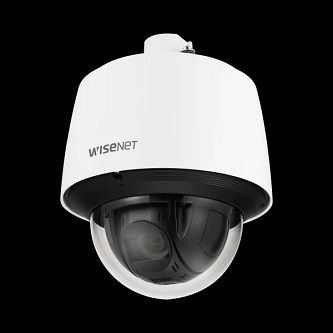
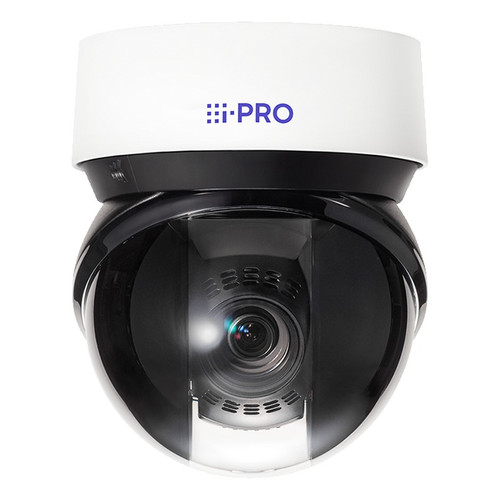
Both the Hanwha QNP-6250H and the i-PRO WV-S66300-Z4 are 2MP outdoor PTZ dome cameras designed for demanding perimeter and wide-area surveillance applications. They occupy the same resolution class and form factor, making them legitimate cross-shop candidates for integrators evaluating outdoor PTZ deployments. This comparison examines how they differ across imaging performance, physical installation requirements, and VMS/analytics integration — drawing exclusively from published specifications.
In This Guide
How do the imaging specs compare?
Both cameras share a 1/2.8" CMOS sensor at 1920×1080 resolution, but diverge significantly on zoom range and dynamic range. The QNP-6250H delivers a 25x optical zoom (4.44–111mm, F1.6–F3.9) plus a digital 32x extender for a total 800x, while the WV-S66300-Z4 offers a 40x optical zoom (4.25–170mm, F1.6–F4.95) and an extra-zoom mode up to 60x at 720p. In telephoto detection range (25ppm/8ppf), the i-PRO extends to 2,199.9m versus the Hanwha's 1,471.3m — a 49% reach advantage at tele. The WV-S66300-Z4 also claims a higher maximum dynamic range at 144dB (Super Dynamic) compared to the QNP-6250H's 120dB WDR.
At minimum illumination, the QNP-6250H is rated 0.05 Lux color / 0.005 Lux B/W; the WV-S66300-Z4 specifies 0.006 Lux B/W (50IRE, F1.6, 1/30s) — no color lux figure is provided in the supplied specs for the i-PRO. The Hanwha supports up to 60fps; the i-PRO lists frame rate as 'Variable' with no maximum fps figure provided in the supplied specifications. Both cameras include a built-in gyro-based image stabilizer and Auto ICR day/night switching. The QNP-6250H's preset accuracy is ±0.2°; the i-PRO does not specify a preset accuracy figure.
What about installation and environment?
Both cameras carry IP66 and IK10 ratings and are ONVIF-compatible wired units with microSD edge storage. A key installation differentiator is power: the QNP-6250H runs on PoE+ (IEEE 802.3at, Class 4, max 23W typical 14W), while the WV-S66300-Z4 requires PoE++ (IEEE 802.3bt, Class 6, 37.8W) — installers must verify switch port compatibility before deployment; PoE++ switches are less common and more expensive than PoE+ switches. The i-PRO also specifies a wind resistance rating of up to 40m/s (~89 mph), a figure not provided for the QNP-6250H.
Operating temperature ranges also differ materially: the QNP-6250H is rated -35°C to +55°C, while the WV-S66300-Z4 operates from -50°C to +60°C, giving the i-PRO a broader cold-weather envelope. The Hanwha additionally holds NEMA4X certification (not listed for the i-PRO in supplied specs) and UL 62368-1 / CAN/CSA C22.2 NO. 62368-1 safety certifications; the i-PRO holds UL 62368-1, c-UL, CE, and IEC 62368-1. The QNP-6250H body is aluminum with a polycarbonate head (ø204.3×265mm, 2,700g); the WV-S66300-Z4 is aluminum die-cast with a polycarbonate dome (ø167mm×205mm, ~3,000g) — the i-PRO has a smaller diameter footprint.
Which fits your VMS and analytics better?
Both cameras support ONVIF Profile S/G/T and H.265/H.264/MJPEG compression with CBR/VBR bitrate control. The i-PRO WV-S66300-Z4 adds ONVIF Profile M, includes AI-based analytics (AI VMD, face/people/vehicle detection, AI sound classification for gunshot/yell/vehicle horn/glass break), and supports two-way audio with G.726, G.711, and AAC-LC compression, plus 4 alarm inputs and 1 alarm output. It also specifies FIPS 140-2 Level 3 security compliance. The i-PRO supports up to 256 preset positions; the QNP-6250H's preset count is not specified in the supplied data.
The QNP-6250H provides analytics including directional detection, enter/exit, virtual line, and tampering via its Wisenet open platform and SUNAPI (HTTP API), and supports WiseStream II smart codec with up to 10 streaming profiles for 20 unicast users. It lists no audio output and no built-in audio compression; audio detection requires an optional I/O box (SPM-4210). The i-PRO allows up to 14 simultaneous users. Both support microSD/SDHC/SDXC edge storage up to 256GB (Hanwha); the i-PRO specifies microSDXC support but does not state a maximum capacity in the supplied specs. The i-PRO includes NTCIP1205 protocol support in its specification, not listed for the QNP-6250H.
Which should you choose: the QNP-6250H or the S66300-Z4?
Our take: The WV-S66300-Z4 is the stronger choice when maximum optical reach, AI analytics, and native two-way audio are priorities on a site with PoE++ infrastructure. Its 40x optical zoom (vs. 25x) extends tele detection range to 2,199.9m versus 1,471.3m — a 728m advantage — while its 144dB dynamic range exceeds the QNP-6250H's 120dB. Built-in AI classification (face, people, vehicle, AI sound events) and FIPS 140-2 Level 3 compliance add value for high-security environments. Conversely, the QNP-6250H is the practical choice where PoE+ (Class 4) switching infrastructure is already in place, NEMA4X certification is contractually required, or budget constraints apply — it draws a maximum 23W versus the i-PRO's 37.8W. Both carry IP66/IK10 ratings; the i-PRO has a wider operating temperature range (-50°C vs. -35°C) and a 5-year warranty versus the Hanwha's 3-year.
Side-by-Side Comparison
Spec-for-spec, from manufacturer data.
| Specification | Hanwha QNP-6250H | i-PRO S66300-Z4 |
|---|---|---|
| Resolution | 1920×1080 (2MP) | 1920×1080 (2MP) |
| Image Sensor | 1/2.8" CMOS | Approx. 1/2.8" type CMOS |
| Optical Zoom / Focal Length | 25x / 4.44–111mm | 40x / 4.25–170mm |
| Max Aperture (Wide / Tele) | F1.6 (Wide) / F3.9 (Tele) | F1.6 (Wide) / F4.95 (Tele) |
| Min. Illumination | 0.05 Lux color / 0.005 Lux B/W | 0.006 Lux B/W (50IRE, F1.6, 1/30s) |
| Wide Dynamic Range | 120dB | Max. 144dB (Super Dynamic On, Level 31) |
| Max Frame Rate | 60fps | Variable (no maximum specified) |
| Tele Detection Range (25ppm) | 1,471.3m | 2,199.9m |
| Video Compression | H.265, H.264, MJPEG | H.265, H.264, MJPEG |
| IP Rating | IP66 / NEMA4X | IP66 |
| Impact Rating | IK10 | IK10 |
| Operating Temperature | -35°C to +55°C | -50°C to +60°C |
| Power Input / PoE Class | PoE+ (IEEE 802.3at) / Class 4 / Max 23W | PoE++ (IEEE 802.3bt) / Class 6 / 37.8W |
| Audio | No audio (external I/O box required for detection) | 2-way audio; G.726/G.711/AAC-LC; 4 alarm inputs / 1 output |
| Edge Storage | microSD/SDHC/SDXC, 1 slot, max 256GB | microSDXC (max capacity not specified) |
| AI Analytics | Directional, enter/exit, virtual line, tampering | AI VMD; face/people/vehicle detection; AI sound classification |
| Warranty | 3-year | 5-year |
Frequently Asked Questions
Which should you choose: the QNP-6250H or the S66300-Z4?
The WV-S66300-Z4 is the stronger choice when maximum optical reach, AI analytics, and native two-way audio are priorities on a site with PoE++ infrastructure. Its 40x optical zoom (vs. 25x) extends tele detection range to 2,199.9m versus 1,471.3m — a 728m advantage — while its 144dB dynamic range exceeds the QNP-6250H's 120dB. Built-in AI classification (face, people, vehicle, AI sound events) and FIPS 140-2 Level 3 compliance add value for high-security environments. Conversely, the QNP-6250H is the practical choice where PoE+ (Class 4) switching infrastructure is already in place, NEMA4X certification is contractually required, or budget constraints apply — it draws a maximum 23W versus the i-PRO's 37.8W. Both carry IP66/IK10 ratings; the i-PRO has a wider operating temperature range (-50°C vs. -35°C) and a 5-year warranty versus the Hanwha's 3-year.
Is the QNP-6250H or WV-S66300-Z4 better for low-light performance?
The supplied specs show the WV-S66300-Z4 rated at 0.006 Lux B/W (50IRE, F1.6, 1/30s), while the QNP-6250H is rated 0.05 Lux color / 0.005 Lux B/W. The QNP-6250H's B/W sensitivity figure is marginally lower, but the two cameras use different measurement standards (IRE thresholds and conditions differ), so a direct numeric comparison should be treated cautiously. No color lux figure is provided for the i-PRO in the supplied specifications.
Can I power either camera from my existing PoE+ switch?
Only the QNP-6250H supports PoE+ (IEEE 802.3at, Class 4, max 23W). The WV-S66300-Z4 requires PoE++ (IEEE 802.3bt, Class 6, 37.8W). If your switches are PoE+ only, the i-PRO will require switch upgrades or a mid-span injector rated for PoE++.
Which camera offers better built-in analytics without a separate server?
The WV-S66300-Z4 includes on-camera AI analytics for face, people, and vehicle detection, plus AI sound classification (gunshot, yell, vehicle horn, glass break) and scene change detection — all edge-based per the supplied specs. The QNP-6250H provides directional detection, enter/exit, virtual line, and tampering analytics on-camera, but audio detection requires an optional external I/O box (SPM-4210). For sites needing server-free AI object classification, the i-PRO has a broader on-board analytics set per the specifications provided.
Get a Second Opinion on Your Camera Choice
Share your site layout, coverage goals, and budget. Our team will validate the camera selection, flag anything we would change, and recommend products that match the use case.