
Hanwha QNP-6250H vs i-PRO S66300-Z3: Specification Comparison
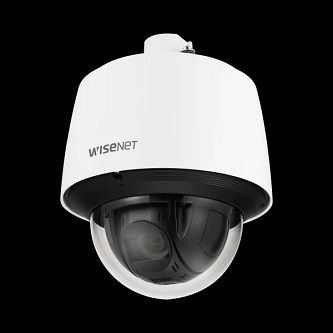
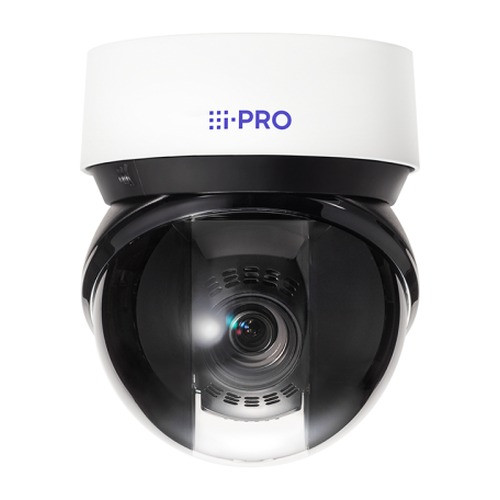
Both the Hanwha QNP-6250H and the i-PRO WV-S66300-Z3 are 2MP outdoor PTZ dome cameras targeting professional IP video surveillance installations. Both deliver 1920×1080 resolution at 60 fps, IK10/IP66 weatherproofing, ONVIF compliance, and PoE power — making them direct cross-shop candidates for perimeter and wide-area monitoring projects where pan-tilt-zoom coverage, edge analytics, and network integration are key purchasing criteria.
In This Guide
How do the imaging specs compare?
Both cameras share a 1/2.8" CMOS sensor and a maximum 60 fps frame rate at 1920×1080. The QNP-6250H offers a 25x optical zoom with a 4.44–111 mm focal length and a maximum aperture of F1.6 (Wide)/F3.9 (Tele), while the WV-S66300-Z3 delivers a 32x optical zoom (extendable to 48x at 1280×720) across a 4.25–136 mm focal length at the same F1.6 (Wide)/F4.4 (Tele) aperture. The i-PRO's longer tele focal length and extra zoom tier give it a materially greater tele detection range: 1,833 m versus 1,471 m at 25 PPM on the DORI scale.
In low-light performance, the QNP-6250H specifies 0.05 lux color and 0.005 lux B/W with Auto ICR day/night switching. The WV-S66300-Z3 lists 0.006 lux as its minimum illumination figure without a separate color/B/W breakdown. WDR is 120 dB on the Hanwha versus a stated maximum of 144 dB (Super Dynamic Level 31) on the i-PRO. The Hanwha includes SSNR V digital noise reduction; the i-PRO offers a 0–255 adjustable DNR scale plus an Adaptive Black Stretch feature with a 0–255 range, adding more tuning granularity. Both include a built-in gyro-based digital image stabilizer and defog/fog compensation.
What about installation and environment?
Both units carry IP66 and IK10 ratings and are certified for outdoor use. The i-PRO WV-S66300-Z3 adds NEMA 4X and NEMA-TS2 certifications and specifies wind resistance up to 40 m/s (~89 mph), neither of which appears in the QNP-6250H spec sheet. Operating temperature ranges differ notably: the QNP-6250H is rated –35°C to +55°C, whereas the WV-S66300-Z3 is rated –50°C to +60°C — a wider envelope on both ends that may matter in extreme-climate deployments.
Power requirements diverge significantly. The QNP-6250H draws up to 23 W and requires PoE+ (IEEE 802.3at, Class 4). The WV-S66300-Z3 draws 37.8 W and requires PoE++ (Class 6), meaning existing PoE+ switches cannot power it without a midspan injector or infrastructure upgrade. The Hanwha body is aluminum (head polycarbonate), weighing 2,700 g at ø204.3×265 mm; the i-PRO is aluminum die-cast with a polycarbonate dome, weighing approximately 3,000 g at ø167×205 mm — more compact in diameter but heavier per unit volume. Both support ceiling, wall, pole, and parapet mounting; the Hanwha publishes specific accessory SKUs (e.g., SBP-156HMW, SBP-156WMW) in its spec sheet, while the i-PRO spec sheet does not list mount accessory part numbers.
Which fits your VMS and analytics better?
Both cameras are ONVIF Profile S/G/T compliant. The QNP-6250H additionally lists ONVIF Profile and Wisenet Open Platform SDK support with SUNAPI (HTTP API), and includes the NTCIP 1205 protocol — relevant for traffic and public-safety integrations. The i-PRO adds ONVIF Profile M, which covers metadata and analytics interoperability beyond what Profile S/G/T provide. The i-PRO's SoC is identified as an Ambarella CV25m; no SoC is specified for the Hanwha. On-board analytics depth differs: the WV-S66300-Z3 provides AI-classified video motion detection, face detection, people detection, vehicle detection, non-mask detection, occupancy detection, scene change detection, and AI sound classification (gunshot, yell, vehicle horn, glass break). The QNP-6250H covers directional detection, enter/exit, virtual line, tampering, and motion detection — solid but without named AI object classification.
Audio support is absent on the QNP-6250H (no audio compression listed; alarm output and audio clip play require an optional I/O box SPM-4210). The WV-S66300-Z3 ships with four 3.5 mm stereo audio inputs, one audio output, and supports G.726, G.711, and AAC-LC compression, enabling full duplex audio natively. Edge storage is microSD/SDHC/SDXC up to 256 GB on the Hanwha; microSDXC (capacity ceiling not stated in the provided spec) on the i-PRO. Security posture: the i-PRO cites FIPS 140-2 Level 3 compliance, which may be a requirement in federal or regulated-industry deployments; the Hanwha lists firmware encryption, Digest Authentication, 802.1X (EAP-TLS/LEAP/PEAP), and a pre-installed Hanwha Techwin Root CA device certificate, but does not claim FIPS 140-2.
Which should you choose: the QNP-6250H or the S66300-Z3?
Our take: The WV-S66300-Z3 is the stronger choice when maximum optical reach, advanced AI analytics, native audio, extreme-temperature tolerance, and FIPS 140-2 security compliance are priorities. Its 32x optical zoom (versus 25x) extends tele detection range to 1,833 m versus 1,471 m — a 25% improvement at the DORI detect threshold. Its dynamic range reaches 144 dB versus 120 dB, offering more headroom in high-contrast scenes. Operating temperature spans –50°C to +60°C versus –35°C to +55°C, a meaningful advantage in arctic or high-heat environments. However, the i-PRO demands PoE++ (Class 6, 37.8 W) rather than the QNP-6250H's PoE+ (Class 4, 23 W max), so existing PoE+ infrastructure will require injectors or switch upgrades. The QNP-6250H is the better fit where PoE+ infrastructure is already deployed, Wisenet/NTCIP integration is required, and budget or power-plant constraints favor lower draw.
Side-by-Side Comparison
Spec-for-spec, from manufacturer data.
| Specification | Hanwha QNP-6250H | i-PRO S66300-Z3 |
|---|---|---|
| Resolution | 1920×1080 (2MP) | 1920×1080 (2MP) |
| Image Sensor | 1/2.8" CMOS | Approx. 1/2.8" CMOS |
| Optical Zoom / Focal Length | 25x / 4.44–111 mm | 32x (48x extended) / 4.25–136 mm |
| Max. Aperture (Wide/Tele) | F1.6 / F3.9 | F1.6 / F4.4 |
| Min. Illumination | 0.05 lux color / 0.005 lux B/W | 0.006 lux |
| Wide Dynamic Range | 120 dB | Max. 144 dB (Super Dynamic On, Level 31) |
| Max. Frame Rate | 60 fps | 60 fps |
| Video Compression | H.265, H.264 (Main/High), MJPEG | H.265, H.264, MJPEG |
| IP Rating | IP66 | IP66, NEMA 4X |
| Impact / Vandal Rating | IK10 | IK10 |
| Operating Temperature | –35°C to +55°C | –50°C to +60°C |
| Power Input / PoE Class | PoE+ (IEEE 802.3at), Class 4, max 23 W | PoE++, Class 6, 37.8 W |
| Pan Speed (Preset / Manual) | 700°/s preset / 0.024–200°/s manual | 700°/s preset / 0.065–150°/s manual |
| Tilt Speed (Preset / Manual) | 300°/s preset / 0.024–200°/s manual | 500°/s preset / 0.065–150°/s manual |
| Audio | None (optional I/O box required) | 4× audio input, 1× audio output; G.726/G.711/AAC-LC |
| Edge Storage | microSD/SDHC/SDXC, 1 slot, max 256 GB | microSDXC (capacity ceiling not stated in spec) |
| ONVIF Profiles | S, G, T | G, M, S, T |
| AI / Edge Analytics | Directional, Enter/Exit, Virtual Line, Tampering, Motion | AI VMD, Face, People, Vehicle, Non-Mask, Occupancy, SCD, AI Sound Classification |
| Security Certification | Firmware encryption, 802.1X, Device Certificate (Hanwha CA) | FIPS 140-2 Level 3, HTTPS, 802.1X, Certificate-based auth |
| Dimensions (D × H) | ø204.3 × 265 mm | ø167 × 205 mm |
| Weight | 2,700 g (5.95 lb) | Approx. 3,000 g |
| Warranty | 3 years | 5 years |
Frequently Asked Questions
Which should you choose: the QNP-6250H or the S66300-Z3?
The WV-S66300-Z3 is the stronger choice when maximum optical reach, advanced AI analytics, native audio, extreme-temperature tolerance, and FIPS 140-2 security compliance are priorities. Its 32x optical zoom (versus 25x) extends tele detection range to 1,833 m versus 1,471 m — a 25% improvement at the DORI detect threshold. Its dynamic range reaches 144 dB versus 120 dB, offering more headroom in high-contrast scenes. Operating temperature spans –50°C to +60°C versus –35°C to +55°C, a meaningful advantage in arctic or high-heat environments. However, the i-PRO demands PoE++ (Class 6, 37.8 W) rather than the QNP-6250H's PoE+ (Class 4, 23 W max), so existing PoE+ infrastructure will require injectors or switch upgrades. The QNP-6250H is the better fit where PoE+ infrastructure is already deployed, Wisenet/NTCIP integration is required, and budget or power-plant constraints favor lower draw.
Is the QNP-6250H or WV-S66300-Z3 better for low-light performance?
The i-PRO WV-S66300-Z3 specifies a minimum illumination of 0.006 lux, compared to 0.05 lux color / 0.005 lux B/W on the Hanwha QNP-6250H. The i-PRO also achieves a higher stated maximum WDR of 144 dB (Super Dynamic Level 31) versus 120 dB on the Hanwha, giving it an edge in high-contrast, mixed-lighting scenes. Note that the two manufacturers measure and report illumination differently, so direct lux comparisons should be treated as indicative rather than absolute.
Can I power either camera from my existing PoE+ switch?
The Hanwha QNP-6250H is powered by PoE+ (IEEE 802.3at, Class 4) at a maximum of 23 W, so it is compatible with standard PoE+ switches. The i-PRO WV-S66300-Z3 requires PoE++ (Class 6) at 37.8 W, which exceeds the PoE+ standard. To power the WV-S66300-Z3 from a PoE+ switch, you would need a PoE++ midspan injector or a switch upgrade — a real infrastructure cost to factor into the project budget.
Which camera offers better built-in AI analytics — the QNP-6250H or the WV-S66300-Z3?
The i-PRO WV-S66300-Z3 provides a broader on-camera AI analytics suite: AI-classified video motion detection, face detection, people detection, vehicle detection, non-mask detection, occupancy detection, scene change detection, and AI sound classification for gunshot, yell, vehicle horn, and glass break — all processed on the Ambarella CV25m SoC. The Hanwha QNP-6250H offers directional detection, enter/exit detection, virtual line crossing, tampering, and motion detection, but does not specify AI object-class differentiation or sound classification in the provided specs.
Get a Second Opinion on Your Camera Choice
Share your site layout, coverage goals, and budget. Our team will validate the camera selection, flag anything we would change, and recommend products that match the use case.