
Hanwha C8253 vs i-PRO X66600-Z3LS: Specification Comparison
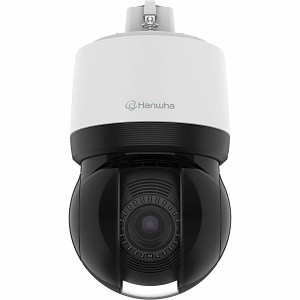
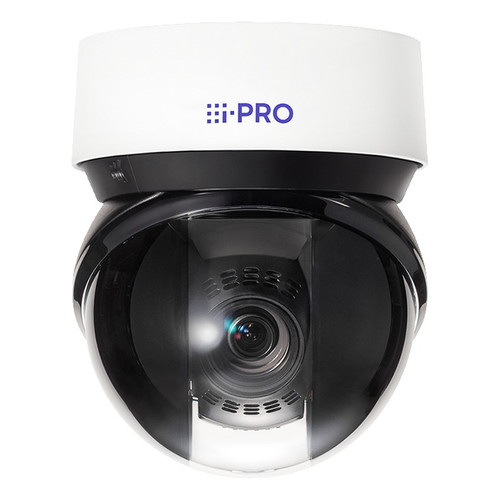
Both the Hanwha XNP-C8253 and the i-PRO WV-X66600-Z3LS are outdoor PTZ dome cameras operating at 6MP resolution, making them direct cross-shop candidates for perimeter and wide-area surveillance deployments. The comparison covers imaging performance, environmental and installation considerations, and VMS/analytics integration — the three dimensions most relevant to integrators and IT buyers evaluating which unit best fits a specific project's requirements.
In This Guide
How do the imaging specs compare?
Both cameras use an approx. 1/2.8" CMOS sensor delivering 3328×1872 resolution at up to 60fps. The XNP-C8253 offers a 5–125mm lens at 25x optical zoom (F1.6 wide / F3.73 tele), while the WV-X66600-Z3LS uses a 4.5–135mm lens at 30x optical zoom (F1.8 wide / F4.7 tele), extendable to 78x digital at 1280×720. The i-PRO unit thus delivers greater optical reach (30x vs 25x) and a longer tele focal length, though the Hanwha's wider aperture at F1.6 gives it a slight light-gathering edge in the wide position. At tele end the i-PRO's F4.7 is narrower than Hanwha's F3.73, meaning the Hanwha admits more light at maximum zoom.
For low-light performance, the XNP-C8253 specifies 0.1 Lux color / 0.01 Lux B/W, while the WV-X66600-Z3LS lists only 0.1 Lux (B/W) — the Hanwha datasheet provides a color-mode figure and a lower B/W floor. IR illumination is a decisive differentiator: the i-PRO specifies 280m IR range (at 30IRE), whereas the Hanwha lists IR distance as 5m in the structured spec field (no extended IR range figure provided in the supplied specs). WDR is 120dB (Extreme WDR) on the Hanwha versus a specified maximum of 132dB (Super Dynamic level 31) on the i-PRO, giving the i-PRO a measurable dynamic-range advantage. DORI figures are broadly similar in wide mode but the i-PRO leads at tele Detect: 3050m vs 2814m, consistent with its longer focal length.
What about installation and environment?
Both cameras carry IP66 and IK10 ratings. The i-PRO additionally lists NEMA 4X in its structured specs, while the Hanwha lists NEMA4X and NEMA-TS 2 (sections 2.2.7/2.2.8/2.2.9) in its certifications — both units are suitable for outdoor washdown environments. The XNP-C8253 specifies an operating range of -40°C to +55°C; the WV-X66600-Z3LS specifies -30°C to +60°C power-on operation (storage rated to -50°C), meaning the Hanwha tolerates colder power-on conditions while the i-PRO handles a slightly higher upper operating temperature. The i-PRO also specifies wind resistance up to 40 m/s (~89 mph), a figure not provided in the Hanwha specs.
Power requirements differ meaningfully: the XNP-C8253 runs on PoE+ (IEEE 802.3at, Class 4) drawing a typical 24W / max 25.5W. The WV-X66600-Z3LS requires PoE++ (54V, 45.9W, Class 6). Installers must verify switch or injector capability before deploying the i-PRO — standard PoE+ switches will not power it. Physical size is comparable: Hanwha is ø158×293.3mm at 3.2kg; i-PRO is ø167×205mm (H) at approx. 3kg. The Hanwha includes a built-in water-removal feature (spin dry and lens heater) and specifies a broad accessory mounting ecosystem (wall, pole, parapet, corner, in-ceiling mounts listed by model number). The i-PRO lists a tamper-resistant enclosure as a noted feature; equivalent mounting accessory detail is not provided in the supplied specs.
Which fits your VMS and analytics better?
Both cameras support ONVIF Profiles G, M, S, and T, providing broad VMS compatibility. The XNP-C8253 additionally lists SUNAPI and Wisenet SDK APIs, and supports up to 20 unicast / 128 multicast simultaneous streams with up to 10 configurable profiles; the WV-X66600-Z3LS supports up to 14 simultaneous users. The Hanwha unit lists protocols including NTCIP1205 and MQTT; the i-PRO also supports MQTT and NTCIP (IPv4 only per specs). Both support H.265, H.264, and MJPEG compression with VBR/CBR modes. Audio is present on the i-PRO (3.5mm stereo input and output jacks, G.726/G.711/AAC-LC; AI Sound Classification: gunshot, yell, vehicle horn, glass break; 3 alarm inputs / 1 alarm output); audio and I/O connectivity are not listed in the supplied Hanwha specs (alarm input noted as requiring optional SPM-4210 I/O box).
AI analytics on the XNP-C8253 include object detection and classification (person/face/vehicle/license plate), virtual line crossing, virtual area, auto-tracking (person/vehicle), and support DetectionShot. The WV-X66600-Z3LS provides AI motion, privacy, face, people, and vehicle detection, plus AI Sound Classification. On-board storage: the Hanwha supports dual microSD slots up to 1TB (512GB×2); the i-PRO supports a single microSD/SDHC/SDXC slot up to 512GB. Security hardening on the Hanwha includes TPM with FIPS 140-2 Level 2 certification, secure boot, signed firmware, AES encryption, and 802.1X (EAP-TLS/LEAP/PEAP); the i-PRO lists signed firmware and 802.1X but FIPS 140-2 TPM certification is not stated in the supplied specs.
Which should you choose: the C8253 or the X66600-Z3LS?
Our take: The WV-X66600-Z3LS is the stronger choice when maximum IR night-vision range, highest dynamic range, or built-in audio I/O are the primary requirements: it delivers 280m IR vs the Hanwha's 5m spec, 132dB Super Dynamic vs 120dB Extreme WDR, and native audio in/out with AI sound classification — all absent or significantly lower on the XNP-C8253 as specified. Conversely, the XNP-C8253 is the stronger choice where PoE+ infrastructure is already in place (Class 4 vs Class 6 / PoE++ required by the i-PRO), where colder-climate startup is needed (-40°C vs -30°C power-on), or where dual-slot edge storage redundancy (1TB vs 512GB single slot) and FIPS 140-2 Level 2 TPM security certification are mandated. The i-PRO's 5-year warranty versus Hanwha's 3-year warranty is also relevant for total cost of ownership. Platform qualifier: Hanwha-native VMS environments benefit from SUNAPI/Wisenet SDK integration on the C8253; i-PRO-native or third-party ONVIF deployments will find both units equally compatible.
Side-by-Side Comparison
Spec-for-spec, from manufacturer data.
| Specification | Hanwha C8253 | i-PRO X66600-Z3LS |
|---|---|---|
| Resolution | 3328×1872 (6MP) | 3328×1872 (6MP) |
| Image Sensor | 1/2.8" CMOS | Approx. 1/2.8" CMOS |
| Lens / Focal Length | 5–125mm, 25x optical zoom | 4.5–135mm, 30x optical (78x extended at 720p) |
| Max Aperture (Wide / Tele) | F1.6 (Wide) / F3.73 (Tele) | F1.8 (Wide) / F4.7 (Tele) |
| Min. Illumination | 0.1 Lux color / 0.01 Lux B/W | 0.1 Lux (B/W); color figure not specified |
| IR Range | 5m (per spec) | 280m @ 30IRE / 200m @ 50IRE |
| WDR | 120dB Extreme WDR | 132dB (Super Dynamic level 31) |
| Max Frame Rate | 60fps | 60fps |
| Video Compression | H.265, H.264 (Main/Baseline/High), MJPEG | H.265, H.264, MJPEG |
| IP Rating | IP66 | IP66 / NEMA 4X |
| IK / Impact Rating | IK10 | IK10 |
| Operating Temperature | -40°C to +55°C | -30°C to +60°C (power-on) |
| Power Input / PoE Class | PoE+ / IEEE 802.3at Class 4 (max 25.5W) | PoE++ / 54V, 45.9W, Class 6 |
| Edge Storage | Dual microSD up to 1TB (512GB×2) | Single microSD up to 512GB |
| Audio | Not specified in supplied specs (optional I/O box for alarm) | 3.5mm stereo in/out; G.726, G.711, AAC-LC; AI sound classification |
| Warranty | 3 years | 5 years |
Frequently Asked Questions
Which should you choose: the C8253 or the X66600-Z3LS?
The WV-X66600-Z3LS is the stronger choice when maximum IR night-vision range, highest dynamic range, or built-in audio I/O are the primary requirements: it delivers 280m IR vs the Hanwha's 5m spec, 132dB Super Dynamic vs 120dB Extreme WDR, and native audio in/out with AI sound classification — all absent or significantly lower on the XNP-C8253 as specified. Conversely, the XNP-C8253 is the stronger choice where PoE+ infrastructure is already in place (Class 4 vs Class 6 / PoE++ required by the i-PRO), where colder-climate startup is needed (-40°C vs -30°C power-on), or where dual-slot edge storage redundancy (1TB vs 512GB single slot) and FIPS 140-2 Level 2 TPM security certification are mandated. The i-PRO's 5-year warranty versus Hanwha's 3-year warranty is also relevant for total cost of ownership. Platform qualifier: Hanwha-native VMS environments benefit from SUNAPI/Wisenet SDK integration on the C8253; i-PRO-native or third-party ONVIF deployments will find both units equally compatible.
Is the XNP-C8253 or WV-X66600-Z3LS better for low-light and night coverage?
The WV-X66600-Z3LS has a significant advantage in night range, specifying IR illumination to 280m (at 30IRE) versus 5m listed for the XNP-C8253 in the supplied specs. Both list 0.1 Lux minimum illumination in color or B/W, but the Hanwha adds a 0.01 Lux B/W figure not provided for the i-PRO. The i-PRO also leads on WDR with 132dB vs 120dB. For sites requiring long-range IR coverage, the WV-X66600-Z3LS has a clear specification advantage.
Can both cameras run on a standard PoE+ switch?
No. The XNP-C8253 is designed for PoE+ (IEEE 802.3at, Class 4, max 25.5W) and will work with any compliant PoE+ switch or injector. The WV-X66600-Z3LS requires PoE++ (802.3bt, 54V, 45.9W, Class 6). Existing PoE or PoE+ infrastructure cannot power the i-PRO unit; a PoE++ capable switch or mid-span injector must be installed, which has direct cabling and budget implications for retrofit projects.
Which camera offers better onboard edge storage?
The XNP-C8253 provides dual microSD card slots supporting up to 512GB each (1TB total), offering redundancy and higher total capacity. The WV-X66600-Z3LS supports a single microSD/SDHC/SDXC card up to 512GB. Both support H.265/H.264 scheduled, alarm, and manual recording modes to the card. For deployments where local redundant storage or maximum on-camera capacity matters, the Hanwha dual-slot design is the practical advantage.
Get a Second Opinion on Your Camera Choice
Share your site layout, coverage goals, and budget. Our team will validate the camera selection, flag anything we would change, and recommend products that match the use case.