
Hanwha C8253 vs Hanwha XNP-8300RW: Specification Comparison
Both the Hanwha XNP-C8253 and XNP-8300RW are 6MP outdoor PTZ network cameras sharing the same 1/2.8" CMOS sensor and 3328×1872 resolution, making them direct cross-shop candidates for integrators specifying perimeter or large-area surveillance. The comparison centers on zoom reach, IR capability, water-removal method, PTZ speed, power input, and cybersecurity posture—differences that meaningfully affect site design, infrastructure planning, and long-term maintainability.
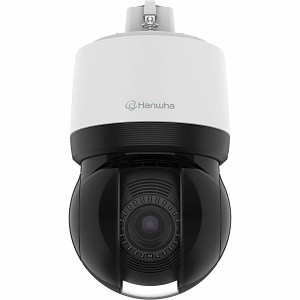
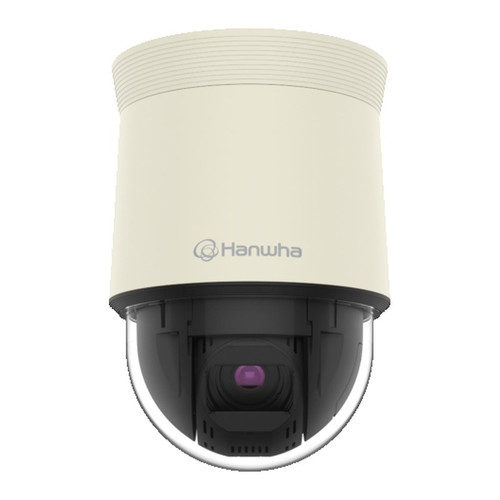
In This Guide
How do the imaging specs compare?
Both cameras share the same 1/2.8" CMOS sensor, 3328×1872 resolution, 120dB Extreme WDR, and a minimum color illumination of 0.1 Lux. The XNP-8300RW pulls ahead on zoom: its 5–150mm DC auto-iris lens delivers 30x optical zoom (total 960x with 32x digital), versus the XNP-C8253's 5–125mm lens with 25x optical zoom (total 800x). At tele end, the 8300RW's DORI Detect range reaches 3,482m versus the C8253's 2,814m—a 24% advantage in raw reach. Low-light performance diverges critically: the 8300RW carries a 200m Wise IR illuminator, enabling 0 Lux operation when IR is active, while the C8253 spec lists a minimum of 0.01 Lux B/W with no IR range stated beyond 5m, suggesting its IR is supplemental rather than long-range.
For noise reduction, the XNP-C8253 specifies WiseNR II (AI-engine-based) alongside SSNR V, while the XNP-8300RW lists only SSNR V—giving the C8253 a stated edge in AI-enhanced noise processing. Both support DIS via built-in gyro sensor and Defog. The C8253 uniquely specifies 60fps in its feature list (though its datasheet also states 30fps at 6MP); the 8300RW specifies 30fps maximum. Both support H.265/H.264/MJPEG with WiseStream II; the C8253 additionally lists WiseStream III. Water removal differs by mechanism: the C8253 uses spin-dry plus a lens heater, while the 8300RW uses a physical wiper—a distinction with real-world maintenance implications in dusty or debris-prone environments.
What about installation and environment?
Both cameras carry IP66, IK10, and NEMA 4X ratings and share an operating temperature range of -40°C to +55°C, making either suitable for harsh outdoor deployments. Physical size and weight differ: the XNP-C8253 measures ø158×293.3mm and weighs 3,200g (7.05 lb), while the XNP-8300RW is larger at ø184.9×318.8mm and heavier at 5,400g (11.90 lb)—relevant for pole-load calculations and mounting hardware selection. Power requirements diverge substantially: the C8253 runs on PoE+ (IEEE 802.3at, Class 4) with a maximum draw of 25.5W, while the 8300RW requires HPoE (IEEE 802.3bt, Class 6, Type 3) with a maximum draw of 42W and includes an injector. Infrastructure already built around 802.3at switches cannot power the 8300RW without an injector or switch upgrade.
The C8253 spec lists mounting accessories including hanging, ceiling, wall, pole, in-ceiling, parapet, corner mounts, and a cabinet option. The XNP-8300RW references optional SBP brackets but does not enumerate a full mount accessory list in the provided specifications. NEMA TS 2 compliance is noted for both, though the C8253 cites clauses 2.2.7, 2.2.8, and 2.2.9 while the 8300RW cites only 2.2.8 and 2.2.9—a minor but documentable difference for traffic-system certifications.
Which fits your VMS and analytics better?
Both cameras support ONVIF Profile S, G, and T, plus Hanwha SUNAPI. The XNP-C8253 adds ONVIF Profile M, which extends metadata streaming support for AI analytics events—useful for VMS platforms that consume rich metadata. The C8253's analytics engine explicitly classifies Person, Face, Vehicle (with sub-types: car, bus, truck, motorcycle, bicycle), and License Plate, and includes DetectionShot and AI-engine-based events. The XNP-8300RW's analytics cover directional detection, fog detection, face detection, motion detection, appear/disappear, enter/exit, and object auto-tracking (Person/Vehicle) with target lock tracking. The 8300RW does not list license plate detection or vehicle sub-type classification in the provided specs.
On cybersecurity, the C8253 specifies TPM with FIPS 140-2 Level 2 certification, HTPM, encrypted SD card, secure boot, signed firmware, firmware encryption, AES encryption, SRTP, WSS, 802.1X (EAP-TLS, EAP-LEAP, EAP-PEAP MSCHAPv2), and MQTT support. The XNP-8300RW carries UL CAP (UL 2900-1) cybersecurity certification and 802.1X (EAP-TLS, EAP-LEAP), but does not list TPM, FIPS 140-2, encrypted SD, secure boot, or MQTT in the provided specifications. Both provide 2-slot Micro SD/SDHC/SDXC edge storage up to 1TB and 4GB RAM / 512MB Flash. Audio input is noted for the 8300RW in the spec data; the C8253 specification as provided does not list audio input. Alarm I/O on both models requires an optional external I/O box.
Which should you choose: the C8253 or the XNP-8300RW?
Our take: The XNP-C8253 is the stronger choice when cybersecurity compliance, AI-depth analytics (license plate, vehicle sub-types, ONVIF Profile M, FIPS 140-2 TPM), and PoE+ infrastructure compatibility are the deciding factors—it draws a maximum of 25.5W on 802.3at Class 4 against the 8300RW's 42W HPoE requirement, and it is substantially lighter at 3,200g vs 5,400g. The XNP-8300RW is the stronger choice when maximum zoom reach and true IR performance are paramount: it delivers 30x optical zoom (vs 25x), a tele Detect range of 3,482m (vs 2,814m), and verified 200m IR illumination enabling 0 Lux operation—capabilities that are decisive for wide-open perimeters, stadiums, or ports. The 8300RW's physical wiper also suits sites with heavy rain or debris. Integrators on legacy 802.3at switch infrastructure must factor in injector cost or switch replacement before specifying the 8300RW.
Side-by-Side Comparison
Spec-for-spec, from manufacturer data.
| Specification | Hanwha C8253 | Hanwha XNP-8300RW |
|---|---|---|
| Resolution | 6MP (3328×1872) | 6MP (3328×1872) |
| Image Sensor | 1/2.8" CMOS | 1/2.8" CMOS |
| Lens / Focal Length | 5–125mm DC auto-iris (25x optical, 32x digital, 800x total) | 5–150mm DC auto-iris (30x optical, 32x digital, 960x total) |
| Min. Illumination | 0.1 Lux color / 0.01 Lux B/W | 0.1 Lux color / 0 Lux (IR on) |
| IR Range | 5m (spec as provided) | 200m (Wise IR) |
| Wide Dynamic Range | Extreme WDR (120dB) | Extreme WDR (120dB) |
| Max Frame Rate | 30fps @ 6MP (60fps listed in features) | 30fps |
| Pan Speed (Max) | 700°/sec | 500°/sec |
| Tilt Speed (Max) | 500°/sec | 350°/sec |
| Water Removal | Spin-dry + lens heater | Wiper |
| Video Compression | H.265, H.264, MJPEG, WiseStream II, WiseStream III | H.265, H.264, MJPEG, WiseStream II |
| IP / IK Rating | IP66 / IK10 / NEMA 4X | IP66 / IK10 / NEMA 4X |
| Operating Temperature | -40°C to +55°C | -40°C to +55°C |
| Power Input / PoE Class | PoE+ (IEEE 802.3at, Class 4), Max 25.5W | HPoE (IEEE 802.3bt, Class 6, Type 3), Max 42W |
| Edge Storage | Micro SD/SDHC/SDXC 2-slot, up to 1TB (512GB×2) | Micro SD/SDHC/SDXC 2-slot, up to 1TB |
| ONVIF Profiles | S, G, T, M | S, G, T |
| Cybersecurity Certifications | TPM (FIPS 140-2 Level 2), secure boot, signed firmware, AES encryption | UL CAP (UL 2900-1) |
| Dimensions | ø158×293.3mm (6.22×11.55") | ø184.9×318.8mm (7.28×12.55") |
| Weight | 3,200g (7.05 lb) | 5,400g (11.90 lb) |
| Warranty | 3 years | — |
Frequently Asked Questions
Which should you choose: the C8253 or the XNP-8300RW?
The XNP-C8253 is the stronger choice when cybersecurity compliance, AI-depth analytics (license plate, vehicle sub-types, ONVIF Profile M, FIPS 140-2 TPM), and PoE+ infrastructure compatibility are the deciding factors—it draws a maximum of 25.5W on 802.3at Class 4 against the 8300RW's 42W HPoE requirement, and it is substantially lighter at 3,200g vs 5,400g. The XNP-8300RW is the stronger choice when maximum zoom reach and true IR performance are paramount: it delivers 30x optical zoom (vs 25x), a tele Detect range of 3,482m (vs 2,814m), and verified 200m IR illumination enabling 0 Lux operation—capabilities that are decisive for wide-open perimeters, stadiums, or ports. The 8300RW's physical wiper also suits sites with heavy rain or debris. Integrators on legacy 802.3at switch infrastructure must factor in injector cost or switch replacement before specifying the 8300RW.
Is the XNP-C8253 or XNP-8300RW better for low-light and night surveillance?
The XNP-8300RW has a clear advantage: it carries a 200m Wise IR illuminator enabling 0 Lux operation when IR is active. The XNP-C8253 specifies a minimum of 0.01 Lux B/W and lists IR support, but its IR range is stated as only 5m in the provided specifications, making it unsuitable for long-distance night surveillance without supplemental lighting. Both cameras share 120dB Extreme WDR for high-contrast daytime scenes.
Can I power the XNP-8300RW from an existing PoE+ switch?
No. The XNP-8300RW requires HPoE (IEEE 802.3bt, Class 6, Type 3) with a maximum draw of 42W. Standard PoE+ (802.3at) switches are limited to 30W and cannot supply sufficient power. Hanwha includes a PoE injector with the 8300RW, but the cabling infrastructure must still support the higher wattage. The XNP-C8253 operates on PoE+ (802.3at, Class 4) at a maximum of 25.5W and is compatible with existing PoE+ switches without additional hardware.
Which camera offers stronger cybersecurity features for government or critical-infrastructure projects?
The XNP-C8253 specifies a more extensive cybersecurity stack: TPM with FIPS 140-2 Level 2 certification, HTPM, encrypted SD card storage, secure boot, signed firmware, firmware encryption, AES encryption, SRTP, WSS, and 802.1X EAP-PEAP MSCHAPv2—in addition to MQTT for secure event messaging. The XNP-8300RW carries UL CAP (UL 2900-1) certification and 802.1X (EAP-TLS, EAP-LEAP), but the provided specifications do not list TPM, FIPS 140-2, encrypted SD, or secure boot. For projects requiring FIPS 140-2 compliance, the C8253 is the documented choice.
Get a Second Opinion on Your Camera Choice
Share your site layout, coverage goals, and budget. Our team will validate the camera selection, flag anything we would change, and recommend products that match the use case.