
Hanwha C6403RW vs i-PRO X66300-Z4LS: Specification Comparison
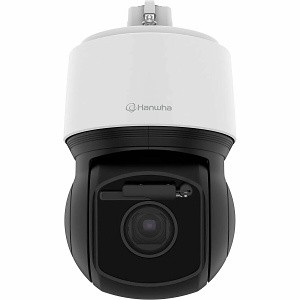
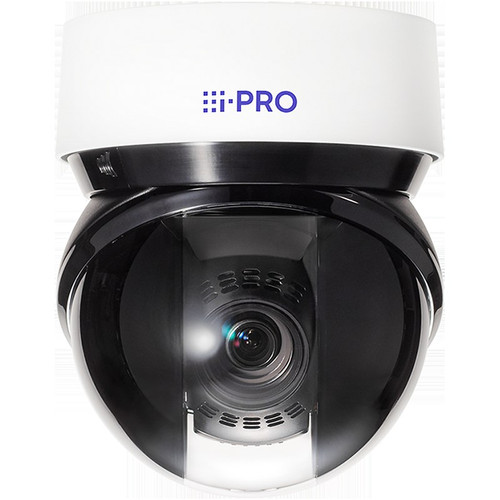
Both the Hanwha XNP-C6403RW and the i-PRO WV-X66300-Z4LS are 2MP outdoor PTZ dome cameras with 40x optical zoom, PoE++ power, IP66/IK10 ratings, and AI-assisted analytics — making them genuine cross-shop candidates for city surveillance, campus perimeter, and critical-infrastructure installations. This comparison examines imaging capability, installation and environmental resilience, and VMS/analytics integration to help installers and IT buyers determine which unit better fits a given project.
In This Guide
How do the imaging specs compare?
Both cameras share a 1/2.8-inch CMOS sensor, a 4.25–170 mm (40x optical) lens with an F1.6 wide-end aperture, and a 60 fps maximum frame rate at 1920×1080. Low-light performance diverges significantly: the i-PRO X66300-Z4LS specifies a minimum illumination of 0.006 Lux (B&W with IR LED), while the Hanwha C6403RW specifies 0.05 Lux color / 0 Lux IR — the 0 Lux IR figure applies only with IR active, making direct comparison nuanced, but the i-PRO's 0.006 Lux figure represents a measurably lower threshold under passive or hybrid lighting. IR range also differs: the i-PRO rates its IR LED at 350 m (30 IRE) / 250 m (50 IRE), versus the Hanwha's Wise IR at 200 m.
Wide dynamic range specifications diverge at the top: the Hanwha C6403RW claims 150 dB Extreme WDR; the i-PRO X66300-Z4LS specifies a maximum of 144 dB (Super Dynamic on, Level 31). The i-PRO adds an extra-zoom mode reaching 60x (at 1280×720 resolution), a feature not listed in the Hanwha spec sheet. PTZ speed favors the i-PRO at preset: 700°/s pan vs. 500°/s for the Hanwha; manual pan speed is higher on the Hanwha (up to 250°/s) versus the i-PRO (up to 150°/s). DORI tele-identify ranges differ — Hanwha 234 m vs. i-PRO 220 m — a minor real-world delta at telephoto.
What about installation and environment?
Both cameras carry IP66, NEMA 4X, and IK10 certifications and are PoE++ (IEEE 802.3bt, Class 6) powered. The Hanwha C6403RW draws up to 46 W max (typical 26 W) and includes an integrated wiper and lens heater for active water removal — a spec not listed for the i-PRO. The i-PRO X66300-Z4LS specifies 45.9 W consumption and adds a wind-resistance rating of up to 40 m/s (≈89 mph), which the Hanwha sheet does not cite. The i-PRO also specifies a tamper-resistant enclosure explicitly.
Operating temperature ranges differ meaningfully: the i-PRO X66300-Z4LS is rated −50 °C to +60 °C, while the Hanwha C6403RW is rated −40 °C to +55 °C — a 10 °C cold-end and 5 °C warm-end advantage for the i-PRO. Physical size and weight also differ: the Hanwha measures ø184.9 × 318.8 mm and weighs 5,600 g (12.34 lb), whereas the i-PRO is ø167 mm × 205 mm (H) and approximately 3,000 g — the i-PRO is notably more compact and lighter, which can matter for pole or parapet mounting load ratings. The Hanwha sheet lists a broad accessory ecosystem (SBP-156HMW, SBP-156WMW, SBP-390WMW2, SBP-300PMW2, etc.); the i-PRO spec sheet does not enumerate mounting accessories.
Which fits your VMS and analytics better?
Both cameras support ONVIF Profile S/G/T/M, H.265/H.264/MJPEG compression, SRTP, HTTPS, SNMPv1/v2c/v3, MQTT, IEEE 802.1X, and NTCIP. The Hanwha C6403RW adds SUNAPI and Wisenet SDK integration, unicast for up to 20 users and multicast for up to 128, and up to 10 simultaneous stream profiles. The i-PRO X66300-Z4LS supports up to 14 simultaneous users and includes native audio: a 3.5 mm stereo audio input and output, G.726/G.711/AAC-LC compression, and half/full-duplex modes — audio hardware and compression codecs are not listed in the Hanwha spec sheet. The i-PRO also specifies AI sound classification (gunshot, yell, vehicle horn, glass break), which the Hanwha sheet does not include.
On-board edge storage: the Hanwha provides dual microSD/SDHC/SDXC slots supporting up to 1 TB total (512 GB × 2); the i-PRO provides a single microSDXC slot up to 512 GB. AI analytics on the Hanwha include person, face, vehicle, and license-plate detection with attribute classification (vehicle type) and auto-tracking of persons and vehicles; the i-PRO lists AI video motion, face, people, and vehicle detection plus AI sound classification. Hanwha's security posture includes TPM with FIPS 140-2 Level 2 certification, encrypted SD card, and device certificate via Hanwha Private Root CA — the i-PRO spec sheet notes signed firmware but does not cite equivalent TPM or FIPS certifications. The i-PRO identifies its SoC as Ambarella CV25m; the Hanwha sheet does not specify a SoC.
Which should you choose: the C6403RW or the X66300-Z4LS?
Our take: The i-PRO WV-X66300-Z4LS is the stronger choice when extreme cold-weather deployment, built-in audio capture, or a lighter and more compact form factor are primary requirements. It operates down to −50 °C versus the Hanwha's −40 °C floor, weighs approximately 3 kg versus 5.6 kg, and includes a hardware audio input/output with AI sound classification (gunshot, yell, glass break, vehicle horn) — none of which appear in the Hanwha spec sheet. Its IR range of 350 m at 30 IRE also exceeds the Hanwha's 200 m Wise IR. Conversely, the Hanwha XNP-C6403RW is the stronger choice for sites requiring an integrated wiper and lens heater for active precipitation management, dual-slot edge storage (up to 1 TB vs. 512 GB), higher simultaneous multicast users (128 vs. 14), FIPS 140-2 Level 2 TPM security, license-plate detection with vehicle-type attribute classification, and a well-documented Hanwha/Wisenet VMS ecosystem. Buyers on Milestone, Genetec, or Wisenet WAVE with Hanwha licensing infrastructure will find native SUNAPI integration decisive.
Side-by-Side Comparison
Spec-for-spec, from manufacturer data.
| Specification | Hanwha C6403RW | i-PRO X66300-Z4LS |
|---|---|---|
| Resolution | 1920×1080 (2MP) | 1920×1080 (2MP) |
| Image Sensor | 1/2.8" CMOS | Approx. 1/2.8" CMOS |
| Lens / Focal Length | 4.25–170 mm, 40x optical | 4.25–170 mm, 40x optical (60x extra zoom at 720p) |
| Min. Illumination | 0.05 Lux color / 0 Lux IR (active) | 0.006 Lux B&W with IR LED |
| IR Range | 200 m (Wise IR) | 350 m (30 IRE) / 250 m (50 IRE) |
| Wide Dynamic Range | 150 dB (Extreme WDR) | 144 dB (Super Dynamic, Level 31) |
| Max Frame Rate | 60 fps | 60 fps |
| Preset Pan Speed | 500°/s | 700°/s |
| Manual Pan Speed | 0.024°–250°/s | 0.065°–150°/s |
| Video Compression | H.265, H.264, MJPEG | H.265, H.264, MJPEG |
| IP Rating | IP66, NEMA 4X | IP66, NEMA 4X |
| Impact Rating | IK10 | IK10 |
| Operating Temperature | −40 °C to +55 °C | −50 °C to +60 °C |
| Power Input / PoE Class | PoE++ IEEE 802.3bt, Class 6, max 46 W | PoE++ IEEE 802.3bt, Class 6, 45.9 W |
| Edge Storage | Dual microSD/SDHC/SDXC, up to 1 TB (512 GB × 2) | Single microSDXC up to 512 GB |
| Audio | Not listed in spec sheet | 3.5 mm stereo in/out; G.726, G.711, AAC-LC; half/full duplex |
| AI Analytics | Person, face, vehicle, license plate; vehicle-type attributes; auto-tracking | AI motion, face, people, vehicle detection; AI sound classification |
| ONVIF Profiles | S / G / T / M | G / M / S / T |
| Security / TPM | TPM, FIPS 140-2 Level 2, encrypted SD, device certificate | Signed firmware (TPM / FIPS not listed) |
| Dimensions | ø184.9 × 318.8 mm | ø167 mm × 205 mm (H) |
| Weight | 5,600 g (12.34 lb) | Approx. 3,000 g |
| Wiper / Lens Heater | Yes (integrated) | Not listed |
| Warranty | 3-year | 5-year |
Frequently Asked Questions
Which should you choose: the C6403RW or the X66300-Z4LS?
The i-PRO WV-X66300-Z4LS is the stronger choice when extreme cold-weather deployment, built-in audio capture, or a lighter and more compact form factor are primary requirements. It operates down to −50 °C versus the Hanwha's −40 °C floor, weighs approximately 3 kg versus 5.6 kg, and includes a hardware audio input/output with AI sound classification (gunshot, yell, glass break, vehicle horn) — none of which appear in the Hanwha spec sheet. Its IR range of 350 m at 30 IRE also exceeds the Hanwha's 200 m Wise IR. Conversely, the Hanwha XNP-C6403RW is the stronger choice for sites requiring an integrated wiper and lens heater for active precipitation management, dual-slot edge storage (up to 1 TB vs. 512 GB), higher simultaneous multicast users (128 vs. 14), FIPS 140-2 Level 2 TPM security, license-plate detection with vehicle-type attribute classification, and a well-documented Hanwha/Wisenet VMS ecosystem. Buyers on Milestone, Genetec, or Wisenet WAVE with Hanwha licensing infrastructure will find native SUNAPI integration decisive.
Is the C6403RW or X66300-Z4LS better for low-light performance?
Based on spec sheets, the i-PRO X66300-Z4LS specifies a lower minimum illumination of 0.006 Lux (B&W, IR LED) compared to the Hanwha C6403RW's 0.05 Lux color figure, suggesting a sensitivity advantage under passive low-light conditions. The Hanwha lists 0 Lux with IR active, which is a common industry claim for any camera with active IR illumination. The i-PRO also provides a longer IR range: 350 m at 30 IRE versus the Hanwha's 200 m Wise IR.
Which camera handles the coldest operating temperatures?
The i-PRO WV-X66300-Z4LS is rated for ambient operating temperatures from −50 °C to +60 °C. The Hanwha XNP-C6403RW is rated from −40 °C to +55 °C. For installations in extreme cold climates — arctic, high-altitude, or northern infrastructure sites — the i-PRO's 10 °C lower cold-end rating is a meaningful differentiator per the published specifications.
Does either camera support built-in audio, and does that affect analytics?
Yes — the i-PRO WV-X66300-Z4LS includes a 3.5 mm stereo audio input and output with G.726/G.711/AAC-LC encoding and half/full-duplex transmission, plus AI sound classification covering gunshot, yell, vehicle horn, and glass break. The Hanwha XNP-C6403RW spec sheet does not list onboard audio input/output hardware or audio-based analytics; alarm audio output is noted as conditional on optional accessories. If audio detection or two-way audio is required, the i-PRO is specified for it natively.
Get a Second Opinion on Your Camera Choice
Share your site layout, coverage goals, and budget. Our team will validate the camera selection, flag anything we would change, and recommend products that match the use case.