
Hanwha C4950TD vs Hanwha XND-9082RV: Specification Comparison
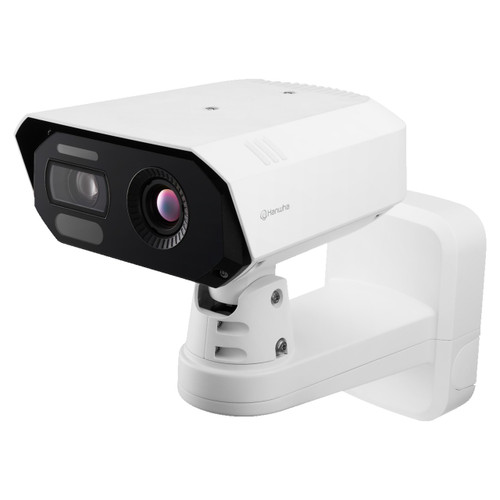
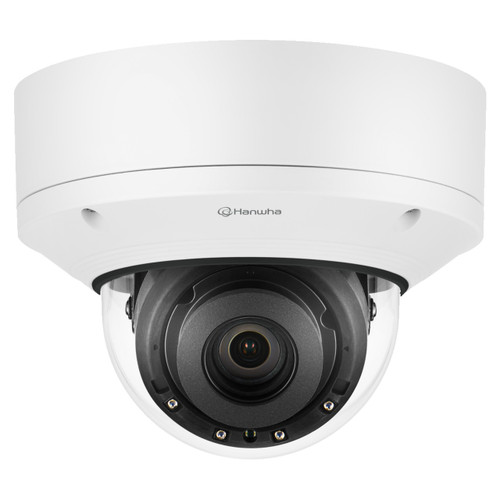
Both the Hanwha TNM-C4950TD and the XND-9082RV are 8MP wired dome cameras sharing the same maximum frame rate and Hanwha's Wisenet platform, but they are engineered for fundamentally different missions. The C4950TD is a dual-sensor AI bi-spectrum thermal-plus-visible outdoor camera targeting perimeter detection and fire/temperature analytics. The XND-9082RV is a single-sensor visible-light indoor IR dome targeting retail, banking, and people-counting environments. A buyer choosing between them is trading thermal situational awareness for indoor analytics depth and lower power draw.
In This Guide
How do the imaging specs compare?
The C4950TD pairs an 8MP (4K) visible sensor on a 1/1.8" CMOS with a separate uncooled micro-bolometer thermal sensor at VGA resolution. The visible lens is a 2.6× motorized varifocal (10.9–29mm, F1.7–1.73), while the thermal channel uses a fixed 13.5mm F1.0 lens with a pixel pitch of 12µm and NETD below 60mK. Minimum illumination on the visible channel is 0.06 Lux color / 0.005 Lux B/W; the thermal channel provides imaging at 0 Lux by detecting radiated heat rather than reflected light. WDR is rated at 120dB on the visible sensor. Thermal detection range at 25PPM reaches 583.4m (tele) and 200.1m (wide).
The XND-9082RV uses a single 1/2.8" progressive CMOS producing 3840×2160 (8MP) at 30fps through a 3× motorized varifocal lens (2.8–8.4mm, F1.2–F2.8). Minimum illumination is 0.05 Lux color and 0 Lux in IR mode, enabled by a built-in WiseIR illuminator rated to 40m (131ft). WDR is rated at 120dB (extremeWDR). Visible detection range at 25PPM is 211.0m (tele) and 49.9m (wide), substantially shorter than the thermal channel on the C4950TD. The XND-9082RV's wide-angle field of view reaches 114° horizontal versus the C4950TD visible channel's 31.9° — making it better suited for broad indoor coverage at close to mid range.
What about installation and environment?
The C4950TD is rated IP66/IP67 and IK10 with NEMA 4X and NEMA TS 2 certifications, making it suitable for exposed outdoor deployments including roadways and parking structures. Its operating temperature spans −40°C to +60°C, and it draws up to 23.5W over PoE+ (IEEE 802.3at, Class 4) or 12VDC. Physical dimensions are 353.4 × 287.5 × 191.2mm and weight is 4.533kg — a substantially larger and heavier unit requiring robust mounting infrastructure. The spec sheet notes startup should be performed at above −30°C.
The XND-9082RV carries an IP52 and IK10 rating, protecting against limited dust ingress and dripping water — adequate for indoor or lightly sheltered locations but not suited for direct outdoor exposure or washdown environments. Its operating temperature range is −25°C to +60°C. Power draw is 12.95W maximum via PoE (IEEE 802.3af, Class 3), compatible with standard 802.3af switches without requiring a PoE+ port. The form factor is a compact indoor dome at ø160 × 125mm weighing 1,600g, with pan/tilt/rotate adjustment of 0–360° / −45° to 85° / 0–355° and conduit compatibility for 1/2" (M20) knockouts.
Which fits your VMS and analytics better?
The C4950TD supports ONVIF Profile S/T and SUNAPI, with TPM 2.0 (FIPS 140-2 Level 2) hardware security — a differentiator for government or critical-infrastructure deployments. Its edge analytics are thermal-centric: fire detection, perimeter breach, and temperature anomaly, complemented by vehicle counting on the visible channel. The camera streams up to 3 simultaneous profiles to 6 unicast users. Edge storage is dual microSD slots supporting up to 512GB total. Alarm I/O is 4 configurable ports. Audio in/out is supported. Protocols include SRTP but not MQTT.
The XND-9082RV supports ONVIF Profile S/G/T and SUNAPI with Wisenet open platform, adding Profile G for on-camera recording and Profile T for metadata. Its analytics suite is substantially broader for people-flow use cases: people counting, queue management, heatmap, loitering, face/upper-body detection, sound classification, shock detection, and defocus detection, among others. Streaming supports up to 10 simultaneous profiles to 20 unicast users, with 3 virtual channels — a meaningful advantage in multi-VMS or multi-client environments. Edge storage is dual microSD up to 1TB (512GB × 2). Alarm I/O is 2 configurable ports. MQTT is supported as both a trigger and alarm event output, enabling integration with IoT platforms. The XND-9082RV also includes a built-in microphone.
Which should you choose: the C4950TD or the XND-9082RV?
Our take: The C4950TD is the stronger choice when the deployment requires thermal detection — fire, perimeter intrusion, or temperature anomaly — in an outdoor environment where visible-light cameras fail in darkness or camouflage. Concretely: it adds a calibrated thermal channel with <60mK NETD and detection range up to 583m (tele) versus the XND-9082RV's 40m IR limit; it carries IP66/IP67/NEMA 4X versus the XND-9082RV's IP52, enabling direct outdoor use; and it provides TPM 2.0 hardware security absent from the XND-9082RV. Conversely, the XND-9082RV is the correct choice for indoor analytics-heavy deployments: it supports up to 10 streaming profiles to 20 users (vs. 3 profiles/6 users), offers people counting, heatmap, queue management, and MQTT, and draws only 12.95W on standard 802.3af — roughly half the C4950TD's 23.5W PoE+ requirement. Specify the C4950TD for outdoor perimeter and thermal use cases; specify the XND-9082RV for indoor retail, banking, or campus analytics where standard PoE infrastructure is already in place.
Side-by-Side Comparison
Spec-for-spec, from manufacturer data.
| Specification | Hanwha C4950TD | Hanwha XND-9082RV |
|---|---|---|
| Resolution | 8MP (4K) visible + VGA thermal | 8MP (3840×2160) visible only |
| Image Sensor | 1/1.8" CMOS (visible) + uncooled micro-bolometer (thermal) | 1/2.8" progressive CMOS |
| Lens / Focal Length | 10.9–29mm 2.6× motorized varifocal (visible); 13.5mm fixed (thermal) | 2.8–8.4mm 3× motorized varifocal |
| Max Aperture | F1.7 (wide) / F1.73 (tele) visible; F1.0 thermal | F1.2 (wide) / F2.8 (tele) |
| Min Illumination | 0.06 Lux color / 0.005 Lux B/W (visible); 0 Lux thermal | 0.05 Lux color / 0 Lux IR |
| IR / Thermal Range | Thermal: detect to 583.4m (tele, 25PPM); no IR illuminator | WiseIR 40m (131ft) at 0 Lux; no thermal |
| WDR | 120dB | 120dB (extremeWDR) |
| Max Frame Rate | 30fps | 30fps @ 8MP |
| Video Compression | H.265 / H.264 / MJPEG | H.265 / H.264 / MJPEG |
| IP Rating | IP66 / IP67 / NEMA 4X | IP52 |
| IK / Impact Rating | IK10 | IK10 |
| Operating Temperature | −40°C to +60°C | −25°C to +60°C |
| Power Input / PoE Class | PoE+ (802.3at, Class 4) or 12VDC; max 23.5W | PoE (802.3af, Class 3) or 12VDC; max 12.95W |
| ONVIF Profiles | Profile S/T | Profile S/G/T |
| Simultaneous Streams / Users | 3 profiles / 6 unicast users | 10 profiles / 20 unicast users |
| Edge Storage | Dual microSD up to 512GB total | Dual microSD up to 1TB (512GB × 2) |
| Alarm I/O Ports | 4 configurable | 2 configurable |
| Hardware Security | TPM 2.0 (FIPS 140-2 Level 2) | Not specified in provided specs |
| MQTT Support | Not specified in provided specs | Yes (trigger and alarm event) |
| Environment / Use Case | Outdoor; IP66/IP67/NEMA 4X | Indoor / lightly sheltered; IP52 |
| Dimensions | 353.4 × 287.5 × 191.2mm | ø160 × 125mm |
| Weight | 4.533kg | 1,600g (1.6kg) |
| Warranty | 3-year | 3-year |
Frequently Asked Questions
Which should you choose: the C4950TD or the XND-9082RV?
The C4950TD is the stronger choice when the deployment requires thermal detection — fire, perimeter intrusion, or temperature anomaly — in an outdoor environment where visible-light cameras fail in darkness or camouflage. Concretely: it adds a calibrated thermal channel with <60mK NETD and detection range up to 583m (tele) versus the XND-9082RV's 40m IR limit; it carries IP66/IP67/NEMA 4X versus the XND-9082RV's IP52, enabling direct outdoor use; and it provides TPM 2.0 hardware security absent from the XND-9082RV. Conversely, the XND-9082RV is the correct choice for indoor analytics-heavy deployments: it supports up to 10 streaming profiles to 20 users (vs. 3 profiles/6 users), offers people counting, heatmap, queue management, and MQTT, and draws only 12.95W on standard 802.3af — roughly half the C4950TD's 23.5W PoE+ requirement. Specify the C4950TD for outdoor perimeter and thermal use cases; specify the XND-9082RV for indoor retail, banking, or campus analytics where standard PoE infrastructure is already in place.
Is the C4950TD or XND-9082RV better for complete-darkness surveillance?
They use different technologies. The C4950TD's thermal sensor detects radiated heat and operates at 0 Lux regardless of ambient light, with detection range up to 583m (tele, 25PPM). The XND-9082RV uses a built-in WiseIR illuminator rated to 40m at 0 Lux in monochrome IR mode. For outdoor long-range darkness coverage the C4950TD's thermal channel has a decisive range advantage; for indoor close-to-mid-range darkness coverage the XND-9082RV's 40m IR is purpose-fit.
Can I power the XND-9082RV from the same PoE switch I use for standard cameras?
Yes. The XND-9082RV draws a maximum of 12.95W and is rated IEEE 802.3af Class 3, which is supported by any standard 802.3af PoE switch. The C4950TD requires PoE+ (IEEE 802.3at, Class 4) at up to 23.5W, so it needs a PoE+ capable switch or injector — not all legacy switches qualify.
Which camera supports more advanced VMS integration and people-flow analytics?
The XND-9082RV supports ONVIF Profile S/G/T (adding Profile G for on-camera recording), up to 10 streaming profiles, 20 unicast users, MQTT trigger and event output, people counting, queue management, and heatmap analytics. The C4950TD supports ONVIF Profile S/T, 3 profiles, and 6 unicast users; its analytics focus is thermal — fire detection, perimeter breach, and temperature anomaly. For people-flow and broad VMS integration the XND-9082RV is more capable; for thermal and critical-infrastructure security integration the C4950TD is the appropriate choice.
Get a Second Opinion on Your Camera Choice
Share your site layout, coverage goals, and budget. Our team will validate the camera selection, flag anything we would change, and recommend products that match the use case.