
Hanwha C4950TD vs Hanwha C9083R: Specification Comparison
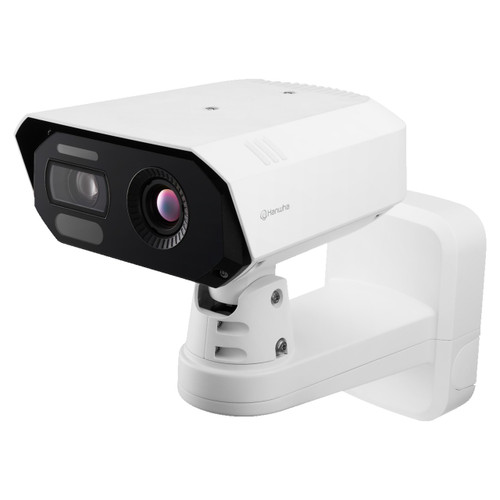
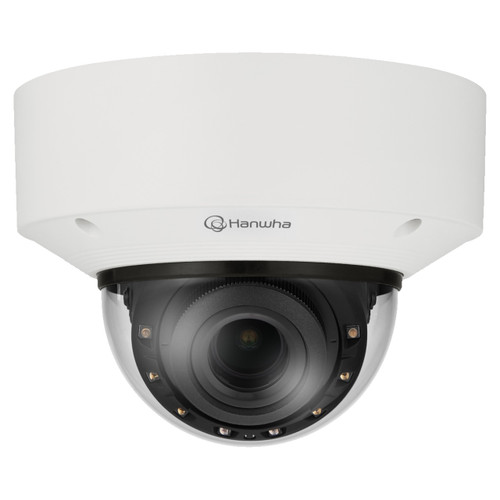
Both the Hanwha TNM-C4950TD and XNV-C9083R are 8MP 4K outdoor dome cameras rated IP66/IK10, aimed at perimeter and area surveillance installations. Despite sharing a resolution class and dome form factor, they are fundamentally different technology platforms: the C4950TD is a bi-spectrum thermal-plus-visible camera with AI fire and temperature analytics, while the C9083R is a conventional IR-illuminated visible-light dome with AI object classification. This comparison helps installers and IT buyers decide which platform fits their detection mission and infrastructure.
In This Guide
How do the imaging specs compare?
The TNM-C4950TD pairs a 1/1.8" CMOS sensor delivering 8MP visible video with an uncooled micro-bolometer thermal sensor at VGA resolution. The visible lens is a 2.6× motorized varifocal (10.9–29mm, F1.7–F1.73), while the thermal channel uses a fixed 13.5mm F1.0 lens with 12µm pixel pitch and <60mK NETD sensitivity. Minimum illumination on the visible channel is 0.06 lux color / 0.005 lux B/W, supplemented by thermal imaging that effectively operates at 0 lux. WDR is rated at 120dB. Thermal detection ranges reach 200m (wide) to 583m (tele) at 25PPM per the Johnson criteria.
The XNV-C9083R uses a 1/1.8" progressive CMOS sensor at 3840×2160 with a 2.1× motorized varifocal lens (4.4–9.3mm, F1.3–F2.15). Minimum illumination is 0.04 lux color / 0 lux with IR active, supported by WiseIR LEDs rated to 40m (131ft). WDR is also rated at 120dB (extremeWDR). Detection ranges at 25PPM reach 50.8m (wide) to 176.6m (tele) — substantially shorter than the thermal channel on the C4950TD, reflecting the difference between active IR and passive thermal imaging. The C9083R includes a P-iris IR-corrected lens and supports Defog, which is not listed for the C4950TD.
What about installation and environment?
Both cameras are rated IP66/IP67, IK10, and NEMA 4X, and both operate down to −40°C. The C4950TD's upper operating limit is +60°C versus the C9083R's +55°C. The C4950TD draws up to 23.5W and requires PoE+ (IEEE 802.3at, Class 4) or 12VDC; the C9083R draws only 12.95W and is satisfied by standard PoE (IEEE 802.3af, Class 3), which significantly broadens switch and injector compatibility. The C4950TD also carries NEMA TS 2 certification, not listed for the C9083R, which is relevant for traffic and roadway installations.
Physically, the C4950TD is a large bi-spectrum dome: 353.4 × 287.5 × 191.2mm and 4.533kg. The C9083R is a compact standard dome: ø160 × 118mm and 1.45kg. The C9083R specifies compatible conduit knockouts (1/2"/M20) and a hanging mount accessory (SBP-167HMW); equivalent mounting accessories for the C4950TD are not enumerated in the provided specs. The C9083R also lists a pan/tilt/rotate adjustment range (0–360° / −45°–75° / 0–355°), while the C4950TD does not include this data in the provided specs.
Which fits your VMS and analytics better?
The TNM-C4950TD supports ONVIF Profile S/T, SUNAPI, and Wisenet Open API, and streams up to 3 profiles simultaneously to 6 unicast users. Its AI analytics are thermal-specific: fire detection, perimeter breach, and temperature anomaly. The C4950TD includes 4 configurable I/O ports, dual Micro SD slots (up to 512GB total), and carries TPM 2.0 (FIPS 140-2 Level 2) hardware security — not listed for the C9083R. The ethernet port is Gigabit (10/100/1000BASE-T).
The XNV-C9083R supports a broader ONVIF profile set — S/G/T/M — and adds MQTT protocol support and CDP, neither of which are listed for the C4950TD. It streams up to 10 profiles simultaneously (including 3 virtual channels) to 20 unicast users, substantially higher than the C4950TD. Its AI analytics classify objects as person, face, vehicle, and license plate, and include people counting, queue management, and heatmap — retail and access-control intelligence not present in the C4950TD. Edge storage is a single Micro SD slot (up to 512GB). The C9083R's ethernet is 10/100BASE-T only. Both cameras include audio in and out, 802.1X authentication, H.265/H.264/MJPEG compression, and WiseStream II/III smart codec.
Which should you choose: the C4950TD or the C9083R?
Our take: The C4950TD is the stronger choice when passive thermal detection, fire/smoke anomaly alerting, or long-range perimeter surveillance in zero-light conditions is the mission requirement. Its thermal channel extends detection range to 583m (tele, 25PPM) versus the C9083R's 176.6m (tele, 25PPM), it carries FIPS 140-2 Level 2 hardware security via TPM 2.0, and its NEMA TS 2 rating suits roadway deployments. However, it demands PoE+ (23.5W vs 12.95W), is nearly four times heavier (4.533kg vs 1.45kg), and supports fewer simultaneous streams (6 vs 20 unicast) and fewer ONVIF profiles. The C9083R is the appropriate pick for standard perimeter and retail deployments requiring AI object/plate classification, broader VMS compatibility via ONVIF Profile G/M and MQTT, a compact dome footprint, and standard PoE infrastructure.
Side-by-Side Comparison
Spec-for-spec, from manufacturer data.
| Specification | Hanwha C4950TD | Hanwha C9083R |
|---|---|---|
| Camera Type | Bi-spectrum thermal + visible dome | IR visible-light dome |
| Visible Resolution | 8MP (3840×2160 implied) | 8MP (3840×2160) |
| Image Sensor | 1/1.8" CMOS (visible) + uncooled micro-bolometer (thermal) | 1/1.8" progressive CMOS |
| Thermal Sensor / NETD | VGA uncooled bolometer, 12µm pixel, <60mK NETD | — |
| Lens / Focal Length | Visible: 10.9–29mm varifocal (2.6×); Thermal: 13.5mm fixed | 4.4–9.3mm motorized varifocal (2.1×) |
| Min. Illumination | 0.06 lux color / 0.005 lux B/W (visible); 0 lux (thermal) | 0.04 lux color / 0 lux (IR on) |
| IR Range | — (thermal; no IR LEDs) | WiseIR 40m (131ft) |
| Detection Range (25PPM, tele) | 583.4m (1,913ft) | 176.6m (579ft) |
| WDR | 120dB | 120dB (extremeWDR) |
| Max Frame Rate | 30fps | 30fps @ 8MP |
| Video Compression | H.265 / H.264 / MJPEG | H.265 / H.264 / MJPEG |
| ONVIF Profiles | S / T | S / G / T / M |
| Simultaneous Unicast Users / Profiles | 6 users / 3 profiles | 20 users / 10 profiles |
| AI Analytics | Fire detection, perimeter breach, temperature anomaly, vehicle counting | Person / face / vehicle / plate detection, people counting, queue mgmt, heatmap |
| Alarm I/O Ports | 4 configurable | 2 configurable |
| Edge Storage | 2× Micro SD/SDHC/SDXC slots, up to 512GB | 1× Micro SD/SDHC/SDXC slot, up to 512GB |
| Hardware Security | TPM 2.0 (FIPS 140-2 Level 2) | — |
| Ethernet | 10/100/1000BASE-T (Gigabit) | 10/100BASE-T |
| Additional Protocols | SRTP | SRTP, MQTT, CDP |
| Power Input / PoE Class | PoE+ 802.3at Class 4 or 12VDC | PoE 802.3af Class 3 or 12VDC |
| Max Power Draw | 23.5W | 12.95W |
| IP / IK Rating | IP66 / IP67 / IK10 / NEMA 4X | IP66 / IP67 / IK10 / NEMA 4X |
| Operating Temperature | −40°C to +60°C | −40°C to +55°C |
| Additional Certifications | NEMA TS 2 (2.2.8, 2.2.9), TAA | UL 62368-1, FCC, CE/UKCA, VCCI, RCM, IEC/EN 63000 |
| Dimensions | 353.4 × 287.5 × 191.2mm (13.92 × 11.32 × 7.53in) | ø160 × 118mm (ø6.30 × 4.65in) |
| Weight | 4.533kg (9.99 lb) | 1.45kg (3.20 lb) |
| Warranty | 3-year | 3-year |
Frequently Asked Questions
Which should you choose: the C4950TD or the C9083R?
The C4950TD is the stronger choice when passive thermal detection, fire/smoke anomaly alerting, or long-range perimeter surveillance in zero-light conditions is the mission requirement. Its thermal channel extends detection range to 583m (tele, 25PPM) versus the C9083R's 176.6m (tele, 25PPM), it carries FIPS 140-2 Level 2 hardware security via TPM 2.0, and its NEMA TS 2 rating suits roadway deployments. However, it demands PoE+ (23.5W vs 12.95W), is nearly four times heavier (4.533kg vs 1.45kg), and supports fewer simultaneous streams (6 vs 20 unicast) and fewer ONVIF profiles. The C9083R is the appropriate pick for standard perimeter and retail deployments requiring AI object/plate classification, broader VMS compatibility via ONVIF Profile G/M and MQTT, a compact dome footprint, and standard PoE infrastructure.
Is the C4950TD or C9083R better for complete darkness with no lighting infrastructure?
The C4950TD is better suited for total darkness because its uncooled thermal sensor detects heat signatures passively, requiring no illumination at all and providing detection ranges up to 583m (tele, 25PPM). The C9083R relies on its WiseIR LED illuminator, which is rated to 40m (131ft), beyond which IR-based imaging degrades. If the scene extends beyond 40m and has no lighting, the C9083R cannot produce usable imagery while the C4950TD's thermal channel continues to operate.
Can I power both cameras from a standard 802.3af PoE switch?
No. The C9083R draws 12.95W and operates on standard PoE (IEEE 802.3af, Class 3), which a standard PoE switch provides. The C4950TD draws up to 23.5W and requires PoE+ (IEEE 802.3at, Class 4); a standard 802.3af switch will not deliver sufficient power and the camera will not operate correctly. You will need a PoE+ capable switch or midspan injector for the C4950TD.
Which camera supports more VMS platforms and IT security integration features?
The C9083R offers broader VMS and IT integration: it supports ONVIF Profiles S, G, T, and M (versus S and T on the C4950TD), adds MQTT and CDP protocols not listed for the C4950TD, supports up to 20 unicast streaming users across 10 profiles (versus 6 users and 3 profiles on the C4950TD), and lists a 'Secure by default certificate' feature. The C4950TD counters with TPM 2.0 hardware security (FIPS 140-2 Level 2) and a Gigabit ethernet port, neither of which are listed for the C9083R.
Get a Second Opinion on Your Camera Choice
Share your site layout, coverage goals, and budget. Our team will validate the camera selection, flag anything we would change, and recommend products that match the use case.