
Geovision ABL871W-0010 vs Geovision TBL8810-0010: Specification Comparison
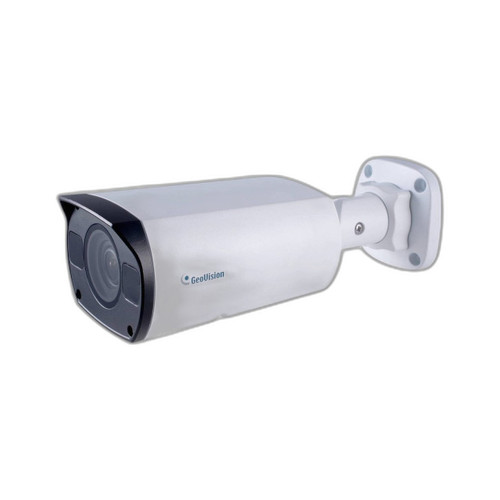
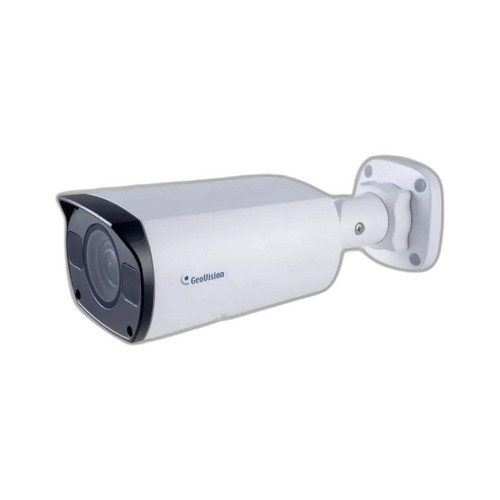
Both the Geovision ABL871W-0010 and TBL8810-0010 are 8MP H.265 bullet IP cameras from Geovision, making them legitimate cross-shop candidates for perimeter and wide-area fixed surveillance deployments. This comparison evaluates their imaging capabilities, installation requirements, and integration features based strictly on provided specifications, to help installers and IT buyers determine which unit better fits a given project's technical and operational requirements.
In This Guide
How do the imaging specs compare?
Both cameras deliver 8MP resolution with H.265 compression and WDR Pro processing. The ABL871W-0010 specifies a 4.3x zoom lens without a fixed focal-length figure, while the TBL8810-0010 explicitly states a 4.3mm fixed focal length with 4.3x optical zoom — the two lens descriptors likely describe different configurations, but the provided specs do not supply enough data (e.g., sensor size, zoom range end-points) to confirm equivalence or difference. Both cameras carry IR night vision; the TBL8810-0010 additionally specifies automatic day/night switching and a 'super low lux' minimum illumination rating, whereas no minimum illumination figure or switching specification is provided for the ABL871W-0010.
WDR Pro is listed for both models, so mixed-lighting performance should be comparable at the feature level. However, no numeric WDR range (in dB) is provided for either unit, preventing a quantitative comparison. IR range figures are absent for both models, limiting the ability to evaluate nighttime coverage distance. The TBL8810-0010's explicit 'super low lux' and 'IR illumination; Automatic day/night switching' entries give it a documented low-light edge in the provided spec set; the ABL871W-0010 provides no equivalent data point.
What about installation and environment?
Neither model's provided specifications include an IP ingress-protection rating, IK impact rating, operating temperature range, or physical dimensions and weight. This is a significant data gap for an outdoor perimeter bullet camera comparison, as buyers need these values to confirm suitability for exposed mounting locations, wash-down environments, or extreme climates. The TBL8810-0010 explicitly lists Wall, Eave, and Pole as supported mount types; the ABL871W-0010 does not specify mount types in the provided data.
Power input and PoE class information is not provided for the ABL871W-0010. The TBL8810-0010's Card Bullet 3 references 'PoE (802.3af/at) support,' indicating dual-standard PoE compatibility, though this appears in marketing copy rather than a dedicated spec field. No PoE reference of any kind exists for the ABL871W-0010 in the provided specifications. Cable Category differs: the ABL871W-0010 is classified under 'IPPTZCam' and the TBL8810-0010 under 'Accessories,' which appears to be an internal catalog-routing field rather than a technical differentiator.
Which fits your VMS and analytics better?
The TBL8810-0010 carries an explicit ONVIF: Yes specification and lists VMS compatibility with 'ONVIF-compliant systems,' making its interoperability with third-party NVRs and VMS platforms a confirmed spec. It also lists 'AI-based' analytics, providing a foundation for edge-based detection tasks, though the specific analytic functions (e.g., line crossing, intrusion detection, face detection) are not enumerated in the provided data. The ABL871W-0010 does not list ONVIF compliance or any analytics capability in its provided specifications.
Neither model provides data on on-board storage (SD card slot), audio input/output, or alarm I/O in the provided spec sets. The ABL871W-0010's 'Compatible With: reliable' and the TBL8810-0010's 'Compatible With: round-the-clock' entries appear to be non-technical catalog tags rather than integration specifications and are not used as technical differentiators in this analysis. Buyers requiring confirmed ONVIF interoperability or edge analytics should treat the TBL8810-0010 as the documented option based on available data.
Which should you choose: the ABL871W-0010 or the TBL8810-0010?
Our take: The TBL8810-0010 is the stronger documented choice when ONVIF compliance, AI-based edge analytics, and explicit PoE 802.3af/at compatibility are project requirements. Based on the provided specifications, the TBL8810-0010 is the only model of the two with a confirmed ONVIF: Yes entry, a documented 'AI-based' analytics capability, and an explicit PoE 802.3af/at reference — three concrete differentiators absent from the ABL871W-0010's provided spec set. The TBL8810-0010 also lists Wall, Eave, and Pole mounting options and specifies super low lux minimum illumination plus automatic day/night switching, none of which appear in the ABL871W-0010 data. However, IP rating, IK rating, operating temperature, IR range, and sensor dimensions are missing for both models, so full environmental suitability cannot be confirmed from available data alone. Buyers should request complete datasheets before finalizing selection for exposed outdoor or harsh-environment deployments.
Side-by-Side Comparison
Spec-for-spec, from manufacturer data.
| Specification | Geovision ABL871W-0010 | Geovision TBL8810-0010 |
|---|---|---|
| Resolution | 8 MP | 8 MP |
| Camera Type | Bullet IP Camera | IR Bullet Camera |
| Lens / Focal Length | 4.3x zoom (focal length not specified) | 4.3mm; 4.3x optical zoom |
| Min Illumination | — | Super low lux |
| IR Night Vision | IR | IR illumination; Automatic day/night switching |
| WDR | WDR Pro | WDR Pro |
| Video Compression | H.265 | H.265 |
| ONVIF | — | Yes |
| Analytics | — | AI-based |
| PoE / Power Input | — | PoE 802.3af/at (referenced in product copy) |
| Mount Types | — | Wall; Eave; Pole |
| VMS Compatibility | — | ONVIF-compliant systems |
Frequently Asked Questions
Which should you choose: the ABL871W-0010 or the TBL8810-0010?
The TBL8810-0010 is the stronger documented choice when ONVIF compliance, AI-based edge analytics, and explicit PoE 802.3af/at compatibility are project requirements. Based on the provided specifications, the TBL8810-0010 is the only model of the two with a confirmed ONVIF: Yes entry, a documented 'AI-based' analytics capability, and an explicit PoE 802.3af/at reference — three concrete differentiators absent from the ABL871W-0010's provided spec set. The TBL8810-0010 also lists Wall, Eave, and Pole mounting options and specifies super low lux minimum illumination plus automatic day/night switching, none of which appear in the ABL871W-0010 data. However, IP rating, IK rating, operating temperature, IR range, and sensor dimensions are missing for both models, so full environmental suitability cannot be confirmed from available data alone. Buyers should request complete datasheets before finalizing selection for exposed outdoor or harsh-environment deployments.
Is the ABL871W-0010 or TBL8810-0010 better for low-light performance?
Based on the provided specifications, the TBL8810-0010 has a documented advantage: it explicitly lists 'super low lux' minimum illumination and 'automatic day/night switching.' The ABL871W-0010 lists IR night vision but provides no minimum illumination figure or day/night switching specification, making a quantitative low-light comparison impossible from the available data.
Will either camera work with my existing ONVIF-compliant VMS?
The TBL8810-0010 carries an explicit ONVIF: Yes specification and lists compatibility with ONVIF-compliant VMS systems. The ABL871W-0010 does not include an ONVIF statement in the provided specifications. If ONVIF compliance is a hard requirement, the TBL8810-0010 is the confirmed option based on available data.
Do both cameras support PoE, and can I power them from a standard PoE switch?
Only the TBL8810-0010 references PoE support (802.3af/at) in its provided data, indicating compatibility with both standard and high-power PoE switches. No power input or PoE specification is provided for the ABL871W-0010. Buyers should verify power requirements for the ABL871W-0010 directly with the manufacturer's datasheet before assuming PoE compatibility.
Get a Second Opinion on Your Camera Choice
Share your site layout, coverage goals, and budget. Our team will validate the camera selection, flag anything we would change, and recommend products that match the use case.