
Digital Watchdog V6563WTIR vs Hanwha PNM-9085RQZ1: Specification Comparison
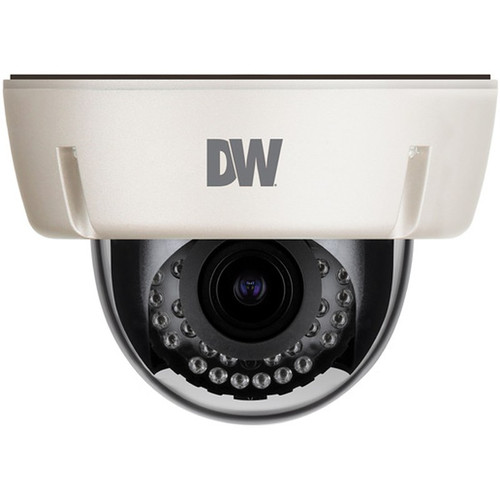
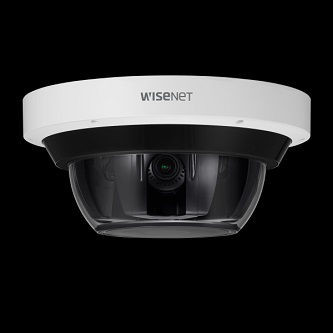
Both the Digital Watchdog DWC-V6563WTIR and the Hanwha PNM-9085RQZ1 are outdoor-rated, vandal-resistant dome cameras with 5MP imaging and built-in IR, positioned for perimeter and general surveillance. However, they differ substantially in architecture: the DW is a single-sensor analog-hybrid coax camera with vari-focal optics, while the Hanwha is a quad-sensor, all-IP network camera delivering 20MP aggregate coverage from one unit. Buyers cross-shopping these should weigh single-channel HD-over-coax legacy integration against multi-sensor IP flexibility.
In This Guide
How do the imaging specs compare?
The DWC-V6563WTIR uses a single 1/2.8" 5MP CMOS sensor (2608×1960) with a vari-focal 2.7–13.5mm lens covering 102°–31.4° HFOV and a 100-foot Smart IR range. Minimum illumination is 0.08 lux in color and 0.0 lux in B/W. WDR is specified at 120dB True WDR. Frame rate is listed as variable with no explicit fps figure provided in the spec sheet.
The PNM-9085RQZ1 deploys four independent 1/1.8" 5MP CMOS sensors (2560×1920 each) with motorized varifocal 4.13–9.4mm lenses at a 2.3x zoom ratio and 87.58°×64.58° angular FOV per channel. Minimum illumination is 0.11 lux color and 0 lux IR. WDR is also rated at 120dB. Frame rate is a specified 30fps per channel. The Hanwha's four larger 1/1.8" sensors provide more light-gathering area per channel than the DW's single 1/2.8" sensor, and the Hanwha also includes digital image stabilization, defocus detection, and fog detection as analytics—none of which are listed in the DW spec sheet.
What about installation and environment?
Both cameras carry IP66 and IK10 ratings. The Hanwha adds NEMA 4X certification, which is not listed for the DW. Operating temperature for the DW is -20°C to +50°C (-4°F to +122°F); the Hanwha extends this significantly to -40°C to +55°C (-40°F to +131°F), making it the clear choice for cold-climate deployments.
Power requirements differ substantially. The DW draws a maximum of 5.3W and accepts 24VAC, 12VDC, or PoE Class 2 (IEEE 802.3af). The Hanwha requires HPoE (IEEE 802.3bt, Class 6, Type 3) at up to 45W to power four sensors and motorized lenses simultaneously, or 12VDC. The DW is a single compact dome at 145×108.3mm weighing 0.9kg; the Hanwha is substantially larger at Ø315×145.9mm and 5.2kg, requiring a compatible HPoE switch port or injector and a sturdier mounting structure.
Which fits your VMS and analytics better?
The DWC-V6563WTIR is an analog-hybrid device transmitting over coax (CVBS, 960H, HD-Analog, HD-CVI, HD-TVI, HD over Coax) with camera control via Pelco C, UTC, or UTP protocols. It is not listed as an IP network camera and does not carry ONVIF certification per the provided specs. Edge storage, H.265 compression, and IP-based analytics are not listed. Motion detection and 24 programmable privacy zones are supported. Audio is not mentioned in the spec sheet.
The PNM-9085RQZ1 is a full IP camera with Gigabit Ethernet (10/100/1000BASE-T), ONVIF Profile S/T compliance, H.265/H.264/MJPEG compression, and up to 10 streaming profiles. It supports unicast (20 users) and multicast. On-board analytics include directional detection, enter/exit, loitering, face detection, virtual line, audio detection, and more. Edge storage is provided via 4× Micro SD/SDHC/SDXC slots (up to 256GB each channel). Audio in (mic/line selectable) and line out are both supported. Security features include 802.1X (EAP-TLS, EAP-LEAP), HTTPS/SSL, and IP filtering.
Which should you choose: the V6563WTIR or the PNM-9085RQZ1?
Our take: The DWC-V6563WTIR is the stronger choice when retrofitting a coax-based HD-over-analog infrastructure where IP networking is unavailable or cost-prohibitive. Its 2.7–13.5mm vari-focal lens offers a wider zoom range (4.67:1 vs. 2.3:1) and longer IR reach (100ft vs. 98ft), and its 5.3W Class 2 PoE draw means any standard 802.3af switch port or existing coax plant can power it. In contrast, the PNM-9085RQZ1 multiplies effective coverage by deploying four 1/1.8" sensors simultaneously, supports H.265 compression, delivers 30fps per channel, includes extensive IP analytics (loitering, virtual line, face detection), four SD card slots, bidirectional audio, ONVIF compliance, and operates down to -40°C—capabilities the DW spec sheet does not list. Buyers running an IP VMS on a modern HPoE switch infrastructure covering wide open areas will find the Hanwha's quad-sensor architecture more capable, at the cost of a significantly larger footprint and 45W power budget.
Side-by-Side Comparison
Spec-for-spec, from manufacturer data.
| Specification | Digital Watchdog V6563WTIR | Hanwha PNM-9085RQZ1 |
|---|---|---|
| Camera Architecture | Single-sensor analog-hybrid (coax) | Quad-sensor IP network camera |
| Image Sensor | 1/2.8" 5MP CMOS ×1 | 1/1.8" 5MP CMOS ×4CH |
| Resolution | 2608×1960 | 2560×1920 per channel (4 channels) |
| Max Frame Rate | Variable (not specified) | 30fps per channel |
| Lens / Focal Length | Vari-focal 2.7–13.5mm (2.7–13.5mm motorized) | Motorized varifocal 4.13–9.4mm (2.3x) |
| Horizontal FOV | 102°–31.4° | 87.58° per channel |
| Min Illumination (Color / IR) | 0.08 lux color / 0.0 lux B/W | 0.11 lux color / 0 lux IR |
| IR Range | 100ft (30m) | 98.43ft (30m) |
| WDR | 120dB True WDR | 120dB (BLC, HLC, WDR, SSDR) |
| Video Compression | Analog signal (CVBS/HD-over-Coax); no IP codec listed | H.265 / H.264 / MJPEG |
| IP Rating | IP66 | IP66 / NEMA 4X |
| IK / Impact Rating | IK10 | IK10 |
| Operating Temperature | -20°C to +50°C (-4°F to +122°F) | -40°C to +55°C (-40°F to +131°F) |
| Power Input / PoE Class | 24VAC / 12VDC / PoE Class 2 (802.3af); 5.3W max | HPoE 802.3bt Class 6 / 12VDC; 45W max |
| Edge Storage | — | 4× Micro SD/SDHC/SDXC up to 256GB each |
| Audio | — | Audio in (mic/line selectable) + line out |
| ONVIF | — | ONVIF Profile S/T |
| Analytics | Motion detection, 24 privacy zones | Loitering, Enter/Exit, Virtual line, Face detection, Defocus, Fog, Directional, Audio detection, +more |
| Dimensions | 145×108.3mm (5.7"×4.26") | Ø315×145.9mm (12.40"×5.74") |
| Weight | 0.9kg (1.98 lbs) | 5.2kg (11.5 lbs) |
| Warranty | 5 years | 3 years |
Frequently Asked Questions
Which should you choose: the V6563WTIR or the PNM-9085RQZ1?
The DWC-V6563WTIR is the stronger choice when retrofitting a coax-based HD-over-analog infrastructure where IP networking is unavailable or cost-prohibitive. Its 2.7–13.5mm vari-focal lens offers a wider zoom range (4.67:1 vs. 2.3:1) and longer IR reach (100ft vs. 98ft), and its 5.3W Class 2 PoE draw means any standard 802.3af switch port or existing coax plant can power it. In contrast, the PNM-9085RQZ1 multiplies effective coverage by deploying four 1/1.8" sensors simultaneously, supports H.265 compression, delivers 30fps per channel, includes extensive IP analytics (loitering, virtual line, face detection), four SD card slots, bidirectional audio, ONVIF compliance, and operates down to -40°C—capabilities the DW spec sheet does not list. Buyers running an IP VMS on a modern HPoE switch infrastructure covering wide open areas will find the Hanwha's quad-sensor architecture more capable, at the cost of a significantly larger footprint and 45W power budget.
Is the DWC-V6563WTIR or PNM-9085RQZ1 better for low-light performance?
Both cameras specify 0 lux IR (B/W) performance. In color mode, the DWC-V6563WTIR is rated at 0.08 lux versus 0.11 lux for the PNM-9085RQZ1, giving the DW a slight color low-light edge per the published specs. However, the Hanwha's larger 1/1.8" sensors (vs. 1/2.8") have a greater light-gathering area, which is a physical advantage not fully captured by a single lux number.
Can I use either camera on my existing coax or analog system?
Only the DWC-V6563WTIR supports analog coax output (CVBS, 960H, HD-CVI, HD-TVI, HD over Coax). The PNM-9085RQZ1 is an IP-only network camera requiring a Gigabit Ethernet connection and an HPoE (802.3bt) switch or injector; it cannot connect to a coax-based DVR or analog recorder.
Which camera is better suited for cold-weather outdoor installations?
The Hanwha PNM-9085RQZ1 is rated for operation down to -40°C (-40°F), compared to -20°C (-4°F) for the DWC-V6563WTIR. For deployments in northern climates or unheated enclosures where temperatures drop below -20°C, the Hanwha is the specified choice based on the provided operating temperature ranges.
Get a Second Opinion on Your Camera Choice
Share your site layout, coverage goals, and budget. Our team will validate the camera selection, flag anything we would change, and recommend products that match the use case.