
Axis M4318-PLVE vs Hanwha QNF-9010: Specification Comparison
Both the Axis M4318-PLVE and the Hanwha QNF-9010 are 12MP fixed panoramic/fisheye IP cameras sharing a 1/2.3" CMOS sensor and 360°-class wide-angle coverage, making them direct cross-shop candidates for open-area surveillance. The comparison covers imaging performance, installation and environmental suitability, and VMS/analytics integration — the three axes most relevant to a specifier choosing between these two platforms for indoor or outdoor deployment.
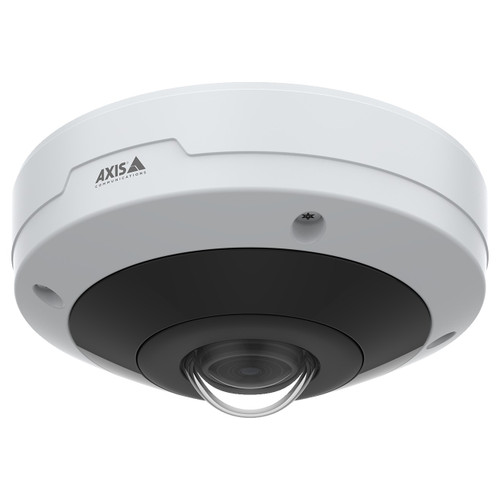
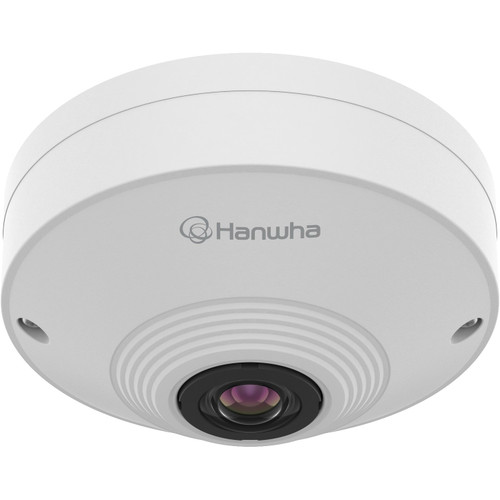
In This Guide
How do the imaging specs compare?
Both cameras deliver 12MP resolution, but their pixel arrays differ: the Axis M4318-PLVE produces a 2992×2992 frame versus the Hanwha QNF-9010's 3008×3008. Both run at 30fps (25fps in 50Hz regions for the Axis). The M4318-PLVE uses a 1.2mm fixed stereographic lens covering 182° H×V, while the QNF-9010 uses a 1.08mm fixed lens at F2.2 with a wider 187° H/V/D field of view. The QNF-9010 specifies a maximum aperture of F2.2; no equivalent aperture figure is provided in the Axis M4318-PLVE specification data supplied.
Low-light performance diverges meaningfully: the Axis M4318-PLVE specifies a minimum illumination of 0.19 lux (color), aided by built-in OptimizedIR 850nm illuminators and Lightfinder technology, giving it an active IR night-vision capability. The Hanwha QNF-9010 specifies 0.39 lux color minimum illumination and is classified as Day & Night via Auto (Electrical) — the spec data indicates a built-in IR flag, but no dedicated IR illuminator range or IR wavelength is stated. WDR is rated at 120dB on the QNF-9010 (specified); the Axis M4318-PLVE lists Forensic WDR but does not state a dB value in the provided specification data. The Axis also includes Zipstream bandwidth-reduction technology; the Hanwha equivalent is WiseStream II.
What about installation and environment?
Environmental ratings separate these cameras sharply. The Axis M4318-PLVE carries an IP66 rating and IK10 vandal resistance, and is rated for outdoor use across -40°C to +50°C. The Hanwha QNF-9010 is rated IP42 only — dust ingress is not fully excluded and it provides limited water protection — and is specified for indoor use with an operating range of -10°C to +40°C. No IK impact rating is stated for the QNF-9010 in the provided data. The M4318-PLVE is therefore the only option of the two rated for outdoor or harsh-environment installation.
On power, the Axis M4318-PLVE requires PoE+ (802.3at) while the Hanwha QNF-9010 operates on standard PoE (IEEE 802.3af, Class 3, max 7.7W). Installers using existing 802.3af infrastructure would need to verify switch compatibility before deploying the Axis unit. The Axis ships as a dome and supports pendant, corner, recessed, and rack mounting. The Hanwha is a compact dome (Ø99×49mm, 370g) specified for wall and ceiling mount. Axis memory is stated as 2048MB RAM / 8192MB Flash; the QNF-9010 carries 2048MB RAM / 256MB Flash.
Which fits your VMS and analytics better?
Both cameras support ONVIF. The Axis M4318-PLVE is certified for ONVIF Profile G, M, S, and the QNF-9010 supports ONVIF Profile S, G, and T. The Hanwha additionally exposes SUNAPI (HTTP API) and the Wisenet open platform. The Axis integrates via VAPIX and the Open API. Both carry microSD/SDXC edge storage; the QNF-9010 states a maximum of 256GB, while no maximum capacity figure is given in the Axis specification data provided.
Analytics differ in scope and type. The QNF-9010 includes on-board people counting, heatmap, defocus detection, motion detection (4 polygonal zones), and tampering detection. The Axis M4318-PLVE lists Deep Learning Processing Unit (DLPU)-based Object Analytics. Neither camera specifies a built-in microphone or line-in audio input in the supplied data — the Axis references I/O connectivity via Portcast technology but no discrete audio specification is given for either unit. The QNF-9010 specifies a CVBS analog video output (720×480/576) for installation purposes. The Axis M4318-PLVE supports multi-view dewarping outputs including quadview, corridor, and corner crops. Both support H.265 and H.264; the QNF-9010 adds MJPEG; the Axis adds Zipstream. The QNF-9010 protocol stack is more extensively documented in the provided data, including SNMPv1/v2c/v3, 802.1X (EAP-TLS, EAP-LEAP), and IPv6.
Which should you choose: the M4318-PLVE or the QNF-9010?
Our take: The M4318-PLVE is the stronger choice when the deployment is outdoors, in harsh environments, or requires active IR night vision. Its IP66+IK10 rating versus the QNF-9010's IP42 indoor-only rating is a hard specification gate: the Hanwha cannot be installed in outdoor or wet locations per its listed rating. The Axis achieves 0.19 lux minimum illumination with OptimizedIR illuminators versus the QNF-9010's 0.39 lux electrical day/night, a roughly 2× low-light advantage. The QNF-9010 covers a marginally wider 187° field versus 182°, runs on standard 802.3af PoE (versus PoE+ required by the Axis), and explicitly documents people-counting and heatmap analytics — making it the more practical selection for indoor retail or occupancy intelligence applications on existing 802.3af infrastructure. Platform qualifier: QNF-9010 suits Wisenet/SUNAPI-native VMS environments; M4318-PLVE suits VAPIX/Axis ecosystem deployments.
Side-by-Side Comparison
Spec-for-spec, from manufacturer data.
| Specification | Axis M4318-PLVE | Hanwha QNF-9010 |
|---|---|---|
| Resolution | 12MP (2992×2992) | 12MP (3008×3008) |
| Image Sensor | 1/2.3" CMOS | 1/2.3" 12M CMOS |
| Lens / Focal Length | 1.2mm fixed stereographic | 1.08mm fixed focal, F2.2 |
| Horizontal / Angular FOV | 182° H × 182° V | 187° H / 187° V / 187° D |
| Min. Illumination (Color) | 0.19 lux | 0.39 lux |
| Built-in IR | Yes — OptimizedIR 850nm + Lightfinder | Spec flags Yes; no IR wavelength or range stated |
| Wide Dynamic Range | Forensic WDR (dB not stated in supplied data) | 120dB WDR |
| Max Frame Rate | 30fps (25fps / 50Hz) | 30fps |
| Video Compression | H.265, H.264, Zipstream | H.265, H.264, MJPEG, WiseStream II |
| IP Rating | IP66 | IP42 |
| IK / Impact Rating | IK10 | — |
| Operating Temperature | -40°C to +50°C | -10°C to +40°C |
| Power Input / PoE Class | PoE+ (802.3at) | PoE (802.3af, Class 3, max 7.7W) |
| Edge Storage | microSD/SDHC/SDXC (max capacity not stated in supplied data) | microSD/SDHC/SDXC up to 256GB |
| ONVIF Profiles | Profile G, M, S | Profile S, G, T |
| On-board Analytics | DLPU Object Analytics | People counting, heatmap, defocus detection, motion detection (4 zones), tampering |
| Environment Rating | Outdoor | Indoor |
| Warranty | 5-year | 3-year |
Frequently Asked Questions
Which should you choose: the M4318-PLVE or the QNF-9010?
The M4318-PLVE is the stronger choice when the deployment is outdoors, in harsh environments, or requires active IR night vision. Its IP66+IK10 rating versus the QNF-9010's IP42 indoor-only rating is a hard specification gate: the Hanwha cannot be installed in outdoor or wet locations per its listed rating. The Axis achieves 0.19 lux minimum illumination with OptimizedIR illuminators versus the QNF-9010's 0.39 lux electrical day/night, a roughly 2× low-light advantage. The QNF-9010 covers a marginally wider 187° field versus 182°, runs on standard 802.3af PoE (versus PoE+ required by the Axis), and explicitly documents people-counting and heatmap analytics — making it the more practical selection for indoor retail or occupancy intelligence applications on existing 802.3af infrastructure. Platform qualifier: QNF-9010 suits Wisenet/SUNAPI-native VMS environments; M4318-PLVE suits VAPIX/Axis ecosystem deployments.
Is the Axis M4318-PLVE or Hanwha QNF-9010 better for low-light performance?
The Axis M4318-PLVE specifies a lower minimum illumination of 0.19 lux (color) and includes built-in OptimizedIR 850nm illuminators plus Lightfinder technology, allowing it to capture detail in near-darkness. The Hanwha QNF-9010 specifies 0.39 lux (color) and uses electrical day/night switching; no dedicated IR illuminator range is stated in the provided specification data. On the supplied specs, the M4318-PLVE has the measurable low-light advantage.
Can the Hanwha QNF-9010 be installed outdoors?
No — the QNF-9010 is rated IP42, which means only partial dust protection and splash resistance from vertically falling water. Its operating temperature range is -10°C to +40°C and it is specified as an indoor camera. The Axis M4318-PLVE is rated IP66 (dust-tight, jet-water resistant), IK10 vandal-resistant, and operates from -40°C to +50°C, making it the only outdoor-rated option of the two.
Will the Axis M4318-PLVE work on a standard 802.3af PoE switch?
No. The Axis M4318-PLVE requires PoE+ (802.3at) per the provided specification data. The Hanwha QNF-9010 operates on standard PoE (IEEE 802.3af, Class 3, max 7.7W). If your switch infrastructure is 802.3af-only, the QNF-9010 is compatible without a hardware upgrade, while the M4318-PLVE would require 802.3at-capable switch ports or a midspan injector.
Get a Second Opinion on Your Camera Choice
Share your site layout, coverage goals, and budget. Our team will validate the camera selection, flag anything we would change, and recommend products that match the use case.