
Aiphone GT-1A vs Aiphone IX-RS-W: Specification Comparison
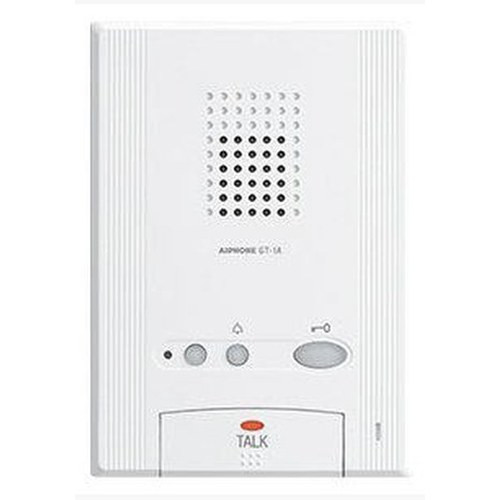
The Aiphone GT-1A and IX-RS-W are both in-unit audio intercom sub-stations — the GT-1A serving analog multi-unit residential deployments over a 2-conductor common bus, and the IX-RS-W targeting IP/SIP-based installations over a standard PoE network. Buyers choosing between an analog GT-series infrastructure and an IP IX-series infrastructure will evaluate these two units as the resident-side endpoint. This comparison covers connectivity and power architecture, audio capability and protocols, and physical form factor and environmental ratings — the three axes most relevant to this device class.

In This Guide
- How do the GT-1A and IX-RS-W differ in connectivity and power architecture?
- What are the audio capability and communication mode differences between the two stations?
- How do the two stations compare in physical dimensions, mounting, and operating environment?
- Which should you choose: the GT-1A or the IX-RS-W?
- Side-by-Side Specs
- FAQ
How do the GT-1A and IX-RS-W differ in connectivity and power architecture?
The GT-1A operates on a dedicated 2-conductor analog common bus using 2-conductor solid PE-insulated wire (Aiphone #872002 recommended), powered at 24V DC supplied by an external GT-BC power supply. It supports up to 4 stations per resident location on that bus. There is no IP, Ethernet, or network dependency; the entire infrastructure is proprietary analog wiring.
The IX-RS-W connects via a standard Ethernet port and draws power exclusively through PoE (IEEE 802.3af Class 0) at 4.32W — eliminating any separate power supply or proprietary bus wiring. It supports a full IP protocol stack including IPv4, IPv6, TCP, UDP, SIP, HTTP, HTTPS, RTSP, RTP, RTCP, IGMP, MLD, SMTP, SFTP, DHCP, NTP, and DNS, plus IEEE 802.1x port security for network access control.
The architectural implication is significant: the GT-1A requires a GT-BC power supply and proprietary bus runs to each tenant, while the IX-RS-W drops onto any 802.3af-capable switch port. Facilities with existing structured cabling favor the IX-RS-W; greenfield or retrofit buildings without network infrastructure favor the GT-1A's simpler analog bus.
What are the audio capability and communication mode differences between the two stations?
The GT-1A supports two-way audio via microphone and offers two selectable communication modes: hands-free VOX (voice-operated switching) or push-to-talk simplex. No audio codec specification is published in the provided specs for this model.
The IX-RS-W supports G.711 (both μ-law and A-law variants) and G.722 wideband audio codecs, delivering higher audio fidelity potential via G.722. It includes a privacy handset, a built-in speaker rated at 8Ω/2W output, one trigger input, and one contact output for ancillary device integration (e.g., door release or alarm). The SIP compatibility means it can register with any SIP-compliant call server or IP PBX — not just Aiphone IX-series controllers.
The GT-1A's VOX/simplex modes are well-understood for tenant intercom use but impose half-duplex constraints in push-to-talk mode. The IX-RS-W's codec flexibility and full-duplex IP audio represent a measurable quality and flexibility advantage, though the GT-1A's communication mode spec (VOX hands-free) does suggest full hands-free capability in VOX mode.
How do the two stations compare in physical dimensions, mounting, and operating environment?
The GT-1A measures 5.3 × 4.7 × 1.6 in and weighs 0.95 lb. It mounts on a standard 3-gang electrical box or flat surface, with an optional desk mount also supported. Country of origin is Vietnam. Warranty is 2 years. Operating temperature is 32–104°F (0–40°C).
The IX-RS-W measures 7-9/16" H × 3-9/16" W × 2-5/8" D (approximately 7.56 × 3.56 × 2.63 in). No weight is listed in the provided specs. Mounting method is not specified beyond the implied wall/surface installation. Compliance certifications include UL 62368-1 and cUL 62368-1. Operating temperature is also 32–104°F (0–40°C). No country of origin or warranty term is provided in the available specs.
The IX-RS-W is taller and deeper than the GT-1A, which may affect rough-in box selection. Both units share the same operating temperature range, making them equivalent for standard indoor conditioned-space installations. The IX-RS-W's UL 62368-1 safety listing is explicitly documented; the GT-1A's safety listing is not stated in the provided specs.
Which should you choose: the GT-1A or the IX-RS-W?
Our take: The GT-1A is the stronger choice when deploying a self-contained analog tenant intercom system in multi-unit residential buildings where no Ethernet infrastructure exists and cost-per-run simplicity matters — its 2-conductor bus, 24V DC architecture, and support for up to 4 stations per location suit that use case directly. The IX-RS-W is the stronger choice when IP infrastructure is already in place or SIP integration is required: it delivers PoE-powered operation at 4.32W (no external power supply), supports G.722 wideband audio versus no published codec on the GT-1A, and adds IEEE 802.1x port security and a full SIP/IP protocol stack including IPv4/IPv6. The privacy handset and contact output on the IX-RS-W also provide hardware features absent from the GT-1A's spec sheet. Platform lock-in is the decisive qualifier: GT-1A requires Aiphone GT-series infrastructure; IX-RS-W is SIP-compatible and can integrate with third-party call servers.
Side-by-Side Comparison
Spec-for-spec, from manufacturer data.
| Specification | Aiphone GT-1A | Aiphone IX-RS-W |
|---|---|---|
| Device Class | Audio Tenant Station (Analog) | IP Audio Room Sub-Station (SIP) |
| Power Source | 24V DC from GT-BC power supply | PoE IEEE 802.3af Class 0 |
| Power Draw | — | 4.32W |
| Network / Bus | 2-conductor analog common bus | Ethernet (IPv4, IPv6, SIP, TCP/UDP) |
| SIP Compatible | — | Yes |
| Audio Codecs | — | G.711 (μ-law, A-law), G.722 |
| Communication Mode | Hands-free VOX or push-to-talk simplex | — |
| Speaker Output | — | 8Ω, 2W |
| Privacy Handset | — | Yes (included) |
| Trigger Input | — | 1 |
| Contact Output | — | 1 |
| Port Security | — | IEEE 802.1x |
| Safety Listing | — | UL 62368-1, cUL 62368-1 |
| Max Stations per Location | 4 | — |
| Dimensions (H × W × D) | 5.3 × 4.7 × 1.6 in | 7-9/16" × 3-9/16" × 2-5/8" |
| Weight | 0.95 lb | — |
| Operating Temperature | 32–104°F (0–40°C) | 32–104°F (0–40°C) |
| Mounting | 3-gang box or flat surface; optional desk mount | — |
| Country of Origin | Vietnam | — |
| Warranty | 2-Year | — |
Frequently Asked Questions
Which should you choose: the GT-1A or the IX-RS-W?
The GT-1A is the stronger choice when deploying a self-contained analog tenant intercom system in multi-unit residential buildings where no Ethernet infrastructure exists and cost-per-run simplicity matters — its 2-conductor bus, 24V DC architecture, and support for up to 4 stations per location suit that use case directly. The IX-RS-W is the stronger choice when IP infrastructure is already in place or SIP integration is required: it delivers PoE-powered operation at 4.32W (no external power supply), supports G.722 wideband audio versus no published codec on the GT-1A, and adds IEEE 802.1x port security and a full SIP/IP protocol stack including IPv4/IPv6. The privacy handset and contact output on the IX-RS-W also provide hardware features absent from the GT-1A's spec sheet. Platform lock-in is the decisive qualifier: GT-1A requires Aiphone GT-series infrastructure; IX-RS-W is SIP-compatible and can integrate with third-party call servers.
Can either station work without a dedicated Aiphone controller?
The IX-RS-W is SIP-compatible and can register with any SIP-compliant call server or IP PBX, not exclusively Aiphone IX-series equipment. The GT-1A is designed for the Aiphone GT-series analog bus and requires an Aiphone GT-BC power supply; no SIP or third-party controller compatibility is indicated in the provided specs.
Which station is easier to install in an existing building?
That depends on existing infrastructure. The GT-1A requires only a 2-conductor wire run and a GT-BC power supply — straightforward in buildings without network cabling. The IX-RS-W requires a PoE-capable Ethernet port at each station location (IEEE 802.3af, Class 0, 4.32W). In buildings with structured cabling already in place, the IX-RS-W avoids the need for a separate power supply and proprietary bus wiring entirely.
Is the GT-1A or IX-RS-W better suited for larger deployments?
The IX-RS-W's IP/SIP architecture scales more readily across large or distributed buildings because it leverages existing network switching infrastructure with no per-bus station count limits stated. The GT-1A supports up to 4 stations per resident location on its analog bus; scaling across many units requires GT-BC power supplies and bus runs for each group. For large multi-building IP networks, the IX-RS-W's architecture is inherently more scalable, though total system capacity also depends on the controller or call server selected.
Get a Second Opinion on Your Camera Choice
Share your site layout, coverage goals, and budget. Our team will validate the camera selection, flag anything we would change, and recommend products that match the use case.