
ACTi E911 vs Geovision VD321-D01U: Specification Comparison
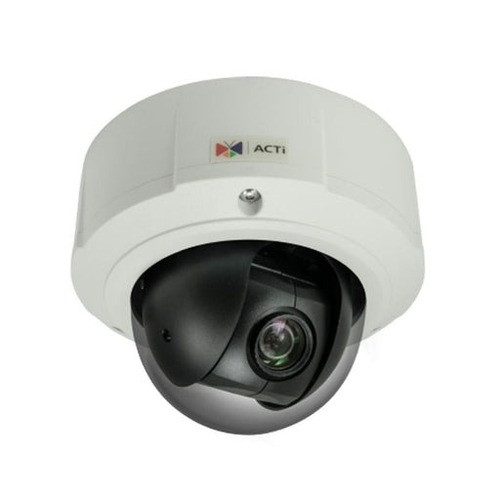
Both the ACTi E911 and Geovision VD321-D01U are 3MP fixed indoor/vandal dome cameras delivered over a single PoE cable, targeting the same mid-tier IP surveillance segment. The comparison covers imaging capabilities including WDR and low-light performance, physical resilience and installation requirements, and integration fit across ONVIF-based VMS and analytics platforms. Buyers typically cross-shop these when specifying vandal-resistant domes for lobbies, corridors, or semi-exposed interior spaces where both image quality and physical durability matter.

In This Guide
How do the imaging specs compare?
Both cameras deliver 3MP resolution, but their low-light strategies differ. The ACTi E911 is specified with Extreme WDR and a 2.1mm fixed lens at F1.8 with a 117.5° horizontal field of view, making it optimized for high-contrast scenes such as building entrances and retail floors where simultaneous bright and dark zones appear in a single frame. Its maximum frame rate is confirmed at 1080p/60fps, providing smooth motion capture. The Geovision VD321-D01U, by contrast, relies on built-in IR for low-light and 24/7 imaging in complete darkness. No WDR specification, lens focal length, aperture, minimum illumination figure, or maximum frame rate is provided in the VD321-D01U spec data supplied.
The E911 supports H.265 and H.264 compression, which directly affects storage and bandwidth efficiency in multi-camera deployments. The VD321-D01U's compression format is not stated in the provided specifications. In summary: the E911 has a documented WDR advantage and a defined lens geometry; the VD321-D01U has a documented IR night-vision capability where the E911's IR performance is not specified.
What about installation and environment?
Impact resistance is a meaningful differentiator here. The Geovision VD321-D01U is rated IK10 (and the certifications field notes IK10+), the highest standard IEC 62262 classification, corresponding to resistance against 20-joule impacts. The ACTi E911 is rated IK08, which covers 5-joule impacts — adequate for most indoor commercial environments but below the VD321-D01U's level. The VD321-D01U also carries an IP66 ingress protection rating, confirming dust-tight sealing and resistance to powerful water jets, which broadens its usable range to semi-exposed or washdown-prone indoor areas. No IP rating is provided for the ACTi E911 in the supplied specifications.
Both cameras are powered via PoE over standard cabling. The E911 is explicitly specified as 802.3af compliant with a draw of less than 13W, which is important for switch port budgeting and confirms compatibility with standard 802.3af switches without requiring 802.3at (PoE+) ports. The VD321-D01U is listed as PoE but no IEEE class, wattage draw, or 802.3af/at designation is provided. Both support ceiling and wall mounting in a dome form factor. Operating temperature range is not provided for either model in the supplied specifications.
Which fits your VMS and analytics better?
Both cameras declare ONVIF compliance, supporting interoperability with standard third-party NVR and VMS platforms. The E911 spec additionally states compatibility with 'Standard ONVIF IP platforms' and includes Video Analytics as a listed feature, indicating on-board edge analytics capability. No analytics specification is provided for the VD321-D01U. The E911 also supports local edge storage via MicroSD/MicroSDXC, which enables continuous recording or event buffering independent of network storage. No on-board storage specification is provided for the VD321-D01U. Audio capability is not specified for either model in the supplied data.
Which should you choose: the E911 or the VD321-D01U?
Our take: The E911 is the stronger choice when the deployment priority is high-contrast scene imaging, bandwidth efficiency, and verified PoE power budgeting. Its Extreme WDR addresses the dual-exposure problem in lobbies and entries, its H.265 compression reduces storage overhead versus unspecified compression, and its sub-13W 802.3af draw is confirmed for standard switch compatibility. The VD321-D01U holds a clear advantage where physical resilience and 24/7 IR night vision are the primary requirements: its IK10 rating withstands 4× the impact energy of the E911's IK08, its IP66 sealing permits washdown environments, and its built-in IR covers scenes in complete darkness — a condition the E911's WDR tuning does not address. Buyers specifying high-assault zones or semi-exposed washdown interiors should favor the VD321-D01U; those prioritizing mixed-light imaging, edge analytics, local storage, and confirmed PoE class should favor the E911.
Side-by-Side Comparison
Spec-for-spec, from manufacturer data.
| Specification | ACTi E911 | Geovision VD321-D01U |
|---|---|---|
| Resolution | 3 MP | 3 MP |
| Camera Type | Fixed Indoor Mini Dome | Fixed Vandal Dome |
| Lens / Focal Length | 2.1mm fixed, F1.8 (HOV 117.5°) | — |
| WDR | Extreme WDR | — |
| IR / Low-Light | — | Built-in IR |
| Max Frame Rate | 1080p / 60fps | — |
| Video Compression | H.265; H.264 | — |
| IP Rating | — | IP66 |
| IK / Impact Rating | IK08 | IK10 (IK10+) |
| Power Input / PoE Class | 802.3af, <13W | PoE (class not specified) |
| Edge Storage | MicroSD / MicroSDXC | — |
| Analytics | Video Analytics | — |
| VMS Compatibility | Standard ONVIF IP platforms | ONVIF |
| Mount Type | Ceiling; Wall | Ceiling; Wall |
| Certifications | — | IK10+ |
Frequently Asked Questions
Which should you choose: the E911 or the VD321-D01U?
The E911 is the stronger choice when the deployment priority is high-contrast scene imaging, bandwidth efficiency, and verified PoE power budgeting. Its Extreme WDR addresses the dual-exposure problem in lobbies and entries, its H.265 compression reduces storage overhead versus unspecified compression, and its sub-13W 802.3af draw is confirmed for standard switch compatibility. The VD321-D01U holds a clear advantage where physical resilience and 24/7 IR night vision are the primary requirements: its IK10 rating withstands 4× the impact energy of the E911's IK08, its IP66 sealing permits washdown environments, and its built-in IR covers scenes in complete darkness — a condition the E911's WDR tuning does not address. Buyers specifying high-assault zones or semi-exposed washdown interiors should favor the VD321-D01U; those prioritizing mixed-light imaging, edge analytics, local storage, and confirmed PoE class should favor the E911.
Is the E911 or VD321-D01U better for low light?
Based on the provided specifications, the Geovision VD321-D01U has a documented built-in IR illuminator for imaging in complete darkness. The ACTi E911 spec does not list IR or a minimum illumination figure; its low-light strength is Extreme WDR for high-contrast mixed-lighting scenes rather than zero-lux operation. If complete darkness coverage is required, the VD321-D01U has the specified capability; the E911 does not.
Which camera is more vandal-resistant?
The Geovision VD321-D01U is rated IK10 (20-joule impact resistance) versus the ACTi E911's IK08 (5-joule resistance). The VD321-D01U also carries an IP66 rating not present in the E911 specs. For high-assault or washdown environments, the VD321-D01U's certifications are the higher-rated of the two.
Will either camera work with my existing 802.3af PoE switches?
The ACTi E911 is explicitly specified as 802.3af compliant at less than 13W, confirming it operates within the standard 15.4W 802.3af budget. The Geovision VD321-D01U is listed as PoE but its IEEE class and wattage draw are not stated in the supplied specifications; you should confirm 802.3af versus 802.3at requirements with Geovision's datasheet before deploying on standard switches.
Get a Second Opinion on Your Camera Choice
Share your site layout, coverage goals, and budget. Our team will validate the camera selection, flag anything we would change, and recommend products that match the use case.