
ACTi B916 vs ACTi I915: Specification Comparison
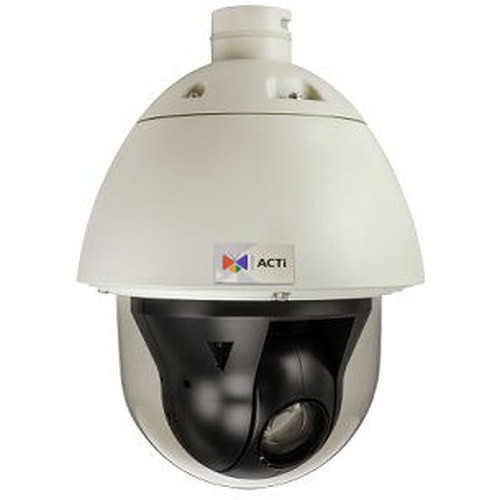
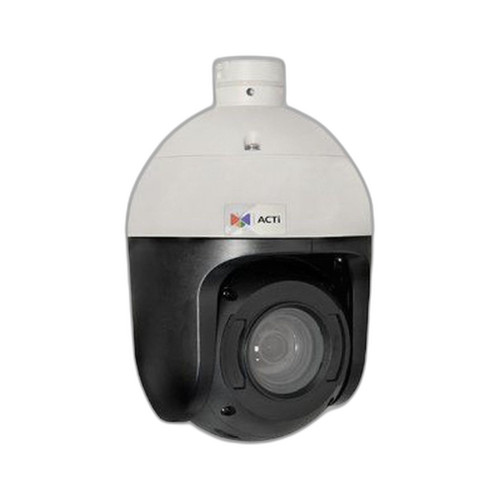
The ACTi B916 and ACTi I915 are both 2MP outdoor PTZ speed dome cameras aimed at perimeter and wide-area surveillance applications. Both share a common resolution class and PTZ form factor, making them direct cross-shop candidates for installers evaluating a medium-resolution, optically-zooming dome. The comparison covers imaging capability, environmental and installation requirements, and VMS/analytics integration — areas where the two models diverge meaningfully despite sharing a brand and resolution tier.
In This Guide
How do the imaging specs compare?
The B916 uses a 1/2.8-inch sensor with a 4.7–94mm varifocal lens delivering 20x optical zoom plus 16x digital zoom, and achieves a minimum illumination of 0.002 lux color / 0.001 lux B/W with IR active (700–1100nm spectrum). It supports up to 60 fps at 2MP, offers 145dB WDR, and includes onboard IR illumination for night operation. The I915 specifies 36x optical zoom — a substantially wider zoom range — and is rated for Extreme WDR with Day/Night sensitivity described as Extreme Low Light, though no specific lux figure, sensor size, IR wavelength, or maximum frame rate is provided in the available specifications.
For zoom reach, the I915's 36x optical zoom exceeds the B916's 20x, enabling tighter subject detail at greater distances. However, because the I915 lacks a published minimum illumination figure or IR specification, its low-light floor cannot be numerically confirmed against the B916's 0.001 lux B/W. The B916's 145dB WDR figure is explicitly quantified; the I915 carries the label 'Extreme WDR' without a decibel rating, so a direct dB-to-dB comparison is not possible from the provided specs.
What about installation and environment?
The B916 carries IP67 and IK10 ratings alongside NEMA 4X certification, meaning it is rated for full dust ingress protection, temporary submersion, and direct vandal-impact resistance — a strong profile for exposed outdoor mounting. It operates from −52°C to 60°C on AC 24V power or −40°C to 60°C on High PoE (45W). Mounting options include wall, pole, pendant, corner, and rack. Weight is 2,605g (5.74 lb). The I915 specifies ceiling and wall mounting and is listed as outdoor, but no IP rating, IK rating, operating temperature range, or weight is provided in the available specifications, making environmental suitability unverifiable from spec data alone.
On power, the B916 accepts AC 24V or High PoE at 45W — exceeding standard PoE+ (802.3at) delivery and requiring a High PoE / PoE++ injector or switch port for PoE-only installations. The I915 lists only 'PoE' as its power input with no wattage or PoE class specified, so infrastructure planning for the I915 requires confirmation from additional documentation.
Which fits your VMS and analytics better?
The B916 supports ONVIF Profile S, G, T, Q, and M (M pending firmware), plus VISCA, Pelco-D, and Pelco-P PTZ control protocols, and ACTi's native URL API. Edge analytics include VMD and People Counting. Audio is two-way with microphone input, line input, and line output. GPS position is available via manual setting. The I915 supports ONVIF Profile S and ONVIF PTZ; no additional PTZ control protocols, edge analytics detail, audio capability, or onboard storage specification is provided in the available specs.
For multi-VMS environments or deployments requiring legacy PTZ protocol compatibility (VISCA, Pelco-D/P), the B916 offers confirmed support. The I915's integration profile is narrower based on available data — Profile S and PTZ only — which is adequate for ONVIF-compliant VMS platforms but leaves protocol flexibility unconfirmed. Neither model lists onboard storage (SD card) in the provided specifications, so edge recording capability cannot be compared.
Which should you choose: the B916 or the I915?
Our take: The B916 is the stronger choice when environmental durability, protocol breadth, and verified low-light performance are primary requirements. It provides a confirmed IP67/IK10/NEMA 4X rating versus no published environmental rating for the I915; a quantified minimum illumination of 0.001 lux B/W with IR versus no lux figure for the I915; and ONVIF Profiles S/G/T/Q/M plus VISCA/Pelco-D/Pelco-P versus the I915's Profile S and PTZ only. The I915's 36x optical zoom — versus the B916's 20x — is the one confirmed imaging advantage and is meaningful for long-range identification at distance. However, because the I915's spec sheet omits IP rating, operating temperature, power wattage, sensor size, frame rate, and illumination figures, installers cannot fully qualify it for harsh outdoor deployments without additional documentation from ACTi.
Side-by-Side Comparison
Spec-for-spec, from manufacturer data.
| Specification | ACTi B916 | ACTi I915 |
|---|---|---|
| Resolution | 2MP | 2MP |
| Image Sensor Size | 1/2.8" | — |
| Lens / Focal Length | 4.7–94mm (20x optical zoom) | 36x optical zoom (focal length not specified) |
| Digital Zoom | 16x | — |
| Min. Illumination | 0.002 lux color; 0.001 lux B/W (IR on) | — |
| IR / Low Light | IR; 700–1100nm | Extreme Low Light Sensitivity; Day/Night (no IR spec) |
| WDR | 145dB WDR | Extreme WDR (no dB rating) |
| Max Frame Rate | 60 fps @ 2MP | — |
| Video Compression | H.264 (Baseline/Main/High); MJPEG | — |
| IP Rating | IP67 | — |
| IK / Impact Rating | IK10 | — |
| Additional Env. Certifications | NEMA 4X; CE Class B; FCC Class B; UL 62368-1; EAC; CB | — |
| Operating Temperature | -52°C to 60°C (AC 24V); -40°C to 60°C (High PoE) | — |
| Power Input | AC 24V or High PoE 45W | PoE (wattage not specified) |
| Mount Types | Wall; Pole; Pendant; Corner; Rack | Ceiling; Wall |
| ONVIF Profiles | S; G; T; Q; M (pending) | S; PTZ |
| PTZ Control Protocols | VISCA; Pelco-D; Pelco-P; ACTi URL | — |
| Edge Analytics | VMD; People Counting | Built-in Video Analytics (no detail specified) |
| Audio | Two-way; Mic input; Line input; Line output | — |
| Weight | 2605g (5.74 lb) | — |
| Warranty | 3 years (1 year continuous motion) | — |
Frequently Asked Questions
Which should you choose: the B916 or the I915?
The B916 is the stronger choice when environmental durability, protocol breadth, and verified low-light performance are primary requirements. It provides a confirmed IP67/IK10/NEMA 4X rating versus no published environmental rating for the I915; a quantified minimum illumination of 0.001 lux B/W with IR versus no lux figure for the I915; and ONVIF Profiles S/G/T/Q/M plus VISCA/Pelco-D/Pelco-P versus the I915's Profile S and PTZ only. The I915's 36x optical zoom — versus the B916's 20x — is the one confirmed imaging advantage and is meaningful for long-range identification at distance. However, because the I915's spec sheet omits IP rating, operating temperature, power wattage, sensor size, frame rate, and illumination figures, installers cannot fully qualify it for harsh outdoor deployments without additional documentation from ACTi.
Is the B916 or I915 better for low-light performance?
Based on available specifications, the B916 is the only model with a published minimum illumination figure: 0.002 lux color and 0.001 lux B/W with IR active. The I915 is described as having Extreme Low Light Sensitivity and Day/Night operation, but no lux value is provided in its specifications, so a direct numerical comparison cannot be made.
Which camera has the better optical zoom — the B916 or the I915?
The I915 specifies 36x optical zoom, compared to the B916's 20x optical zoom (4.7–94mm). The I915 has a confirmed zoom advantage of 16x over the B916 for reaching subjects at greater distances. The B916 adds 16x digital zoom on top of its optical range; no digital zoom figure is provided for the I915.
Can either camera work with legacy PTZ controllers using Pelco-D or Pelco-P?
Yes, but only the B916 lists Pelco-D and Pelco-P (as well as VISCA) as supported PTZ control protocols in its specifications. The I915's specifications list ONVIF Profile S and ONVIF PTZ only; legacy protocol support for the I915 is not confirmed by the provided spec data.
Get a Second Opinion on Your Camera Choice
Share your site layout, coverage goals, and budget. Our team will validate the camera selection, flag anything we would change, and recommend products that match the use case.