
ACTi A32 vs Geovision BL3700: Specification Comparison
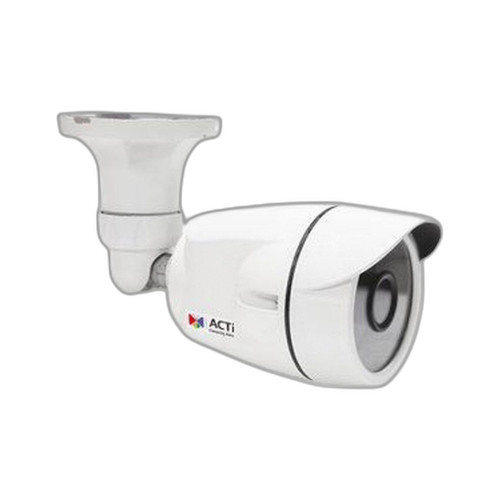
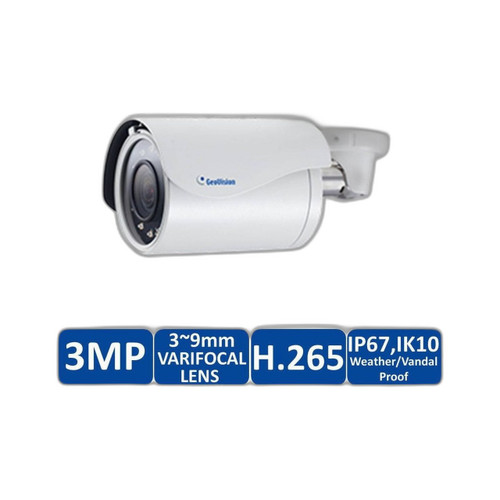
Both the ACTi A32 and Geovision GV-BL3700 are 3MP fixed bullet cameras targeting cost-conscious commercial and light-industrial deployments where 24/7 outdoor or perimeter coverage is required. This comparison evaluates how their imaging capabilities, installation requirements, and VMS integration characteristics differ, so integrators and IT buyers can determine which unit better fits a given site's infrastructure, lighting conditions, and software environment.
In This Guide
How do the imaging specs compare?
Both cameras deliver 3MP resolution, putting them in the same detail tier for coverage of entry points, parking areas, and corridors. The ACTi A32 specifies Advanced WDR, a step above the generic WDR listed for the GV-BL3700; Advanced WDR typically implies multi-frame or multi-exposure processing that handles high-contrast scenes more aggressively than standard single-frame WDR, though ACTi does not publish a dB rating in the provided specs, and neither does Geovision, so a direct dB-to-dB comparison cannot be made from available data.
For low-light performance the A32 is documented as having Day/Night switching with Superior Low Light Sensitivity, indicating a mechanical or electronic IR-cut filter plus an enhanced sensor optimized for reduced-illumination scenes. The GV-BL3700 lists Super Low Lux and active IR illumination as its primary night strategy. Neither minimum-illumination figure (in lux) is provided for the A32; the GV-BL3700 does not specify an IR range in meters. The GV-BL3700 adds a 3–9 mm P-Iris varifocal lens, giving the installer scene-tuning flexibility at commissioning; no lens specification is provided for the A32.
What about installation and environment?
Both cameras share a bullet form factor suitable for wall mounting. The GV-BL3700 additionally supports pole mounting per its spec sheet, while the A32 lists wall and ceiling as mount options — a meaningful distinction when infrastructure anchoring to a pole or mast is required. Neither IP ingress protection rating, IK impact rating, nor operating temperature range is provided in the supplied specifications for either model, so weatherproofing and temperature suitability cannot be compared from available data.
Power delivery differs: the A32 explicitly supports IEEE 802.3af/at PoE, covering both standard (15.4 W) and high-power (30 W) PoE budgets and simplifying single-cable runs. No PoE standard or power input specification is listed for the GV-BL3700 in the provided data; installers should verify the GV-BL3700's power requirements and PoE class independently before specifying switch ports or injectors.
Which fits your VMS and analytics better?
Both cameras declare ONVIF compliance, ensuring baseline interoperability with any ONVIF Profile S or Profile T VMS platform without vendor-specific drivers. The A32's spec explicitly calls out compatibility with ONVIF-compliant systems and 802.3af/at PoE, which covers the majority of enterprise and mid-market VMS environments. The GV-BL3700 is listed as ONVIF-compatible and carries the IPCAM cable category designation, consistent with standard RJ-45 network integration.
The GV-BL3700 specifies H.265 compression, which reduces bandwidth and storage consumption roughly 50% versus H.264 at equivalent quality — a material advantage in multi-camera deployments with constrained NVR storage or limited WAN uplink. No compression codec is specified for the A32 in the provided data, making a direct storage-efficiency comparison impossible. Edge analytics, audio I/O, alarm I/O, and on-board SD card storage are not specified for either model in the available data.
Which should you choose: the A32 or the BL3700?
Our take: The GV-BL3700 is the stronger choice when H.265 codec efficiency and varifocal lens flexibility are priorities, while the A32 is the stronger choice when Advanced WDR performance in high-contrast lighting and confirmed 802.3af/at PoE compliance are the deciding factors. Three concrete spec deltas: (1) Codec — GV-BL3700 specifies H.265; A32 codec is not documented in available specs, a meaningful gap for storage planning. (2) Lens — GV-BL3700 offers a 3–9 mm P-Iris varifocal for scene optimization at commissioning; A32 lens spec is absent. (3) WDR tier — A32 specifies Advanced WDR versus the GV-BL3700's generic WDR label, favoring the A32 in lobbies, gates, and mixed indoor/outdoor scenes with strong backlight. Choose the A32 for PoE-standardized infrastructure and challenging lighting; choose the GV-BL3700 for bandwidth-constrained networks and sites requiring adjustable focal length.
Side-by-Side Comparison
Spec-for-spec, from manufacturer data.
| Specification | ACTi A32 | Geovision BL3700 |
|---|---|---|
| Resolution | 3 MP | 3 MP |
| Form Factor | Bullet | Bullet |
| Lens / Focal Length | — | 3–9 mm P-Iris varifocal |
| WDR | Advanced WDR | WDR |
| Low-Light / IR | Day/Night; Superior Low Light Sensitivity | IR; Super Low Lux |
| Video Compression | — | H.265 |
| ONVIF | Yes | Yes |
| VMS Compatibility | ONVIF-compliant systems | ONVIF |
| Power Input / PoE | PoE 802.3af/at | — |
| Mount Type | Wall; Ceiling | Wall; Pole |
Frequently Asked Questions
Which should you choose: the A32 or the BL3700?
The GV-BL3700 is the stronger choice when H.265 codec efficiency and varifocal lens flexibility are priorities, while the A32 is the stronger choice when Advanced WDR performance in high-contrast lighting and confirmed 802.3af/at PoE compliance are the deciding factors. Three concrete spec deltas: (1) Codec — GV-BL3700 specifies H.265; A32 codec is not documented in available specs, a meaningful gap for storage planning. (2) Lens — GV-BL3700 offers a 3–9 mm P-Iris varifocal for scene optimization at commissioning; A32 lens spec is absent. (3) WDR tier — A32 specifies Advanced WDR versus the GV-BL3700's generic WDR label, favoring the A32 in lobbies, gates, and mixed indoor/outdoor scenes with strong backlight. Choose the A32 for PoE-standardized infrastructure and challenging lighting; choose the GV-BL3700 for bandwidth-constrained networks and sites requiring adjustable focal length.
Is the ACTi A32 or GV-BL3700 better for low-light performance?
The A32 lists Superior Low Light Sensitivity with Day/Night switching, suggesting a sensor optimized for reduced-illumination scenes with mechanical IR-cut filter control. The GV-BL3700 relies on active IR illumination and a Super Low Lux rating. Neither minimum-illumination figure in lux is provided in the available specs, so a numeric comparison cannot be made. Sites that need passive low-light sensitivity without IR glow may lean toward the A32; sites needing guaranteed IR illumination in complete darkness should verify the GV-BL3700's IR range specification from Geovision's datasheet.
Which camera is easier to integrate with a third-party VMS?
Both cameras are ONVIF-compliant, so either will connect to any ONVIF Profile S or Profile T VMS without proprietary drivers. The GV-BL3700's H.265 support can reduce the per-camera storage and bandwidth footprint on the VMS server, which is a practical integration advantage in large deployments. The A32's codec is not specified in available data, so confirm H.264 or H.265 support directly with ACTi before designing storage.
Can the GV-BL3700 be pole-mounted while the A32 cannot?
Based on the provided specifications, the GV-BL3700 lists wall and pole as mount types, while the A32 lists wall and ceiling. Pole mounting is not listed for the A32 in the available spec data. If pole or mast mounting is a site requirement, the GV-BL3700 has documented support for that configuration; verify bracket and hardware requirements with Geovision before ordering.
Get a Second Opinion on Your Camera Choice
Share your site layout, coverage goals, and budget. Our team will validate the camera selection, flag anything we would change, and recommend products that match the use case.