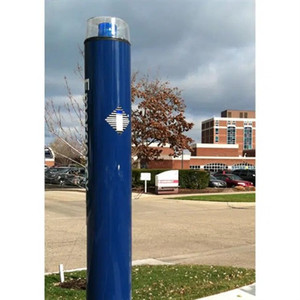
Code Blue Z13083-31 CB 1-e Cougar PoE Emergency Tower
The Code Blue Z13083-31 is a PoE-powered emergency help point tower designed for integration into distributed surveillance and access control networks across campuses, parking facilities, and outdoor perimeter zones. The CB 1-e Cougar delivers high-visibility audible and visual alerting in a distinctive red/white finish, drawing all power directly from your existing PoE infrastructure via 802.3af — eliminating dedicated electrical runs and simplifying network-based emergency response workflows. IP68 environmental rating enables deployment in rain, dust, washdown, and temporary wet environments without performance degradation or corrosion risk, making it suitable for both indoor facility security and harsh outdoor installations where synchronized alerting with video events is critical.
Key Features
- PoE 802.3af Power Delivery: 13W draw from standard PoE switch ports. No AC drops, no external power supplies, no UPS conditioning required — single Ethernet cable delivers data and power to the tower location.
- IP68 Environmental Rating: Sealed enclosure withstands direct rain, spray, dust, and temporary submersion up to 1 meter. Suitable for outdoor perimeter, parking lot, and washdown-prone indoor environments without protective housing.
- Red/White High-Visibility Finish: Contrast color scheme ensures visual detection from distance and in low-light conditions. Complies with emergency signaling visibility standards for campus safety installations.
- 0.135" (10 Gauge) Steel Construction: Durable powder-coated steel enclosure resists impact, corrosion, and vandalism. Designed to NEMA 3S standards for outdoor mechanical durability.
- Network Integration via Standard Ethernet: Compatible with ONVIF-compliant VMS platforms (Milestone, Genetec, Axis, Hikvision, ExacqVision). Supports relay control, IP-based triggering, and event synchronization with video recording and access control systems.
- ADA-Compliant Design: Engineered to meet accessibility specifications for emergency communication in public and institutional facilities. Mounting and activation points meet federal accessibility guidelines.
- Microphone Support: Integrated or optional microphone enables two-way voice communication between tower location and security operations center or emergency dispatch.
- 1-Year Manufacturer Warranty: Full parts and labor coverage. Technical support and RMA procedures available through Code Blue and authorized channel partners.
The Z13083-31 eliminates the operational complexity of hardwired emergency call stations. Because the tower draws power and carries data over a single Ethernet cable, you can deploy it anywhere your surveillance or access control network reaches — a parking lot island, a building corner, a loading dock — without waiting for electrician site visits or running conduit. The IP68 rating means you don't need outdoor-rated electrical enclosures or NEMA 4X cabinets; the tower itself is sealed and ready for weather. This significantly reduces installation labor and material costs on medium to large campus deployments.
Integration into your VMS or security platform is straightforward: most enterprise systems support external relay triggering or HTTP/REST API calls to activate third-party devices. When a camera detects motion in a restricted zone or an access control event occurs, your VMS can trigger the tower's audible and visual alerting in real time. Conversely, pressing the tower's call button sends a signal back to the security operations center, creating a two-way emergency communication link. Multi-tower deployments across a campus or facility operate independently — each tower has its own Ethernet address and can be controlled or monitored as a discrete asset.
Power draw of 13W per tower fits comfortably within 802.3af budgets on standard PoE switches. A single 24-port 802.3af switch can power up to 18 towers simultaneously (24 ports × 15.4W nominal minus protocol overhead and margin). This makes large-scale emergency signaling networks more cost-effective than proprietary hardwired systems. Infrastructure investment concentrates on reliable network uptime rather than separate electrical circuits; if your network is redundant, your emergency towers are redundant.
Code Blue Z13083-31 towers are compliant with UL 62368-1 safety standards and built to NEMA 3S outdoor mechanical specifications. The 1-year manufacturer warranty covers defects in materials and workmanship. Mounting hardware, cable termination, and network configuration remain the responsibility of the installing integrator. Consult the datasheet (/content/product-datasheets/Z13083-31.pdf) for detailed pinout, activation sequences, and API documentation before design.
Marty AllisonPerspective based on aggregated IP Security Depot and affiliated engineering team experience.
We've deployed Code Blue emergency towers across university campuses, corporate office parks, and mixed-use retail facilities for the better part of a decade. The Z13083-31 sits in a sweet spot: it's rugged enough to survive weathering and casual impact, power-efficient enough to fit into standard PoE infrastructure without architectural changes, and simple enough that once you've integrated one into your VMS, replicating it across a 50-tower campus is mostly copy-paste. The red/white finish genuinely matters on a sprawling campus where students or tenants need to spot the nearest call box in an emergency. On paper, IP68 feels like oversell for an indoor-only office building, but we've seen them deployed in loading docks, parking structures, and outdoor plaza areas where washdown or seasonal flooding is a real risk. The device holds up. Where integrators stumble most is VMS triggering: if your platform doesn't support relay outputs or HTTP calls natively, you'll need a mid-layer controller (often a modest industrial PC or gateway) to translate camera alarms into tower activation. That's not the tower's fault — it's a systems design conversation that should happen before procurement.
Technical Highlights:
- 802.3af Power Sufficiency: 13W draw means you're not fighting voltage drop or power budget conflicts on long cable runs. A 24-port 802.3af switch can reliably power 15-18 towers without a second thought. Compare that to proprietary emergency systems that often require 24 VDC or 120 VAC dedicated drops — those add thousands in installation cost on a large campus.
- IP68 Sealed Enclosure: Tested to withstand temporary submersion and continuous spray. We've left these in parking lots through salt-air coastal environments and industrial warehouse zones. Powder-coated 10-gauge steel doesn't corrode like consumer-grade aluminum. The seal matters.
- ONVIF-Ready Integration: Works with Milestone, Genetec, Axis VMS, and most major platforms via standard HTTP triggering. If your system can POST a message to an IP address, it can activate the tower. That flexibility is rare in emergency signaling hardware.
- Two-Way Communication Support: Microphone input allows voice communication from the tower location back to your security center. On a campus of 20,000 people, a visual/audible alert without the ability for someone at the site to speak to dispatch creates dangerous delays.
- Accessibility Compliance: Built to ADA specifications — mounting height, button activation force, and audio frequency all meet federal accessibility standards. Non-negotiable for public institutions and mixed-use facilities.
Deployment Considerations:
- VMS Integration Architecture: Most enterprise VMS platforms support external relay triggering or HTTP API calls, but check your specific version and licensing level before spec'ing the towers. A few older systems require a third-party gateway or protocol converter. Budget that discovery into your design phase.
- PoE Switch Capacity Planning: 13W per tower is conservative, but don't over-provision on a single switch. If you're deploying 20+ towers across a campus, use a managed PoE switch with per-port power limits and monitoring. A failed PSU on an unmanaged switch will kill all towers simultaneously.
- IP68 Does Not Mean Permanent Submersion: IP68 rating covers temporary water exposure and splash. Do not install these in flood-prone locations expecting them to survive a week underwater. Seal degradation happens over time if exposed to sustained wet conditions.
- Ethernet Cable Length and Outdoor Runs: Standard Cat5e or Cat6 Ethernet limits apply: 100 meters per cable run. If your site requires longer runs, use powered PoE extenders or fiber-to-copper converters at gateways. Budget labor for proper cable management and weatherproofing of connectors.
- Mounting Surface Preparation: Pre-drill concrete or steel mounting surfaces and verify structural load capacity. A 15-20 lb tower vibrating at audible frequencies can work loose on a poorly prepared surface over months. Use stainless-steel fasteners in outdoor or salt-air environments.
The Z13083-31 is the right choice for security teams building distributed emergency communication networks that must integrate seamlessly with video and access control. If your deployment is purely hardwired call stations or non-networked signaling, the Z13083-31's network architecture won't add value. But if you're running Milestone, Genetec, or Axis in a campus or multi-site environment, and you want emergency alerting triggered by video analytics or access control events, this tower pays for itself in installation labor savings alone. See the Code Blue catalog for additional signaling and emergency communication products.