i-PRO SR-OTSF-IP Cloud Collect One Time Fee
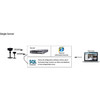
The i-PRO SR-OTSF-IP is a one-time service activation license that enables cloud-based video and audio collection for compatible i-PRO PoE security devices. Instead of relying on local NVR storage or on-premise servers, this license routes live and recorded footage to i-PRO's centralized cloud platform for remote access, retention, and cross-site management. Deploy this when you need to consolidate surveillance from multiple PoE-powered locations—retail chains, multi-tenant facilities, or distributed campus deployments—without the operational burden of maintaining separate local storage infrastructure at each site.
Key Features
- One-Time Activation: No recurring monthly subscription. Single license purchase grants perpetual cloud collection rights for the covered device or account scope, reducing long-term operational expenses.
- PoE (802.3af) Compatibility: Works with standard PoE-powered i-PRO cameras and compatible security devices. No additional power infrastructure required beyond existing PoE switch deployment.
- Microphone Support: Enables bidirectional audio capture on compatible i-PRO devices with built-in or external microphone input. Useful for facilities requiring audio documentation alongside video.
- Centralized Cloud Access: Consolidate video streams from multiple remote sites into a single i-PRO cloud account. Eliminates the need to manage separate local storage systems or deploy on-premise video servers.
- Multi-Site Management: Scale surveillance infrastructure across geographically distributed locations while maintaining unified retention policies, user permissions, and audit trails from one platform.
- Flexible Retention: Cloud-based storage avoids local disk capacity limits. Define retention windows and archival policies at the account level without re-provisioning on-site hardware.
Deployment Context
Cloud collection licensing is particularly valuable for organizations that lack IT infrastructure to operate on-premise video management systems (NVRs, video servers) or want to avoid the capex and maintenance overhead of distributed storage. Retail chains managing 50+ locations, hospitality properties with multiple buildings, or manufacturing campuses with scattered security zones benefit from the operational simplification—footage is automatically forwarded to i-PRO's platform, and site-level personnel don't need to manage local DVR/NVR hardware or worry about disk failures.
Before purchasing, confirm that your specific i-PRO camera models and recorders are listed in the i-PRO cloud platform compatibility matrix. Not all i-PRO devices support cloud collection natively; some may require firmware updates or specific hardware revisions to enable the feature. Your integrator or i-PRO pre-sales team can provide a validated compatibility list for your exact deployment footprint. Bandwidth requirements scale with resolution, frame rate, and the number of concurrent streams—consult i-PRO's network sizing guide for your camera configuration to ensure your internet uplink can sustain the aggregate bitrate without degrading other network services.
The license itself is a digital activation: you receive a license code or key that you apply within your i-PRO cloud account or through your VMS dashboard. There is no physical hardware to install. Once activated, your compatible PoE cameras and devices automatically begin forwarding video and audio to the cloud platform. No maintenance fees accrue after the initial one-time purchase, though you remain responsible for your internet connectivity and any data egress charges imposed by your ISP or cloud provider.
This licensing model is most cost-effective for organizations planning to operate cloud collection indefinitely. If your cloud-to-local migration is temporary or pilot-phase, negotiate usage-based or month-to-month alternatives with i-PRO or your reseller beforehand. For facilities with existing on-premise NVR infrastructure and minimal multi-site coordination needs, local recording may remain more economical than cloud licensing at scale.
Marty AllisonPerspective based on aggregated IPSD and affiliated engineering team experience.
We've deployed i-PRO cloud collection across retail and hospitality chains, and the SR-OTSF-IP one-time license model solves a real pain point: eliminating recurring cloud subscription creep. In our experience, integrators and end-users hate surprise monthly line items five years into a deployment. With this model, you pay once upfront and never see a cloud licensing charge again—the only ongoing costs are internet connectivity and any data egress fees from your ISP. That said, the gotcha is compatibility validation. i-PRO's product matrix has evolved, and not every older camera model or firmware version supports cloud collection without updates. We've seen deployments delayed when a customer assumed their existing fleet was cloud-ready; always request a pre-sales compatibility audit before committing. The PoE (802.3af) specification is standard and non-controversial—integrators deploying i-PRO PoE cameras already have the power infrastructure. The microphone support adds value for facilities that need audio correlation with video (retail loss-prevention, manufacturing safety documentation), but it's not a differentiator versus other cloud platforms.
Technical Highlights:
- One-Time Licensing Structure: Perpetual activation with no subscription renewal. Eliminates recurring monthly cloud fees and simplifies budget forecasting for multi-year deployments. Ideal for organizations seeking predictable, front-loaded capex rather than operational subscriptions.
- PoE (802.3af) Power Envelope: Standard 802.3af compliance means no special power provisioning beyond existing PoE switch infrastructure. Any managed PoE+ switch (802.3at or higher) will comfortably support PoE (802.3af) devices, leaving power headroom for future expansion.
- Microphone Input Support: Cloud-collected audio enables audio forensics, ambient-sound detection (glass break, shouting), and regulatory compliance in facilities requiring bidirectional documentation. Requires compatible i-PRO devices with microphone ports or integrated audio sensors.
- Multi-Site Consolidation: Single cloud account scales to dozens of remote PoE camera locations without deploying distributed NVR hardware. Unified retention policy, user access, and audit trails reduce administrative overhead versus managing separate on-premise systems.
- Automatic Stream Forwarding: Once activated, compatible i-PRO devices automatically route video and audio to i-PRO's cloud platform without manual intervention or scheduled uploads. Real-time or near-real-time cloud access eliminates lag inherent to nightly backup models.
Deployment Considerations:
- Validate device compatibility before purchase. Not all i-PRO cameras or recorders support cloud collection; some older models or specific SKUs may require firmware patches. Request an official compatibility matrix from i-PRO pre-sales or your integrator, keyed to your exact device model numbers and current firmware versions.
- Bandwidth sizing is critical. Aggregate bitrate from all simultaneous streams must fit within your internet uplink capacity. For a 16-camera deployment at 4Mbps per stream (1080p 30fps), expect 64Mbps sustained throughput. Undersizing here causes buffering, failed uploads, and customer complaints. Use i-PRO's bandwidth calculator or engage your integrator for network design.
- Internet reliability matters. If your uplink goes down, cloud collection pauses. Deploy redundant internet (dual ISP or failover mobile) at critical sites, or hybrid local + cloud recording (primary to cloud, secondary to local NVR) to ensure uninterrupted footage capture.
- Data egress charges may apply. Some ISPs and cloud regions charge for data leaving your network. Factor egress costs into total cost of ownership if your organization processes sensitive video or operates in bandwidth-constrained regions.
- License scope and account management. Clarify whether the one-time fee covers a single device, a device group, or an entire account. Account consolidation (multiple sites under one master license) simplifies billing but may require role-based access controls to prevent unauthorized cross-site viewing. Align licensing structure with your organizational hierarchy before deployment.
The SR-OTSF-IP is the right choice for multi-site operators, retail chains, and hospitality groups that want to eliminate local NVR complexity and accept cloud-first architecture. Organizations prioritizing predictable licensing (avoiding recurring subscriptions) and willing to invest in internet reliability will find strong ROI. Revisit the i-PRO catalog to review compatible camera models and complementary cloud management tools.