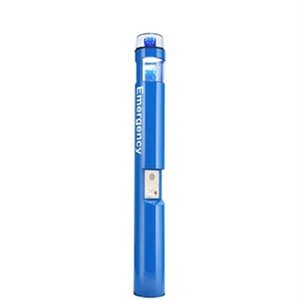
Code Blue CBCE00010 Ethernet Help Point Emergency Communication
The Code Blue CBCE00010 is an Ethernet-connected Help Point designed for emergency communication and incident reporting in campuses, transit facilities, and critical infrastructure. This hardwired device eliminates wireless latency and interference concerns, ensuring that panic button presses and two-way voice communication reach the dispatch center without delay. The combination of persistent network connectivity and local event logging makes it suitable for integrators standardizing on wired security networks or retrofitting existing infrastructure where wireless coverage is unreliable.
Key Features
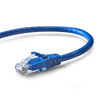
- Ethernet Connectivity: Direct RJ45 wired connection. Eliminates dependency on wireless signal strength and reduces response-time variability in critical emergency scenarios.
- Operating Temperature Range: -40°C to 70°C. Rated for both indoor climate-controlled spaces and outdoor pole or wall-mounted installations without environmental enclosure overhead.
- 4GB Local Memory: Onboard storage for event logging, call recordings, and incident metadata. Enables local backup of emergency transactions if network connectivity is temporarily interrupted.
- Compact Form Factor: 4.0 lbs weight. Suitable for pedestrian pathways, building entrances, parking structures, and remote outdoor locations where space constraints and weathering require a lightweight, rugged design.
- Emergency Communication Integration: Purpose-built Help Point architecture. Pairs seamlessly with Code Blue dispatch systems and third-party emergency management platforms via Ethernet-based protocols.
- Hardened Construction: Built for high-use, high-stress environments. Designed to withstand vandalism, weather exposure, and repeated activation cycles without degradation of core communication function.
The CBCE00010 addresses a common pain point in emergency communication deployments: wireless Help Points suffer from dead zones, interference from building materials, and battery-drain concerns on solar charging systems. By leveraging existing Ethernet infrastructure (or running Cat6 runs during retrofit), integrators avoid the annual maintenance burden of wireless signal mapping and failover testing. Network uptime directly translates to emergency system uptime—a critical requirement for campuses, hospitals, and transportation hubs where seconds matter in an active threat scenario.
Local memory storage decouples the Help Point from real-time cloud or central NVR dependencies. In a facility where the primary network link goes down, the unit continues to log button presses, voice calls, and metadata. Once connectivity is restored, stored events flush to the central system. This design pattern is particularly valuable in sprawling outdoor campuses or facilities with single points of network failure, where a wireless ad-hoc mesh would require additional infrastructure investment and ongoing tuning.
Integration with Code Blue's dispatch ecosystem is native; third-party VMS and access control platforms can ingest Help Point events via standard Ethernet-based APIs or syslog feeds. The wide operating temperature range (-40°C to 70°C) eliminates the need for environmental enclosures on outdoor installations, reducing capex and simplifying field commissioning. Mounting can be pole-mounted, wall-mounted, or pedestal-mounted depending on facility layout—a flexibility that wireless units often trade away for coverage optimization.
Code Blue Help Points are deployed across K–12 campuses, university public safety networks, parking garages, and transit authority stations. The Ethernet variant is favored in installations where the customer has already committed to wired security infrastructure (IP cameras on PoE networks, networked access control) and wants to avoid introducing wireless protocols that require separate radio frequency survey and maintenance.
Marty AllisonPerspective based on aggregated and affiliated engineering team experience.
We've deployed Code Blue Help Points across a range of facility types, and the CBCE00010's Ethernet-only design fills a specific and important niche. In our experience, the decision to go wired versus wireless in emergency communication comes down to network coverage confidence and the cost of maintenance burden. On campuses with mature building automation and security networks already running Cat6 or fiber to outdoor perimeter zones, the Ethernet Help Point is a natural choice—no RF survey, no cellular backup complexity, no battery worries. The local 4GB memory is often overlooked, but it's the feature that pays for itself when a facility's central network or NVR experiences a hiccup during an actual emergency. We've seen integrators spec wireless Help Points for outdoor deployments, then spend two years troubleshooting coverage dead zones and lost event logs due to brief connectivity glitches. The wired alternative costs more upfront (cable runs, conduit, splice boxes), but the operational simplicity and reliability argument wins over the lifecycle. On a 10-year campus contract, that's a meaningful difference in support calls and field visit expenses.
Technical Highlights:
- Ethernet-Only Connectivity: No wireless fallback, no multi-band radio management. This is a strength if your network is reliable (zero latency variability, no RF interference, consistent uptime), and a constraint if your installation includes coverage gaps. Deploy the CBCE00010 only where you have confirmed Ethernet availability or are willing to run new cable.
- 4GB Local Storage: Sufficient for 48–72 hours of continuous logging on a single Help Point under normal call volume (1–5 incidents per day). Scaling to 10+ Help Points across a campus requires central syslog aggregation or a local NVR node to prevent log overflow and lost records.
- -40°C to 70°C Operating Range: Eliminates the need for thermostatic enclosure kits on outdoor installations. Cold climates (Minnesota, Canada) and hot climates (Arizona, Texas) both see direct deployment without environmental conditioning—a rare advantage among Help Points and worth the investment if your facilities span multiple climate zones.
- Weight and Form Factor: At 4.0 lbs, the unit is light enough for wall-mount or pole-mount via standard hardware (L-brackets, U-clamps). Heavier alternatives sometimes require concrete footers or structural reinforcement—here, a two-person crew can mount and cable in under 30 minutes per location.
- Code Blue Native Integration: Help Point events (button press, call duration, location ID, caller name if keyed) feed directly into Code Blue's dispatch console. Third-party integration (Genetec Commandcentre, Milestone Federated Architecture) requires middleware translation or syslog parsing—doable, but Code Blue consoles have the native edge.
Deployment Considerations:
- Ethernet cable runs must be planned in advance, especially for outdoor Help Points in parking areas or perimeter zones. Running Cat6 in conduit after-the-fact is invasive and expensive—include Help Point locations in the initial network survey before construction begins.
- Network switch ports must be allocated and budgeted. If you're deploying 12+ Help Points on a single campus, verify switch port density and PoE availability. The CBCE00010 draws power via Ethernet (PoE), so ensure your switch or injectors support the device's power profile.
- Local memory fills up if central syslog or NVR connectivity is lost for extended periods. Configure automated syslog forwarding to a on-campus syslog server or NVR to prevent log loss. Test failover behavior before go-live.
- Wireless protocols (cellular backup, WiFi offload) are not available on the CBCE00010. If your facility has segments with unreliable Ethernet (rural campus perimeter, mobile operations), consider wireless variants or hybrid architectures (wired primary, cellular failover via separate device).
- Mounting hardware and weatherproofing details matter in outdoor installations. Specify stainless steel U-bolts and silicone sealant around cable entry points to prevent water ingress in freeze-thaw cycles. Standard plastic cable glands degrade in UV-heavy environments within 3–5 years.
The CBCE00010 is the right choice for integrators and facility managers who have already committed to wired network infrastructure and prioritize emergency communication reliability above wireless convenience. For K–12 districts, university campuses, and transit operators standardizing on Ethernet security networks, this Help Point eliminates the complexity and maintenance overhead that wireless alternatives introduce. Explore the full Code Blue catalog to compare wireless and hybrid options for facilities with partial Ethernet coverage.