Middle Atlantic CLH-ED17 Cable Ladder End Drop
Overview
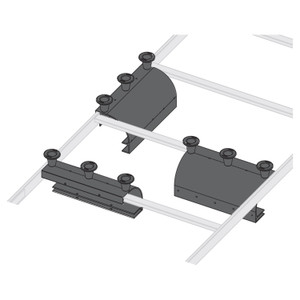
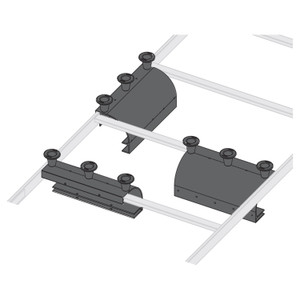
The Middle Atlantic CLH-ED17 is a cable ladder end drop designed to transition horizontal overhead cable runs down to rack equipment — the component that keeps your cable ladder system from terminating in a disorganized bundle at the cabinet entry point. At 16.75 inches wide (42.5 cm), it matches standard full-width cable ladder runs and provides a controlled, strain-relieving descent path for structured cabling in data centers, security head-end rooms, and AV equipment suites. The CLH-ED17 (often searched as CLH ED17) ships as a single piece and is TAA-compliant, satisfying federal procurement requirements where country-of-origin matters.
This is a purpose-built infrastructure component from Middle Atlantic's cable management line — not a generic bracket. If you are specifying a complete cable management system, the end drop is the termination piece that defines how cleanly your horizontal ladder transitions into vertical cable descent at the rack.
Key Features
- 16.75-inch width (42.5 cm): Matches full-width cable ladder sections, so there is no mismatch at the end-run transition. Cables stay aligned across the full ladder width rather than being funneled through a narrower drop — critical when routing dense multi-cable runs to patch panels or switch ports.
- 4.5-inch depth (11.4 cm): The drop depth gives cables a gradual bend radius over 4.5 inches rather than a sharp 90-degree turn. Sharp bends are the primary cause of signal degradation on Cat6A and fiber — this geometry helps maintain bend-radius compliance without add-on bend radius managers.
- 6.1-inch height (15.5 cm): Provides enough vertical drop distance to clear typical rack top-of-cabinet obstructions and route cables into the rear cable management panels of standard 2-post or 4-post racks below.
- TAA-compliant: Satisfies Trade Agreements Act requirements for federal, state, and municipal projects where US government procurement rules apply. Specify the CLH-ED17 on government facility or GSA-schedule projects without a compliance exception.
- Single-piece construction (Package Count: 1): Ships as one complete end drop unit — no assembly from sub-components required on the ladder. Reduces installation time at the end of a cable ladder run where field assembly is inconvenient at height.
Integration & Compatibility
The CLH-ED17 is designed to integrate with Middle Atlantic cable ladder systems. Confirm your existing ladder series and width specification before ordering — cable ladder end drops are width-specific and the 16.75-inch dimension must match your installed horizontal ladder sections. For planning structured cabling infrastructure, pair this component with appropriate cable management accessories including cable ties, vertical managers, and brush strips at the rack entry point to maintain the bend-radius discipline the end drop establishes.
What's in the Box
- 1x Middle Atlantic CLH-ED17 Cable Ladder End Drop
Frequently Asked Questions
Q: Is the CLH-ED17 TAA-compliant for federal government projects?
A: Yes. The CLH-ED17 is TAA-compliant, making it eligible for federal, state, and municipal procurement under Trade Agreements Act requirements.
Q: What width cable ladder does the CLH-ED17 fit?
A: The CLH-ED17 is 16.75 inches (42.5 cm) wide. It is designed to match 16.75-inch-wide horizontal cable ladder runs. Verify your installed ladder width before ordering — end drops are width-specific.
Q: How many pieces are included with the CLH-ED17?
A: The CLH-ED17 ships as a single piece (Package Count: 1). No additional sub-components are included.
Q: What are the overall dimensions of the CLH-ED17?
A: Width: 16.75 in (42.5 cm), Height: 6.1 in (15.5 cm), Depth: 4.5 in (11.4 cm).
Q: Can the CLH-ED17 be used with non-Middle Atlantic cable ladder systems?
A: The CLH-ED17 is engineered for Middle Atlantic cable ladder systems. Compatibility with third-party ladder systems depends on matching attachment points and dimensions — verify against your specific ladder series before specifying.
The CLH-ED17's 4.5-inch drop depth is the spec I check first on any overhead-to-rack cable transition — it is the dimension that determines whether you are going to maintain bend-radius compliance on Cat6A and OM4 fiber without adding a separate bend radius manager. At 4.5 inches, this component gives you a managed descent rather than a hard turn off the ladder end.
Technical Highlights:
- 16.75-inch width: Full-width match to standard ladder runs means the entire cable bundle transitions uniformly — no funnel-and-crush effect at the end of the run that compresses outer cables beyond their rated bend radius.
- 6.1-inch drop height: Sufficient vertical clearance to route over typical rack-top obstructions and feed into rear cable managers on standard 4-post open frames without forcing cables into tight S-bends at entry.
- TAA compliance: Verified for the CLH-ED17 — specify it on GSA schedule and government facility projects without needing a country-of-origin waiver, which can hold up procurement on sensitive-site builds.
Deployment Considerations:
- Width matching is non-negotiable — the CLH-ED17 is 16.75 inches and must align with your installed ladder section width. Ordering the wrong width creates a step transition that shifts cable paths laterally and negates the bend-radius benefit.
- At 6.1 inches tall, factor the end drop height into your cable pathway planning above suspended ceilings or in tight interstitial spaces — confirm you have vertical clearance before the ladder terminates.
The CLH-ED17 is the right termination component for data center row ends and security head-end rooms where structured cabling density is high and maintaining cable geometry from overhead ladder to rack panel directly affects long-run signal integrity on Cat6A horizontal runs.