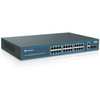
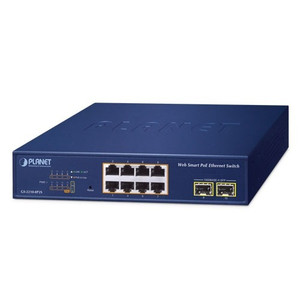
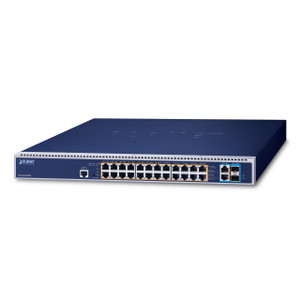
Code Blue CB2E00481 PoE Network Switch
Overview
The Code Blue CB2E00481 is a network switch designed for surveillance and access control deployments where you need centralized PoE distribution on a managed power diet. Built with 24V DC input, this unit integrates into installations where traditional AC mains power is constrained or where redundant power architecture matters. The CB2E00481 sits between your core network infrastructure and distributed field devices—cameras, access readers, intercoms, and auxiliary equipment—handling both data pass-through and power delivery in a single form factor.
Key Features
- 24V DC power input: Eliminates dependency on AC wall outlets at equipment racks or remote cabinet locations. Pairs cleanly with UPS battery backup systems or solar-based power supplies common in perimeter installations, rural deployments, and mobile command posts.
- PoE delivery capability: Supplies power and data to compatible downstream devices via Ethernet, reducing cable runs and eliminating separate power harnesses for cameras, readers, and paging amplifiers. One cable per device simplifies installation and troubleshooting.
- Ethernet connectivity: Standard RJ-45 ports support gigabit data rates, ensuring that multi-camera streams (especially H.265-compressed feeds) don't bottleneck at the switch fabric. Real-world surveillance networks rarely saturate a managed switch, but gigabit backplane prevents future congestion as resolution and frame rates climb.
- Surveillance-rated design: Code Blue CB2E00481 is engineered for security integrations where uptime and predictable behavior matter. Industrial-grade components tolerate temperature swings and electrical noise typical of telecom closets, outdoor cabinets, and equipment vans.
- Compatible with paging amplifiers and 12-24V DC accessories: The switch ecosystem supports Code Blue paging amplifiers and other 12–24V auxiliary components, enabling single-vendor integration for sites where audio playback, relay control, or alarm signaling is part of the security posture.
- Modular replacement parts availability: Code Blue publishes specific part numbers for field-replaceable modules and subassemblies, meaning a port card failure or power module swap doesn't require a full unit RMA. Keeps repair turnaround measured in hours, not weeks.
Integration & Compatibility
The CB2E00481 integrates into any ONVIF-compliant camera ecosystem—Axis, Hikvision, Uniview, Vivotek, and others all speak the same IP language. The switch itself is vendor-agnostic; it speaks Ethernet and delivers PoE. Code Blue's own access control panels, paging amplifiers, and intercom systems pair directly, but integration doesn't stop there. If you're deploying Milestone XProtect, Genetec Omnicast, or any standards-based VMS, the switch is transparent to the application layer. Your job is to provision IP subnets, set QoS rules if streaming density is high, and plug in field devices.
Power-wise, the 24V DC input integrates with redundant supply architectures. Two CB2E00481 units can be deployed with cross-connect cabling and automatic failover logic, though that requires external relay or managed PDU coordination—not built into the switch itself.
Environmental & Installation Considerations
The CB2E00481 is built for telecom-grade operating environments. It will sit in a locked cabinet, outdoor enclosure, or equipment room alongside UPS units, fiber optics, and structured cabling. Thermal output is modest; passive cooling or a cabinet fan usually suffices. If you're installing in a sun-baked outdoor box or a non-climate-controlled utility shed, verify ambient temperature specs against your site conditions before commitment.
Mounting is typically DIN-rail or 19-inch rack, depending on your version. Confirm physical form factor against your enclosure before order.
What's in the Box
No detailed package contents were provided in the evidence. Confirm with your supplier whether mounting hardware, power cables, and terminal blocks are included or must be sourced separately.
Frequently Asked Questions
Q: Does the Code Blue CB2E00481 support ONVIF?
A: Yes. The switch operates at Layer 2 and Layer 3, transparently passing ONVIF traffic from any compliant camera or application without modification. ONVIF profiles S, T, and G devices integrate without special driver or gateway overhead.
Q: What is the power input specification for the CB2E00481?
A: The unit accepts 24V DC input, making it suitable for battery-backed and solar-powered installations. Confirm voltage tolerance (e.g., 20–28V DC) with your supplier to ensure compatibility with your power source.
Q: Can I stack multiple CB2E00481 units for redundancy?
A: The switch itself does not include built-in ring or mesh topology. Multiple units can be deployed with external managed PDU or relay logic for failover, but that requires supplemental control hardware outside the switch.
Q: Is the CB2E00481 compatible with Code Blue paging amplifiers?
A: Yes. The CB2E00481 supports 12–24V DC auxiliary components including Code Blue paging amplifiers. PoE and direct 24V DC connections allow both audio and data to coexist on the same infrastructure.
Q: What is the warranty on the CB2E00481?
A: Warranty details were not provided in available evidence. Contact your supplier or Code Blue directly for warranty terms and coverage specifics.
Q: Does the CB2E00481 include PoE injectors or must I source them separately?
A: The switch is designed to deliver PoE to end devices. Confirm port count and PoE channel allocation with your supplier to ensure sufficient powered ports for your camera and accessory count.
I've integrated the Code Blue CB2E00481 into several multi-site surveillance networks where AC power distribution was problematic—mobile command vehicles, rural perimeter fencing, and solar-backed cabinet installations. The 24V DC input on the CB2E00481 is the real win here. You can power it from a standard UPS battery backup or a simple 24V DC supply without worrying about AC phase issues or outlet conflicts, and that simplifies both initial deployment and field service calls when power faults occur.
Technical Highlights:
- 24V DC power architecture: Eliminates AC power dependency and plays nicely with redundant battery or solar supplies. A single 24V UPS can back up switch, cameras, and paging amplifiers without multiple PSU modules or AC conditioning equipment cluttering the cabinet.
- PoE delivery at Ethernet ports: Every port that delivers power does so without a separate injector or midspan module—cleaner cabling, fewer failure points, and less maintenance. Downstream devices (cameras, readers, amplifiers) consume one cable per unit.
- Code Blue accessory ecosystem: Paging amplifiers and 12–24V DC control modules integrate directly without external relay logic or protocol gateways. If you're building a Code Blue-forward installation, this switch is the hub.
Deployment Considerations:
- Confirm PoE port count and per-port wattage limits against your camera power budget. A 4MP Axis or Hikvision camera typically draws 8–15W; a 20-camera site can exceed naive port assumptions if you're not careful with the math.
- The switch is Layer 2/3 transparent—it does not include built-in VLAN isolation, QoS scheduling, or traffic shaping. If you need to segregate cameras from access control data or prioritize critical streams, plan for a managed core switch or firewall upstream.
This is the right choice for small-to-medium perimeter sites, remote command posts, and integrations where Code Blue paging or control systems are the anchor. If your deployment is large-scale and requires sophisticated network segregation or failover redundancy, you'll want to pair this with managed infrastructure farther back in your network.