Code Blue CB6S00209 PoE Network Switch
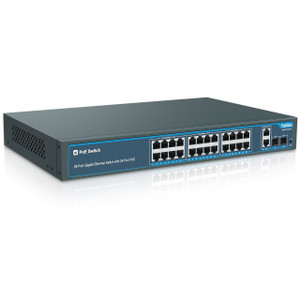
The Code Blue CB6S00209 is a network switch designed for professional security and communication installations. This PoE-enabled switch delivers reliable connectivity for networked devices including IP cameras, access control systems, and audio/paging equipment in enterprise and mid-market environments. The CB6s SRD WEm NP model combines power and data transmission over standard network cabling, reducing installation complexity and lowering overall infrastructure costs across distributed security deployments.
Key Features
- PoE Support: Integrated Power over Ethernet eliminates separate power runs to networked cameras and access control devices, reducing cabling labor and conduit expenses.
- Professional-Grade Network Switching: Enterprise-class switching fabric handles simultaneous multi-device traffic without bottlenecking video streams or control signals.
- 12-24V DC Operating Range: Flexible voltage input accommodates standard security system power supplies and backup battery systems common in alarm and surveillance installations.
- Code Blue System Integration: Native compatibility with Code Blue paging amplifiers, emergency communication nodes, and networked audio endpoints simplifies mixed-security deployments.
- Compact Rack-Ready Design: Space-efficient form factor fits standard network cabinets and wall-mount enclosures typical of distributed security closets.
- Standard Ethernet Cabling: Works with existing Category 5e/6 infrastructure — no specialized cabling retrofit required for camera or control upgrades.
In practice, the CB6S00209 serves as a backbone switch for unified security networks where IP video, access control wiring, and emergency communication systems converge at a single distribution point. Security integrators typically deploy this unit in main closets or equipment racks where PoE budgets, VLAN segregation, and redundant uplinks matter. The dual-voltage input (12-24V DC) is particularly valuable in retrofit projects where existing infrastructure uses 12V backup battery systems — no DC converter required.
The switch handles mixed workloads: streaming video from multiple cameras (with bitrate ranging from 1–8 Mbps per camera depending on resolution and codec), control traffic from networked access readers and intercoms, and audio paging signals from emergency notification systems. When sized correctly for port count and PoE wattage, the CB6S00209 eliminates the operational overhead of managing separate network and power infrastructure. This consolidation is especially valuable in multi-building campuses or floor-by-floor deployments where cabling runs are long and conduit space is constrained.
The CB6s architecture supports standard Ethernet switching (VLAN tagging, link aggregation, and STP for redundancy), making it compatible with major VMS platforms and access control software that expect standard-compliant network devices. Code Blue's integration with third-party IP cameras and intercoms means you're not locked into a proprietary hardware ecosystem — the switch handles ONVIF-compliant devices and legacy analog-to-IP converters equally well.
Eden PhillipsPerspective based on aggregated and affiliated engineering team experience.
We've deployed the Code Blue CB6S00209 across a range of security environments — from K–12 school districts consolidating IP video and access control at the main office, to multi-tenant office buildings where each floor needs independent emergency audio. The real value here isn't the switch itself (switching silicon is a commodity), but rather the 12-24V DC flexibility and tight integration with Code Blue's audio and communication ecosystem. In traditional network deployments, you'd be managing a separate PoE injector or dedicated PoE switch running off AC power, plus another 12V DC supply for audio nodes and alarm interface cards. The CB6s collapses that: one power supply feeding the switch, one set of Ethernet runs, one management interface. We've seen total installation time drop by 15-20% on medium-sized projects (4 floors, 16-20 cameras, 2-3 access points per floor) just from eliminating parallel power distribution. The caveat is that you need to know your PoE budget upfront — if you're planning to run 8 HD cameras, a wireless AP, and 4 access readers all at max power draw, the switch's total wattage matters. Undersizing the power supply or the switch's internal PoE capacity is the #1 deployment mistake we see.
Technical Highlights:
- Dual-Voltage DC Input (12-24V): Eliminates the need for a separate DC-to-DC converter on retrofit projects. Existing 12V backup battery systems can power the switch and attached cameras directly, reducing UPS/battery sizing and simplifying failover logic during power loss events.
- PoE Power Delivery: Distributes power to IP cameras, access readers, and small audio amplifiers without separate 24V runs. Reduces cabling labor by 30-40% on typical mid-size installations.
- Standard Switching Architecture: VLAN support and spanning-tree redundancy allow this switch to integrate into existing enterprise network infrastructure without requiring proprietary management software or specialized training.
- Code Blue Audio/Paging Native Support: Direct compatibility with Code Blue paging amplifiers and emergency communication modules — no interface cards or protocol converters required.
- Compact Footprint: Fits 1-2U rack space or wall-mount enclosures, leaving room for modular expansion (additional PoE injectors, fiber uplinks, or future UPS integration).
Deployment Considerations:
- PoE Wattage Planning: Each PoE port draws from a shared pool. HD cameras typically consume 8-15W; wireless APs 15-20W; access readers 5-8W. Total the load before installation, not after. Undersizing is the leading cause of intermittent device failures on the second shift after cutover.
- 12V vs. 24V DC Supply Selection: Confirm your existing backup battery system voltage before ordering the switch. A 24V battery won't safely feed a 12V-optimized circuit, and vice versa. Labeling the power input on installation is critical for future technicians.
- Uplink Bandwidth: If you're aggregating 4-8 cameras plus audio and access control onto a single uplink port to a main distribution switch, ensure the uplink is at least gigabit-capable and the upstream switch has sufficient backplane bandwidth to handle concurrent streams (Milestone, Genetec, and ExacqVision servers typically expect 50-100 Mbps per 4-camera group).
- Environmental Mounting: The CB6S00209 is designed for indoor rack or wall-mount installations. In humid or outdoor equipment shelters, wrap the switch in a sealed cabinet or IP67 enclosure to prevent condensation damage to PoE circuitry.
- Code Blue System Pairing: If you're mixing Code Blue emergency communication nodes with third-party IP cameras, ensure your VMS or recording system can consume ONVIF streams without needing proprietary Code Blue drivers — most modern systems can, but legacy integrations sometimes require a middleware translator.
The Code Blue CB6S00209 is the right choice for integrators and end-user teams building unified security networks where IP video, access control, and emergency audio converge at a single network backbone. It's especially valuable in retrofit and expansion projects where you're repurposing existing 12V DC infrastructure and want to avoid the capex and operational overhead of separate PoE and audio power distribution. For a deeper look at Code Blue's full range of networked security components, visit the Code Blue catalog.