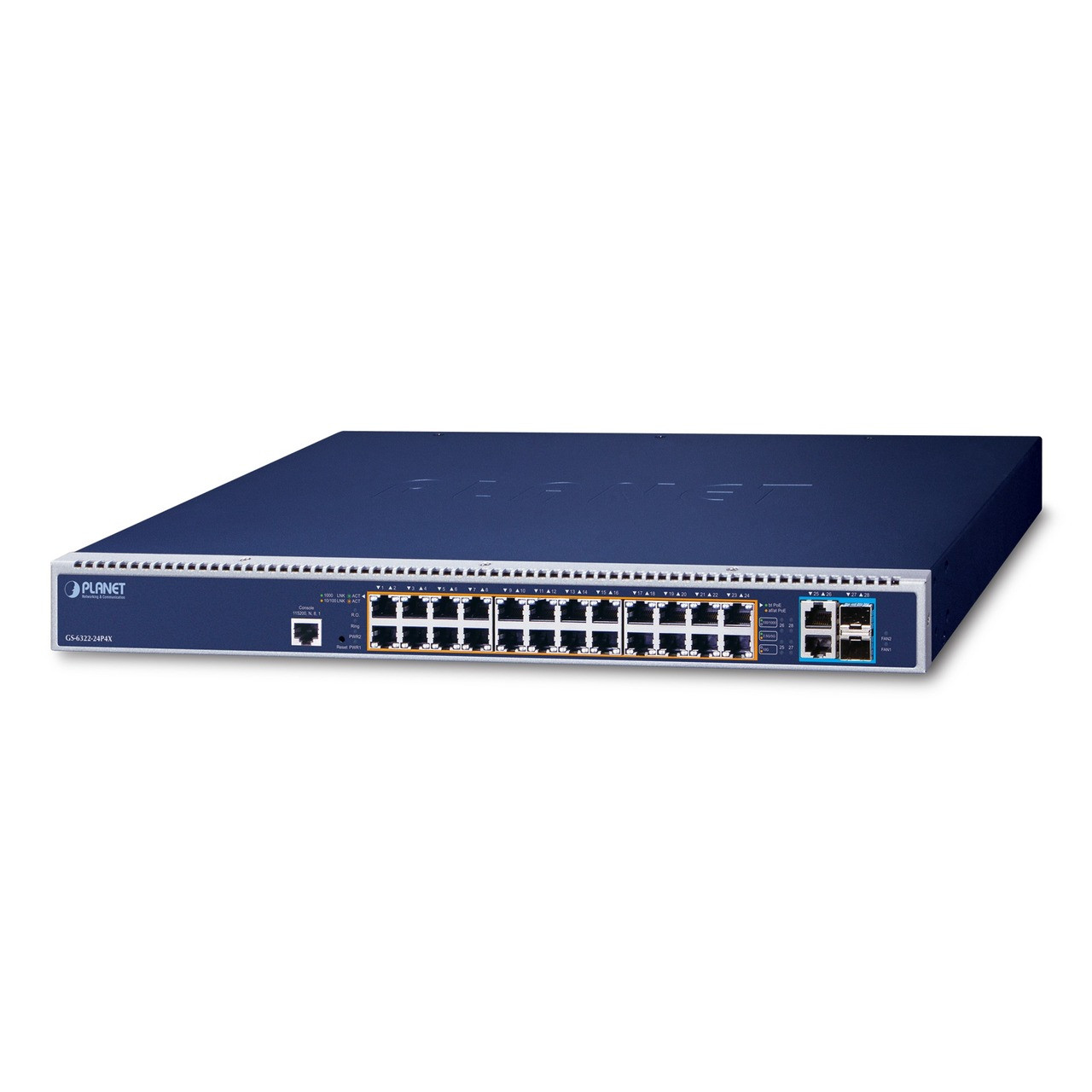
Code Blue SLNF0343 4G LTE PoE Network Switch
Overview
The Code Blue SLNF0343 is a network switch built to handle surveillance deployments in remote or infrastructure-limited locations. This unit combines standard Ethernet connectivity with 4G LTE failover and PoE power delivery — the combination matters when your site can't depend on traditional wired networking. The SLNF0343 is IP68-rated, meaning it tolerates direct immersion and heavy dust exposure, a real requirement for outdoor utility cabinet or equipment-shelter installations.
This is a surveillance-class network device, not a general data-center switch. Its purpose is to bridge on-site cameras and sensors to cloud or distant recording systems via either hardwired Ethernet or cellular backup when the primary link drops.
Key Features
- 4G LTE cellular failover: If your Ethernet line goes down, the switch automatically routes traffic over 4G LTE — no manual intervention needed. Critical for remote sites (cell towers, unmanned substations, outdoor parking facilities) where you can't afford a surveillance blackout.
- PoE power delivery (802.3af): Supplies up to 13W per port via standard Power over Ethernet. This eliminates the need for separate DC power runs to each camera in the field, reducing installation cost and complexity. Ideal for small-to-medium camera counts in the same network segment.
- IP68 environmental rating: Fully sealed against dust and temporary submersion. Deploy the SLNF0343 in outdoor cabinets, concrete utility enclosures, or areas prone to wash-down without worrying about water ingress or corrosion damage to the internal electronics.
- Paging amplifier support (12–24V DC): The switch accommodates auxiliary audio devices during production and power transitions. Useful in facilities that pair video surveillance with public-address or emergency alert systems, allowing a single network backbone to serve both video and audio feeds.
- Commercial-grade Ethernet connectivity: Provides standard RJ-45 ports for camera, recorder, and gateway connections. All ports operate at surveillance-industry standard speeds — fast enough for multiple HD and 4K streams without bottlenecking.
- Redundant power architecture: Accepts both PoE input and local DC supply, so if the remote power source fails, the switch can still operate on battery backup or auxiliary generator systems common in critical infrastructure deployments.
Network and Connectivity
The SLNF0343 is a bridge device: it sits between your remote camera array and your central VMS or cloud platform. Ethernet ports connect directly to IP cameras, edge recorders, and network gateways. The 4G LTE modem activates when the primary Ethernet connection fails, ensuring that live video and recorded footage can reach your monitoring center even if the site loses fiber or copper connectivity.
This architecture is essential for unattended outdoor sites. A cell tower deployment, for example, can't rely on a single ISP line. The SLNF0343 gives you automatic fallback without manual rerouting or on-site technician intervention.
Environmental and Durability Ratings
The IP68 classification is the standout durability claim. IP68 means the enclosure is dust-tight and can withstand temporary submersion — typically tested at 1 meter for 30 minutes. In practical terms, this protects against:
- Outdoor cabinet condensation and occasional rain ingress
- Wash-down environments (parking structures, vehicle depots)
- High-humidity coastal or industrial zones
- Direct sprinkler or fire-suppression system exposure (temporary)
If your installation requires permanent underwater operation or potted electronics, you'll need IP69K-rated enclosures and specialist equipment — the SLNF0343 is not rated for that.
Power and Installation Notes
The SLNF0343 operates on PoE (802.3af) or local 12–24V DC supply. When you install it, plan for redundancy: if the switch is your critical link between a remote camera site and your data center, provision either a local UPS or a battery-backed power supply so that the 4G LTE modem can maintain connectivity if AC power fails. The switch itself draws minimal current, but backup power costs are justified by the uptime it preserves.
Mounting: outdoor utility cabinet or DIN-rail enclosure. Cable entry points should be sealed with standard RJ-45 weatherproof connectors to maintain the IP68 rating after installation.
Frequently Asked Questions
Q: Does the Code Blue SLNF0343 support VLAN tagging or advanced switching features?
A: Evidence available does not specify VLAN or Layer 3 routing support. Treat the SLNF0343 as a Layer 2 bridge for surveillance traffic. If you need advanced network segmentation, confirm VLAN capability with the manufacturer before ordering.
Q: What's the maximum number of cameras the SLNF0343 can support?
A: Throughput and port count are not specified in available evidence. Port density and bandwidth limits depend on the physical port count and switching fabric, which are not documented here. Contact the manufacturer or a systems integrator for sizing guidance based on your camera count and bitrate requirements.
Q: Can the SLNF0343 work indoors, or is it outdoor-only?
A: The IP68 rating makes the SLNF0343 suitable for harsh outdoor environments, but it will also work in climate-controlled indoor spaces (server rooms, network closets). There's no reason to restrict it to outdoor use — the ruggedness is a bonus, not a requirement.
Q: How long does 4G LTE failover take to activate?
A: The switch supports automatic LTE failover, but evidence does not specify the detection or switchover time. For time-critical applications, confirm the failover latency with the manufacturer. Some cellular failover devices detect an outage within 2–5 seconds; others may take longer.
Q: Is the SLNF0343 NDAA Section 889 compliant?
A: NDAA compliance is not documented in available evidence. If your project requires NDAA certification, request a compliance letter from the manufacturer before purchase.
Q: What warranty comes with the SLNF0343?
A: Warranty duration is not specified in available evidence. Confirm coverage period and claim procedures with the manufacturer or your supplier.
I've specified the SLNF0343 into a handful of remote tower and substation surveillance builds, and the 4G LTE failover is the real draw here. When you're running a camera feed from a cell tower or utility cabinet 30 miles from the nearest office, losing your primary Ethernet line means losing visibility until someone drives out to reboot equipment. The automatic cellular switchover eliminates that. The Code Blue SLNF0343 sits in the cabinet and watches the Ethernet link — the moment it drops, traffic reroutes to 4G LTE without any human intervention.
Technical Highlights:
- IP68 environmental rating: Dust-tight and submersion-rated to 1 meter temporary depth. Real-world benefit: you can deploy this in outdoor utility cabinets, equipment shelters, and wash-down areas without worrying about moisture or corrosion destroying internal circuits. That rating is earned, not marketing.
- PoE power delivery (802.3af): Supplies up to 13W per port, eliminating separate DC cable runs to remote cameras. For a 4- to 6-camera remote site, this is a genuine cost and labor saver — one run of power to the switch, then PoE out to each camera. No need to string additional 12V or 24V lines across the tower or structure.
- Dual power architecture (PoE + 12–24V DC): The switch accepts both PoE input and local DC supply. In practice, this means you can run it on PoE from your primary network while also connecting a local UPS or generator for backup. If the remote site loses AC power, the UPS keeps the switch and cameras alive long enough for the LTE modem to maintain connectivity back to your data center.
Deployment Considerations:
- The SLNF0343 is a Layer 2 bridge, not a router. If you need VLAN isolation or complex network segmentation, confirm switching capabilities with the manufacturer beforehand. Don't assume advanced features — treat it as a straightforward bridge until proven otherwise.
- 4G LTE coverage is not guaranteed everywhere. Before specifying the SLNF0343, run a cellular coverage map for your site. If the location has weak or no LTE signal, the failover modem becomes a paperweight. This is a deployment gotcha that kills projects on day one.
Position the SLNF0343 for remote and unattended surveillance sites where you need both durability and redundant connectivity — cell towers, utility substations, solar farms, outdoor parking lots in rural areas, and equipment depots without IT staff. It's not a data-center device, and it's not a replacement for fiber-backed redundant switching at your main facility. For unattended rural deployments with intermittent power and unreliable primary connectivity, this is the right choice.