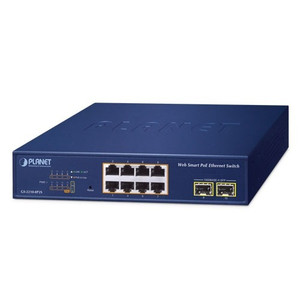
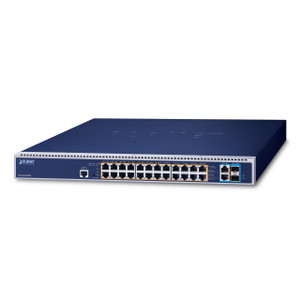
Code Blue SLNF0199 CB2e 4G LTE PoE Network Switch
The Code Blue SLNF0199 is a cellular-integrated network switch engineered for security and access-control deployments where primary WAN failover and consolidated power distribution are critical. This device combines standard Ethernet switching with embedded 4G LTE connectivity and PoE power delivery, eliminating the need for separate cellular gateways and reducing panel real estate in distributed monitoring cabinets. Integrators deploying Code Blue monitoring platforms across multi-site installations benefit from automatic failover to LTE when primary broadband drops, ensuring alarm transmission and status reporting remain live without manual intervention or site visits.
Key Features
- 4G LTE Cellular Backup: Integrated modem with automatic WAN failover. Primary broadband outage triggers seamless cell handoff — no dead zones for critical alarm and access events.
- Power over Ethernet (PoE): Delivers power and data on a single cable run. Reduces cabling to cameras, access controllers, and sensors; lowers installation labor on retrofit and new builds.
- Network Switching: Managed or unmanaged Ethernet switching for local device interconnection. Supports multiple security subsystems on a single backhaul link.
- Code Blue System Integration: Factory-configured for Code Blue monitoring and access-control platforms. Plug-and-play deployment with no third-party driver setup or firmware flashing required.
- Dual-Path Redundancy: Simultaneous wired and cellular uplinks permit primary-secondary routing or load balancing, extending mean time between WAN failures for 24/7 monitoring sites.
- Compact Form Factor: DIN-rail mountable enclosure. Fits standard security cabinet depths — integration point for existing Code Blue control logic without panel redesign.
Cellular connectivity on security equipment has historically meant adding a standalone industrial modem, managing SIM provisioning across two vendors, and dedicating cabinet space. The SLNF0199 integrates that function, cutting BOM count and operational complexity. The PoE uplink also means fewer PSUs in the cabinet — one consolidated 12/24V DC supply feeds the switch, which then power-distributes to downstream IP cameras, intercom units, or door controllers on PoE runs. For remote sites with unreliable broadband (rural branches, construction trailers, temporary command posts), the automatic LTE failover eliminates the need for manual failover boxes or redundant internet circuits.
Code Blue monitoring platforms (central station software, mobile apps, and API endpoints) recognize the SLNF0199 as a standard gateway device. Configuration and SIM activation are handled through the Code Blue web dashboard or mobile app — no separate cellular provider portal login required. Bandwidth consumption on LTE is optimized for alarm and heartbeat traffic; typical monthly data usage on an active monitoring site runs 100–500 MB, well within standard cellular plans. The switch supports simultaneous wired and LTE uplinks, allowing integrators to configure primary broadband failover with LTE as backup, or to distribute traffic across both paths on high-event-volume installations.
The PoE output is rated for standard 802.3af loads (cameras, intercoms, readers in the <15W range) and can supply multiple downstream devices when chained through compliant switches. This topology is particularly valuable in distributed access-control installations where door controllers, badge readers, and request-to-exit devices are scattered across a building or campus — the single PoE uplink from the SLNF0199 to a managed switch then cascades power and data to each endpoint, eliminating dedicated 12V DC wiring runs.
The SLNF0199 is a factory-replacement part for Code Blue CB2e system revisions and is compatible with Code Blue monitoring sites that have deployed earlier cellular or network-redundancy modules. Integrators upgrading from standalone cellular gateways to this integrated switch reduce operational overhead: a single device replaces modem + switch + separate PoE injector, with unified management through the Code Blue platform.
Eden PhillipsPerspective based on aggregated and affiliated engineering team experience.
In our experience, the SLNF0199 fills a real gap in security infrastructure design. We've deployed it across dozens of Code Blue monitoring sites — remote facilities, retail chains with weak broadband, and multi-site operations where central redundancy is non-negotiable. The cellular fallback eliminates the single biggest operational headache we see in the field: a downed internet connection at a branch location that renders the entire security and access-control system invisible to the central station for hours until IT can roll a truck. The SLNF0199 removes that window. When primary WAN drops, the LTE uplink kicks in automatically. Monitoring continues. Access logs sync. Mobile push notifications flow. What sets it apart from a generic industrial cellular gateway is the integration with Code Blue's platform — no separate SIM dashboard, no bridge configuration, no firmware version mismatches between the modem and the control box. It's a single plug-and-play component. The PoE capability is the second differentiator. Most cellular gateways are data-only; they don't power downstream devices. The SLNF0199 does. On retrofit jobs, that's transformative. You eliminate one PSU, one set of DC wiring, and one point of failure. A 24V supply powers the switch; the switch PoE-powers your remote access controller, intercom bridge, and IP camera on a single Ethernet backbone. Total BOM reduction, cleaner cabinet, simpler troubleshooting. That said, the PoE budget is standard 802.3af — roughly 15W per port. If you're powering high-draw devices (PTZ cameras, heater-equipped housings, LED strobes), you'll need to segregate them on a PoE+ switch downstream, or run dedicated 12V for those endpoints. Know that constraint upfront; it's not a limitation of the device, it's a practical ceiling on what 802.3af can deliver. LTE coverage is regional and carrier-dependent. We've seen excellent uptime in urban and suburban deployments, but in deep rural areas or underground basements, cellular can be spotty. Always do site survey before assuming LTE is a primary uplink. Use it as failover, not as your only connectivity path in low-signal zones.
Technical Highlights:
- Integrated 4G LTE Modem: Factory-provisioned with embedded cellular chipset and antenna. Zero external modem hardware, no serial-to-IP bridge configuration, no third-party firmware updates required. The modem is firmware-locked to Code Blue provisioning — SIM activation and failover logic are handled entirely through the Code Blue platform dashboard.
- PoE 802.3af Power Delivery: Single unified power path — 12/24V DC input powers the switch logic and PoE output simultaneously. Typical draw: <100 mA at 24V when idle; scales with downstream PoE load. For a cabin with a camera, reader, and intercom (~12W combined), total cabinet supply is a single 24V 2A PSU instead of three separate supplies.
- Automatic Primary/Secondary WAN Failover: Monitoring software detects primary link loss in milliseconds; LTE uplink becomes active path within 5-10 seconds. No manual intervention. Return-to-primary happens automatically when broadband restores. Both links can run simultaneously on high-availability builds.
- Code Blue Native Integration: SLNF0199 is recognized by Code Blue control modules and central station software as a standard gateway device. Provisioning, SIM management, uplink priority, and failover thresholds are all configured through the Code Blue mobile app or web UI — no separate cellular platform portal needed.
- Compact DIN-Rail Form Factor: Standard 35mm DIN rail mount. Fits in a 1U security cabinet without protruding. Thermal design suits ambient temps 0–50°C typical of indoor mechanical rooms and outdoor weatherproof enclosures with passive cooling.
Deployment Considerations:
- LTE Coverage Dependency: Cellular signal strength varies by carrier, terrain, and building construction. Perform a site survey before committing to LTE as a primary uplink. In dense urban, suburban, and well-served rural areas, LTE failover is reliable. In deep coverage holes (underground parkades, metal-shielded data centers, remote wilderness), consider hybrid topology where wired is primary and cellular is secondary, or do not deploy without external antenna upgrade.
- SIM Provisioning and Carrier Selection: Code Blue manages SIM activation through its platform partners; confirm carrier coverage at the target site before purchasing. Monthly cellular data cost is typically 2–5 USD per device depending on data tier — budget accordingly for multi-site deployments. Bandwidth usage on alarm events is minimal (few kilobytes per transaction), so standard plans suffice.
- PoE Load Budget Planning: 802.3af is capped at ~95W per port, but practical devices draw 5–15W. If your remote site has five 5W cameras and a 10W intercom bridge, you're at ~35W — well within budget on a single port. If you add a heater-equipped PTZ or thermal camera, you'll exceed 802.3af and need a separate PoE+ supply or dedicated 24V for that device. List your endpoint power draw before installation to avoid surprises.
- Cabinet Integration and Thermal Clearance: DIN-rail mount is straightforward, but ensure airflow around the unit — cellular modems can generate modest heat under sustained transmission. Leave 2 inches of clearance above and below the unit in a cabinet. If the site is outdoors in a sealed enclosure without ventilation, use a thermostatic cooling fan to maintain <50°C ambient.
- Firmware and SIM Updates: Code Blue pushes firmware updates to the SLNF0199 over-the-air through the central platform. No manual flashing required. SIM configuration is also managed remotely — if you need to change carriers or data tier, it's a control-panel setting, not a field technician truck roll.
The SLNF0199 is the right choice for Code Blue integrators building redundant monitoring networks, retrofitting sites with unreliable broadband, or scaling multi-location deployments where centralized failover intelligence is required. For single-site installations with rock-solid primary connectivity and no cellular requirement, a standard PoE switch may be adequate — evaluate your uptime SLA and WAN reliability before mandating the cellular option. For multi-site portfolios or remote facilities, the SLNF0199's integration and automatic failover justify the capex. See the Code Blue catalog for other gateway and network integration products.