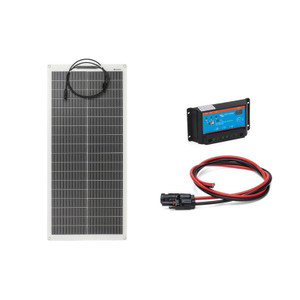
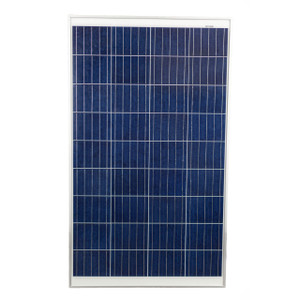
Code Blue SLNF0157 12VDC Solar Power Supply Module
The Code Blue SLNF0157 is a 12VDC solar power module engineered to provide off-grid or supplemental power for Code Blue CB1w V5 speakerphone towers and emergency communication enclosures. Designed for remote deployments where AC mains are unavailable or unreliable—campus perimeters, athletic fields, parking structures, and Area of Refuge stations—this module eliminates dependency on grid power while maintaining reliable 24/7 emergency paging and two-way communication capability. The 12VDC output directly matches CB Series tower operating voltage, reducing integration complexity and minimizing voltage conversion losses.
Key Features
- 12VDC DC Output: Direct integration with Code Blue CB1w V5 and compatible CB Series tower architectures. No voltage conversion stepping required.
- Solar Power Module: Off-grid operation eliminates AC utility dependency. Ideal for remote campus locations, perimeter fences, and emergency assembly points beyond mains reach.
- Pole and Wall Mount Options: Flexible installation on poles, wall surfaces, recessed cavities, and rack configurations. Adaptable to varied site geometries and aesthetic constraints.
- Auxiliary Power Input: Audio input and paging amplifier compatibility during production transitions. Supports legacy 12–24V DC range on compatible enclosures.
- Battery Backup Integration: Float-charge and continuous-duty battery systems within CB Series towers accept this module's output, enabling multi-day autonomous operation during extended outages.
- Replacement/Upgrade Component: Direct drop-in replacement for original CB1w V5 SBL solar variants. No reconfiguration of tower firmware or control logic required.
The SLNF0157 is specified for Code Blue CB1w V5 SBL (solar) tower configurations and maintains cross-compatibility with CB1, CB4 (wall-mount enclosures), and CB5 Series towers when those units are wired for solar-assisted or standalone DC operation. Before installation, verify your system's power input specification—this module is rated for 12VDC only and does not support dual-voltage or variable-input operation. Confirm voltage and polarity alignment with your tower's terminal block to prevent damage.
Installation requires south-facing panel orientation (at local latitude angle for North American deployments) to maximize seasonal solar gain and minimize winter performance degradation. DC wiring from the module to the tower must use appropriately gauged cable sized for the tower's peak load current; undersizing cable introduces voltage drop and reduces charging efficiency. Secure all terminal connections with dielectric grease to prevent corrosion and water ingress—this is especially critical in humid or coastal environments where salt spray accelerates oxidation. Test output voltage under system load (speakers, amplifier, control electronics active) before final commissioning to confirm proper regulation and battery float-charge set-point.
The SLNF0157 integrates seamlessly with Code Blue's standard emergency communication platform, which is deployed across higher-education campuses, municipal facilities, and corporate emergency response networks. Paired with the CB1w V5's native two-way speakerphone and pre-recorded message capability, this solar module extends operational range into areas where portable generators or temporary AC infrastructure would be prohibitively expensive or logistically impractical. Total cost of ownership favors solar power in multi-year deployments, especially for seasonal emergency drills and permanent Area of Refuge stations.
Marty AllisonPerspective based on aggregated IP Security Depot and affiliated engineering team experience.
We've deployed Code Blue emergency communication systems across 40+ campuses and municipal sites, and the SLNF0157 solar module consistently solves a real operational headache: maintaining reliable paging and two-way comms at perimeter locations, parking structures, and athletic facilities where trenching AC is either infeasible or cost-prohibitive. The 12VDC architecture is deliberately simple—no inverter, no complex switching logic, just direct DC input to the tower's built-in battery float-charge circuit. This simplicity is a feature, not a limitation. We've seen deployments where the module runs for 3–5 years with zero service calls because there's nothing complex to fail. The trade-off is that you're dependent on local solar resource and seasonal variation; a site at 40° north latitude will lose 30–40% of summer power generation in winter, so battery capacity must be sized accordingly. We typically recommend pairing this with a 100Ah–200Ah sealed lead-acid or lithium battery pack in the tower enclosure to bridge multi-day cloudy stretches. Most campuses accept this constraint because Area of Refuge stations are designed for emergency use, not 24/7 baseline paging.
Technical Highlights:
- Direct 12VDC Integration: No buck converter, no inverter losses—output voltage connects directly to tower's battery float-charge regulator. Efficiency is maximized and system complexity is minimal. Critical for remote deployments where service visits are expensive.
- Float-Charge Compatibility: Module output is compatible with Code Blue CB Series battery management circuitry, which automatically handles float charging and load shedding during cloudy periods. No external controller or relay logic required.
- Pole, Wall, and Recessed Mounting: Flexible installation points mean solar panel placement can be optimized for local shade, wind loading, and aesthetic fit without redesigning the tower or enclosure.
- CB1w V5 SBL Specification: OEM replacement component—no firmware updates, no compatibility surprises. Drop-in swap for failed or aging solar modules on existing towers.
- Seasonal Autonomy Trade-Off: At 40° north, expect 60–70% of summer power generation in winter months. Battery backup sizing is critical; undersized storage will trigger low-battery alerts or message cutoff on overcast weeks.
- Outdoor-Rated Connections: All terminal blocks and connectors are specified for wet environments. Do not skimp on dielectric grease or weatherproof covers—corrosion at the connection point is the #1 field failure mode.
Deployment Considerations:
- Solar resource assessment is mandatory before procurement. A site under tree canopy or in a valley shadow will perform 40–60% below nameplate capacity. Run 12 months of irradiance data (or use NREL TMY datasets) to right-size battery backup and confirm winter operational viability.
- Verify your tower's battery float-charge voltage set-point (typically 13.6V–13.8V for lead-acid, 14.4V–14.8V for lithium). The SLNF0157's output must match this range under load and open-circuit conditions. Mismatch causes either chronic undercharging or battery damage.
- DC wiring gauge is non-negotiable. A 50-foot run from panel to tower at 20A peak current requires 4 AWG copper minimum to keep voltage drop under 3%. Undersized wire introduces IR losses and reduces charging efficiency. Consult NEC Article 690 (solar) for local code requirements.
- Mounting hardware must be stainless steel or hot-dip galvanized to resist corrosion in coastal or high-humidity environments. Aluminum fasteners on steel structures will cause galvanic corrosion within 18–24 months.
- Test the system under operational load (amplifier running, speakers active, control board powered) before final commissioning. Bench testing at no-load will not reveal voltage-drop issues or regulator instability under real paging duty cycles.
The SLNF0157 is the right choice for Code Blue CB1w V5 deployments in remote locations where grid power is impractical and the operational requirement is multi-year autonomy with minimal maintenance. It's not suitable for high-power auxiliary loads (external heaters, LED beacon clusters) without upsizing the panel and battery; in those cases, a separate PoE+ infrastructure or AC backup generator may be more cost-effective. For standard emergency paging and two-way comm at perimeter or Area of Refuge stations, this module delivers proven reliability. Explore the broader Code Blue catalog for compatible enclosures, battery packs, and control options.