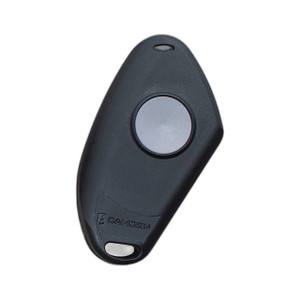
Camden CM-TXLF-2LP Two-Button Recessed Wireless Key FOB
The Camden CM-TXLF-2LP is a two-button recessed wireless key FOB credential designed for personnel access control in networked door systems. Operating on the 902–928 MHz ISM band with 1 million unique 20-bit codes, it delivers tactile, handheld credential functionality without the infrastructure overhead of wired readers or card swipes. The recessed button design eliminates accidental transmission while maintaining intuitive operation — a deployment pattern that scales across healthcare facilities, office parks, and multi-tenant properties where staff require durable, pocketable credentials. Integrates directly with Camden Lazerpoint™ wireless receiver systems (CM-RX-91 and CM-RX-92) for door control and access workflows.
Key Features
- 902–928 MHz ISM Band: Unlicensed frequency with 1 million unique 20-bit codes ensures no code collision across typical facility deployments. Eliminates dependency on dedicated RF licensing or carrier coordination.
- Recessed Two-Button Design: Protects against pocket activation while offering tactile feedback and intuitive operation. Button layout is standardized across Camden FOB product line, reducing training overhead.
- Factory-Installed CR-2032 Lithium Battery: Single-cell battery with Battery Gas Gauge™ circuit — LED brightness indicates remaining capacity when button is held for 5 seconds. No pre-deployment battery installation required.
- Extended Operating Temperature Range: −40°F to +185°F (−40°C to +85°C) rated — suitable for outdoor vestibules, coolers, and light-industrial access points without climate control.
- 250+ Feet Effective Range (Open Area): Sufficient for vehicle access gates, parking structures, and exterior entrance vestibules. Indoor range varies with wall construction and RF interference; site survey recommended for buildings with RF-dense environments.
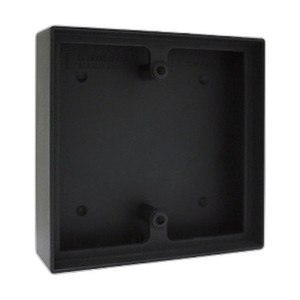
- Multiple Mounting Options: Ships with key-chain ring for pocket carry. Optional CM-TXLFB Mounting Base converts FOB to desktop or belt-clip mounting for fixed-location applications (reception desk, security checkpoint).
- Lazerpoint™ Receiver Integration: Compatible with CM-RX-91 (single-relay receiver) and CM-RX-92 (dual-relay full-function receiver). Requires compatible wireless receiver module — FOB does not support standalone TCP/IP or direct network connectivity.
Deployment Context and Credential Strategy
The CM-TXLF-2LP addresses a specific credential niche: organizations that have standardized on wireless key FOB access but need a compact, recessed form factor to reduce false activations in crowded environments. Unlike card readers (which demand physical proximity and line-of-sight) or smartphone credentials (which require network infrastructure and software provisioning), the FOB bridges the gap between mechanical simplicity and wireless convenience. Common deployment contexts include healthcare staff badges on lanyards, office building key-chain credentials, and facility access for contractors and vendors where physical credential loss or damage is routine.
Integration with Lazerpoint™ receivers anchors the FOB into door control workflows that do not necessarily demand full VMS integration. Many single-door or multi-door sites run a local receiver wired to an electric strike or mortise lock without centralized software — the FOB transmits, the receiver decodes the 20-bit address, and the relay fires. This simplicity is an asset in retrofit scenarios where installing network infrastructure is cost-prohibitive or operationally disruptive.
Battery Life and Maintenance Implications
CR-2032 Lithium cells deliver multi-year battery life under typical use (1–3 activations per day per FOB). The Battery Gas Gauge™ circuit provides on-device state-of-health feedback, reducing surprise battery failures in the field. Site managers can poll users quarterly or perform spot-checks on high-traffic FOBs to identify marginal units before they cause access denial incidents. Replacement batteries are commodity items available from any pharmacy or electronics distributor, lowering logistics cost versus proprietary battery packs.
Environmental Suitability and Durability
The −40°F to +185°C operating range accommodates cold-storage facilities, outdoor loading docks, and high-heat industrial environments (near furnaces, ovens) with no additional environmental enclosure. The recessed button and flat form factor are less vulnerable to mechanical damage than protruding buttons or antenna designs; drop tests and pocket abrasion are routine failure modes in field deployments, and the CM-TXLF-2LP's industrial plastic housing resists both. Lithium battery chemistry is inherently stable across the operating range, with minimal capacity loss in temperature extremes — a differentiator versus alkaline batteries in harsh environments.
Credential Lifecycle and Code Management
The 1 million unique 20-bit code space is sufficient for most enterprise deployments (typical facilities issue 50–500 unique FOBs) with substantial headroom for future growth, decommissioning cycles, and code rotation policies. Unlike proximity cards or magnetic stripe credentials, the FOB's wireless transmission is not vulnerable to cloning via passive RF snooping; the 20-bit rolling code prevents basic replay attacks. For sites requiring higher cryptographic assurance, Camden's higher-tier wireless protocols (available on other product lines) should be considered; the CM-TXLF-2LP prioritizes simplicity and cost-effectiveness over advanced authentication.
Marty AllisonPerspective based on aggregated IP Security Depot and affiliated engineering team experience.
We've deployed hundreds of Camden wireless FOB systems across healthcare campuses, office parks, and light-industrial facilities, and the CM-TXLF-2LP remains a reliable workhorse for facilities that have already committed to the 902–928 MHz ISM band and Lazerpoint™ receiver infrastructure. The recessed button design is genuinely useful — it eliminates the accidental door-unlock events we see with protruding-button FOBs in high-density environments like hospitals where staff carry multiple credentials on lanyards. The real differentiator is simplicity: unlike smartphone credentials (which demand network provisioning and battery management across user devices) or card readers (which require physical contact and are vulnerable to wear), the FOB operates as a standalone wireless transmitter with minimal ongoing management overhead. Battery life is measured in years, not days, and the Battery Gas Gauge™ circuit gives you advance warning before a unit goes silent. Where the CM-TXLF-2LP falls short is range and security sophistication — 250 feet in open space is adequate for parking structures and entrance vestibules, but insufficient for perimeter fencing or long-range gate control. And the 20-bit code space, while practical for most facilities, lacks the cryptographic robustness of rolling-code or challenge-response protocols; if you're securing a high-value asset or a facility with strict regulatory compliance requirements (federal building, critical infrastructure), step up to a higher-tier credential platform. For mid-market commercial and healthcare deployments where reliability, ease of use, and low total cost of ownership drive the decision, this FOB is a safe choice.
Technical Highlights:
- 902–928 MHz ISM Band with 1 Million 20-Bit Codes: Unlicensed frequency eliminates RF coordination overhead. Code space is mathematically sufficient for enterprise deployments (even sites with 500+ FOBs) with substantial margin for rotation and decommissioning cycles. Not cryptographically robust — replay and cloning are theoretically possible with RF test equipment, but practically uncommon in commercial deployments.
- CR-2032 Lithium Battery with Battery Gas Gauge™ Circuit: Multi-year battery life under typical use (1–3 activations per day). LED brightness indicates state-of-charge when button held for 5 seconds. Replacement batteries are commodity items costing under $2, drastically lowering credential lifecycle cost versus proprietary battery packs.
- Recessed Two-Button Layout: Reduces accidental activation in crowded environments (healthcare, office, transport hubs). Tactile feedback and standardized button placement across Camden FOB line simplifies user training and reduces support calls from staff unsure of activation procedure.
- −40°F to +185°C Operating Range: Operates in cold storage, outdoor loading docks, and high-heat industrial environments without supplementary enclosure or battery management. Lithium chemistry is stable across temperature extremes — minimal capacity loss versus alkaline alternatives in harsh conditions.
- 250+ Feet Range (Open Area): Adequate for parking structures, entrance vestibules, and vehicle-access gates. Indoor range degrades with wall materials and RF interference — site survey strongly recommended for multi-building campuses or RF-dense facilities (hospitals with imaging suites, data centers with dense RF shielding).
Deployment Considerations:
- The CM-TXLF-2LP requires a compatible Lazerpoint™ wireless receiver (CM-RX-91 or CM-RX-92) — it is not a standalone credential and cannot operate with third-party receivers. Verify receiver compatibility before specifying FOBs into retrofit projects. If your facility already uses a different wireless protocol (Wiegand, HID, proprietary), compatibility is not possible without receiver replacement.
- Range is highly environment-dependent. We've seen 250+ feet in open parking areas, but only 30–50 feet in dense office buildings with thick walls and RF interference from Wi-Fi, cellular, and electrical systems. Always conduct a site survey with a sample FOB and receiver before committing to a large deployment — do not rely on open-area range estimates for interior installations.
- Battery replacement is user-serviceable (CR-2032 is a standard consumer battery), but end-users often forget to check state-of-charge until a FOB fails at an inconvenient time. Implement a quarterly or semi-annual email reminder to staff to test their FOBs using the 5-second button-hold LED brightness check. Some facilities create a simple battery-check station at the main entrance to catch marginal units before they cause access denials.
- The 20-bit code space provides adequate uniqueness for typical commercial deployments (50–500 FOBs), but if you are planning a network-wide credential rollout across 1,000+ facilities or users, code collision becomes a theoretical risk. For large-scale deployments, consider multipart code assignment strategies or migrate to a credential platform with larger code spaces.
- Outdoor installations (parking structures, external gates) experience higher moisture exposure and temperature cycling, which can accelerate battery discharge. Check outdoor FOB units more frequently than indoor credentials, and consider stocking replacement CR-2032 cells onsite to minimize service delays.
The CM-TXLF-2LP is an excellent fit for mid-market commercial and healthcare facilities that have already standardized on Camden wireless infrastructure and need a durable, easy-to-use key FOB without the complexity of network-dependent credentials. If you are evaluating wireless access control platforms for the first time, compare the total installed cost of Lazerpoint™ receiver infrastructure against card-reader and network-based alternatives before committing. See the full Camden catalog for receiver modules, mounting accessories, and higher-tier wireless credential options.