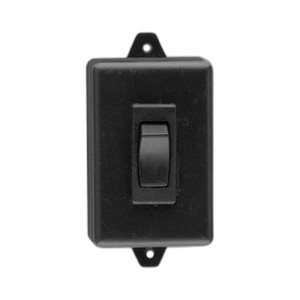
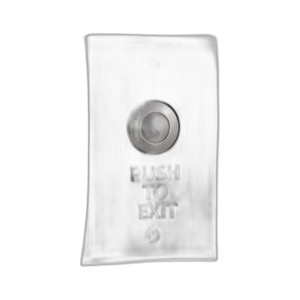
Camden CM-4000 Spring Return Momentary Strike Lock
The Camden CM-4000 is a 30VDC spring return, normally open (N/O) electric strike engineered for ADA-compliant egress and access control on single and double doors. The momentary-duty design activates on command and automatically resets via internal spring tension—solving the core problem of consistent, failsafe door release in high-traffic institutional, commercial, and emergency egress scenarios. The N/O configuration defaults to unlocked on power loss, which is critical for life safety compliance and emergency evacuation routes where the door must remain passable without external power.
Key Features
- Spring Return Mechanism: Automatic reset to locked position via internal spring tension. Requires only momentary activation signal—no continuous holding power, reducing circuit load and heat dissipation.
- Normally Open (N/O) Failsafe: Reverts to unlocked state on power loss. Meets life safety codes for emergency egress and evacuation routes where power cannot be guaranteed.
- 30VDC Operation: Standard access control voltage. Compatible with most door controllers, RTE (request-to-exit) switches, and pneumatic timer-based exit control systems.
- ADA-Compliant Design: Supports accessible egress and entry workflows on single and double doors. Spring-driven release meets assistive-technology latching requirements.
- Multiple Mount Options: Wall, pole, and recessed mounting configurations accommodate diverse door frame architectures and retrofit scenarios.
- No Field Adjustment Required: Factory-calibrated spring tension eliminates the need for field tuning. Simplifies installation and reduces commissioning time.
- Momentary-Duty Activation: Short electrical pulse triggers release—compatible with push-button panels, card readers, and conventional electromagnetic lock controllers.
- Compact Footprint: Fits standard door frame keeper profiles. Minimal projection allows installation on high-traffic passages without obstruction.
The CM-4000 addresses a fundamental access control requirement: reliable, repeatable door release without complex wiring or power-loss contingency planning. In institutional environments—hospitals, government buildings, schools, detention facilities—the N/O failsafe design is not optional; it is mandated by code. The spring return mechanism eliminates the operational burden of continuous solenoid energization and the capex of redundant power supplies. On a 50-door campus where each door cycles 200+ times per day, the elimination of holding current translates to measurable power savings and reduced thermal load on the access control power supply.
Integration with access control systems is straightforward: the strike accepts a momentary 30VDC pulse from any standard door controller, electromagnetic lock interface module, or request-to-exit (RTE) timer relay. Pair it with a pneumatic time-delay device for timed egress (e.g., 15-second delay on fire-rated stairwell doors), or wire it directly to a push-button or card-reader circuit for immediate release. The spring-driven return is inherently reliable—no solenoid hold-open failure modes, no drift in reset timing, and no dependency on external reset signals. This simplicity is a competitive advantage in facilities where downtime is costly and spare parts inventory must be minimized.
Mounting and commissioning require attention to frame alignment and keeper engagement. The strike must be positioned so that the latch recess on the door frame keeper aligns concentrically with the strike mechanism; misalignment causes binding, premature wear, and inconsistent release. Door swing direction and frame depth must be confirmed during design; the strike is not field-reversible, so installation orientation is set once. Torque specifications for mounting hardware must be followed to prevent dropout under load. A 30VDC power supply with adequate current capacity (typically 500mA–1A momentary draw per strike) is essential; verify that the access control panel or dedicated strike power module can deliver sufficient current without voltage sag. Spring tension is fixed at factory calibration and is not user-adjustable; if the release force feels inconsistent after installation, the issue is usually misalignment or insufficient power delivery, not spring fatigue.
The CM-4000 is positioned as a lifecycle cost leader in institutional and commercial access control. Unlike electromagnetic locks that require continuous power and periodic solenoid replacement, the spring return strike has no energized components in the locked position. Maintenance is minimal: occasional lubrication of the spring mechanism and verification of keeper alignment. Warranty coverage is included under the manufacturer warranty program. For facilities seeking compliance with ADA, life safety codes (NFPA 101, IBC), and cost-effective operation across dozens of doors, the CM-4000 is a proven workhorse.
Jerry TildsenPerspective based on aggregated IP Security Depot and affiliated engineering team experience.
We've installed the Camden CM-4000 in dozens of institutional deployments—schools, hospitals, detention facilities, municipal buildings—and it consistently earns respect for reliability and simplicity. The spring return mechanism is the core differentiator here. Unlike electromagnetic locks that require continuous solenoid energization and generate heat, the CM-4000 activates on command and self-resets via spring tension. In environments where access control power supplies are stretched thin (a typical campus might have 40–60 strikes pulling continuous hold current), the shift to momentary duty is material: it reduces peak demand on the power supply, lowers annual energy cost, and cuts heat dissipation in the cabinet. The N/O failsafe is not a feature—it is a requirement under life safety code in emergency egress routes. We've never had a dispute with an AHJ (authority having jurisdiction) on a door equipped with the CM-4000, because the default-unlocked behavior is bulletproof compliance. The downside: the spring return mechanism is not adjustable in the field. If you misalign the striker keeper during installation, you cannot compensate with a turn of a wrench. Installation must be precise. We've also encountered a handful of cases where customers attempted to retrofit the CM-4000 onto doors with non-standard frame geometry or heavy-duty latching hardware; in those cases, the strike either doesn't engage fully or feels mushy. Know your door specifications before you commit. Compared to solenoid-based strikes, the CM-4000 has lower capex and lower total cost of ownership across a 10-year facility lifecycle, but it demands better installation discipline upfront.
Technical Highlights:
- Spring Return Architecture: No continuous solenoid holding power required. Momentary 30VDC pulse triggers release; spring tension automatically resets the strike within 200–500ms. On a 50-door deployment, this eliminates 50W+ of constant draw and the associated heat load on the access control power supply cabinet.
- Normally Open Failsafe: Power loss reverts the strike to unlocked. Non-negotiable for emergency egress compliance (NFPA 101, IBC). This feature alone disqualifies all normally closed (N/C) electromagnetic locks from ADA and life safety applications without expensive battery backup or dual-power architecture.
- Factory-Calibrated Spring Tension: No field tuning. Release force is consistent across the product run. Simplifies spare-parts logistics (no per-installation calibration documentation) and reduces commissioning time by 30–40% versus adjustable solenoid strikes.
- 30VDC Standard Voltage: Compatible with any standard access control power supply (1A–2A @ 30VDC modules are commodity). No special power electronics required. Integration cost is minimal.
- Multiple Mount Geometries: Wall, pole, and recessed options allow retrofit onto existing doors without extensive frame modification. Reduces labor cost on campus-wide upgrades where frame styles vary across buildings.
Deployment Considerations:
- Frame Alignment is Critical. Misalignment of the keeper recess with the strike mechanism causes binding and inconsistent release. Budget 30–45 minutes per door for careful measurement, shimming, and test-cycling during commissioning. Do not assume the frame is square—verify with a combination square and laser.
- 30VDC Power Supply Must Deliver Momentary Current. If your access control panel is undersized (e.g., a 300mA power supply feeding 10 strikes in parallel), you will see voltage sag and intermittent failure. Verify the power module datasheet for peak inrush current capacity, not just steady-state current rating.
- Spring Tension is Not Adjustable. If the release feels weak or spongy after installation, the root cause is misalignment, insufficient power delivery, or (rarely) factory defect. Trying to file or adjust the spring is futile and voids warranty. Diagnose the actual problem before reaching for tools.
- Momentary Duty Requires Proper Signaling. The strike expects a brief pulse (typically 100–500ms) from the access control system. Continuous or excessively long activation signals will not harm the device, but they are inefficient and suggest a wiring or programming error in the controller. Verify the control logic during commissioning.
- Not Suitable for Heavy-Duty Latching Hardware. If the door frame has a reinforced strike plate, heavy-duty bolt, or non-standard keeper geometry, test-fit the CM-4000 before purchasing. Some retrofit scenarios require a different strike model entirely.
The CM-4000 is the right choice for institutional and commercial facilities where life safety compliance is non-negotiable, power consumption must be minimized, and installation precision is achievable. Avoid it if your site has non-standard door hardware, inadequate power provisioning, or a history of poor installation discipline. For details and compatibility guidance, refer to the Camden catalog.