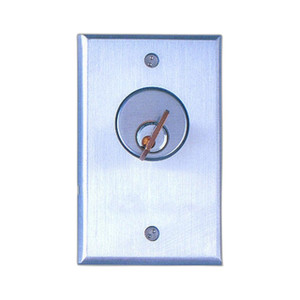
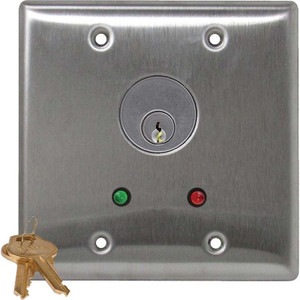
Camden CM-1250 Key Switch SPDT Momentary
The Camden CM-1250 is a flush-mount key-switch control designed for applications requiring direct key actuation of door strikes, electromagnetic locks, and signal functions within access control systems. It provides two independent SPDT (single-pole, double-throw) momentary contacts rated for 30VDC, accepting standard mortise cylinders from 1" to 1¼" in diameter. This control is ideal for retrofit installations where authorized personnel need reliable key-based entry trigger without dependence on credential readers or networked systems.
Key Features
- SPDT Momentary Contact Design: Two independent single-pole, double-throw contacts. Each contact closes momentarily when the key turns, allowing independent control of two separate functions (primary strike + secondary solenoid, or strike + relay signal).
- 30VDC Rating: Rated for 30VDC dry-contact switching. Compatible with standard electromagnetic lock controllers, electric strike panels, and relay-based access control systems operating at or below 30VDC.
- Mortise Cylinder Compatibility: Accepts standard mortise cylinders 1" to 1¼" OD. Retrofit-friendly into existing commercial door frames designed for mortise hardware.
- Passive Dry Contact: No built-in logic, no power draw from the switch itself — operates as a simple mechanical contact closure. All control logic resides in the connected panel or strike controller.
- Cast Housing Assembly: One-piece cast construction with counter-sunk cylinder opening. Single-gang mounting footprint (2¾" width reference) for standard door prep.
- Tamper-Resistant Hardware: Supplied with both standard and tamper-proof screws with dedicated driver. Limits unauthorized disassembly in high-security installations.
The CM-1250 integrates into any access control architecture that requires hardwired key-based triggering. Because it outputs a simple dry contact, it works equally well with legacy relay panels, modern IP-based access controllers via dry-contact relay modules, and hybrid systems combining credential readers with manual override capability. The momentary nature of the contact means the connected strike or lock automatically de-energizes when the key returns to neutral — no sustained signal required.
Deployment scenarios include: single-point override switches at management offices, emergency egress controls, mechanical room entry where credential readers are impractical, and retrofit projects where existing door frames already accommodate mortise cylinders. In multi-tenant or high-turnover environments, key-switch controls eliminate the administrative overhead of credential issuance and revocation for occasional-access roles.
The 30VDC rating pairs directly with standard commercial electric strike power supplies and magnetic lock controllers. Verify that your strike or lock controller accepts dry SPDT momentary input — do not exceed the supply voltage of your control panel. The mortise cylinder itself is sourced separately; specify a cylinder matching your master-key system to ensure consistency with your building's key infrastructure. Cast housing and stainless-steel fastening resist corrosion in damp entry vestibules and exterior door frames.
The CM-1250 is manufactured by Camden Door Controls, a subsidiary of ASSA ABLOY with decades of commercial access hardware expertise. It carries a 1-year warranty covering defects in materials and workmanship. For questions on cylinder interchangeability or panel integration, consult the product datasheet or your access control system integrator.
Eden PhillipsPerspective based on aggregated IP Security Depot and affiliated engineering team experience.
We've deployed dozens of CM-1250 units in retrofit access control projects where the client's existing door frames already house mortise cylinders, and the hardware consistently performs without issues. The real value here isn't flashy — it's reliability and simplicity. You're not buying smart, you're buying a mechanical switch that does one thing extremely well: closes a dry contact when a key turns. In our experience, that simplicity means fewer integration headaches, lower failure rates, and easier staff training. We've seen integrators pair this with everything from 1980s relay panels to brand-new IP badge readers (via a relay module), because the CM-1250 doesn't care what's on the other end of the dry contact — it just sends a signal. The momentary design is particularly elegant for door-strike applications: key turns, strike de-energizes immediately when key returns to center. No sustained signal, no power waste, no confusion about whether a strike is currently locked or unlocked. That's a tactical advantage in high-turnover or secure-room scenarios where mechanical simplicity beats electrical complexity.
Technical Highlights:
- SPDT Momentary Switching: Two independent contacts allow simultaneous control of a primary strike and a secondary function (relay trigger, alarm output, or second electromagnetic lock). The momentary nature — signal present only while the key is actively turned — prevents accidental lockout scenarios and simplifies troubleshooting.
- Dry Contact Output at 30VDC: A passive switch with no embedded logic means absolute compatibility with legacy and modern control systems. The only requirement: your strike controller or panel must accept dry-contact input. No special driver, no firmware update, no VPN configuration.
- Mortise Cylinder Standardization: 1" to 1¼" OD cylinders are ubiquitous in commercial doors. This compatibility saves retrofit cost — no need for custom door prep or exotic cylinder sourcing. If your building's master-key system already uses standard mortise cylinders, the CM-1250 drops in immediately.
- Cast Housing Durability: One-piece casting — no seams, no plastic parts that fatigue or crack under repeated key actuation. In high-traffic or humid environments (vestibules, exterior doors), this beats composite housings hands down.
- Tamper-Proof Fastening Option: Socket-head screws and a proprietary driver in the supplied hardware set discourage casual disassembly. We recommend using these fasteners in secure-room or administrative-access applications where key-switch tampering is a concern.
Deployment Considerations:
- Verify your strike controller or magnetic lock accepts dry SPDT momentary contact at or below 30VDC. If you're uncertain, consult your panel datasheet or test with a multimeter before final installation. Exceed the voltage rating, and you risk contact erosion or failure.
- Mortise cylinders are not included; source them from your preferred lock supplier to match your building's master-key system. Mixing different cylinder types across a site creates key-management complexity. Plan your cylinder sourcing before ordering the switches.
- Single-gang mounting requires 2¾" width minimum. Verify your door prep allows this footprint — in some retrofit scenarios, you may need to enlarge an existing opening or choose a surface-mount option if the door is too narrow.
- The momentary contact is ideal for door-strike applications but may not suit equipment requiring a sustained signal (e.g., a parking-gate motor expecting continuous power). Test your specific application before field deployment.
- In multi-key environments, ensure your key blank matches the mortise cylinder you specify. Key interoperability prevents confusion and lost access during key rotation or emergency credential changes.
The CM-1250 is the right choice for integrators and end-users who value mechanical simplicity, retrofit compatibility, and zero-surprise integration. It's not a feature-rich networked device — it's a reliable dry-contact trigger for legacy and modern access panels alike. For retrofit projects, secure-room entry, and mechanical-override applications, this unit justifies its place in any access control bill of materials. Explore the full Camden catalog for complementary hardware.