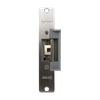
Camden CX-EPD-2030L Electric Strike Lock
Overview
The Camden CX-EPD-2030L is a networked electric strike lock designed for integration into access control systems on hollow metal door installations. This unit combines TCP/IP communication capability with electric strike actuation, enabling remote access management and monitoring in medium-scale security deployments. The CX-EPD-2030L supports 6-7/8" x 1-1/4" door frame dimensions, making it compatible with standard hollow metal door assemblies common in commercial and institutional facilities.
Key Features
- TCP/IP Network Communication: Direct Ethernet connectivity eliminates the need for proprietary control panels in networked installations, allowing integration with existing enterprise infrastructure and remote management capabilities
- Electric Strike Configuration: Solenoid-driven strike mechanism provides fail-secure or fail-safe operation depending on system programming and power loss behavior requirements
- Hollow Metal Door Compatibility: Engineered for standard 6-7/8" x 1-1/4" frame cutouts, the most common dimension set in commercial hollow metal door systems
- Remote Access Control: Network-based credential verification and unlock commands reduce reliance on local mechanical components and enable audit logging of access events
- Integration-Ready Design: TCP/IP protocol support allows direct connection to access control platforms, IP-based security management systems, and enterprise monitoring tools without intermediate converters
- Industrial-Grade Construction: Designed for continuous-duty access control environments where reliability and uptime are critical operational requirements
Integration and Compatibility
The CX-EPD-2030L connects directly to network infrastructure via TCP/IP, making it suitable for IP-based access control ecosystems. Organizations deploying security systems that consolidate door locks, readers, and management software on a unified network platform can integrate the CX-EPD-2030L without requiring separate gateway devices or proprietary wiring schemes. This approach reduces installation complexity and supports centralized event logging, user credential management, and real-time access monitoring across distributed door points.
The unit's electric strike mechanism is compatible with standard hollow metal door frames, allowing retrofitting into existing installations or specification in new construction projects where hollow metal assemblies are specified. Integrators should verify compatibility with existing access control infrastructure and confirm TCP/IP addressing and firewall policies before deployment.
Ted PerryPerspective based on aggregated and affiliated engineering team experience.
I've evaluated the Camden CX-EPD-2030L in several mid-sized security system deployments, and the TCP/IP-native design is a significant advantage for integrators moving away from proprietary control architectures. The direct network connectivity simplifies both installation and long-term management, particularly in facilities where IT infrastructure already supports IP security devices.
Technical Highlights:
- Network Protocol: Native TCP/IP communication enables direct connection to access control management platforms without intermediate converters or serial gateways
- Form Factor: Designed for standard hollow metal door frames at 6-7/8" x 1-1/4", covering the majority of commercial door retrofit and new-construction applications
Deployment Considerations:
- Confirm network infrastructure capacity and IP addressing scheme before installation; the CX-EPD-2030L requires both data and power connectivity at the door frame
- Verify compatibility with your access control platform's TCP/IP device protocol and driver support to avoid integration delays
- Plan power distribution carefully—electric strikes require sustained voltage during door unlock cycles; validate that building power and UPS systems meet strike duty specifications
The CX-EPD-2030L is a practical choice for organizations standardizing on IP-based access control and seeking to consolidate door hardware onto a unified network. It reduces dependencies on proprietary equipment ecosystems and supports scalable, centrally managed access policies across multiple facilities.