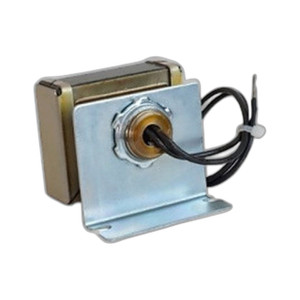
Camden CX-ESP1B ANSI Square Stainless Magnetic Strike
The Camden CX-ESP1B is a stainless steel magnetic strike engineered for networked access control installations in commercial buildings, office lobbies, and secure facilities. Sized to ANSI square 4 7/8" x 1 1/4" mounting specifications, it integrates directly into standard door frames and pairs with a compatible armature mounted on the door leaf. TCP/IP networked communication eliminates proprietary converter overhead — the strike connects natively to Camden's networked control panels for streamlined multi-door deployments across wired network infrastructure.
Key Features
- ANSI Square 4 7/8" x 1 1/4" Footprint: Direct fit into standard commercial door frame strikes. Minimizes custom frame modifications and speeds installation across new construction or retrofit projects.
- Stainless Steel Construction: Resists corrosion in humid and salt-spray environments. Ideal for coastal facilities, loading docks, and buildings with aggressive washdown protocols.
- TCP/IP Networked Communication: Connects directly to networked access control panels without proprietary converters. Simplifies wiring in multi-door deployments and reduces BOM complexity.
- Magnetic Lock Strike Half: Works with matched armature for fail-secure operation. Requires paired armature for full lock assembly.
- Standard Door Frame Compatibility: Compatible with wood and metal frame construction. Camden accessory plates (3/8", 1/2", 5/8" fillers and spacers) bridge minor frame opening variations.
- Manufacturer Warranty: Factory-backed warranty covers defects in materials and workmanship under normal operating conditions.
The CX-ESP1B strike is designed for networked access control ecosystems where door-level lockdown is managed centrally. The ANSI square format is the commercial standard for retrofit installations — most door frame rebates in office and institutional buildings accept this footprint without structural modification. Stainless steel construction withstands corrosive environments (salt air, humidity, washdown areas) without surface degradation, though the body does not provide submersion protection and should be kept away from standing water.
Installation requires careful armature alignment on the door leaf — misalignment leads to lock drag, uneven wear, or intermittent failure. Mount the strike into the door frame at the standard strike location using the ANSI square footprint as your reference. TCP/IP wiring connects to your networked control panel per the panel's documentation. Power requirements and signal protocols vary by control system, so verify your access control platform supports this model before procurement. Test full door cycles (lock, unlock, and re-lock sequences) before final commissioning to confirm keeper alignment and electrical continuity.
On multi-door installations, the networked interface consolidates all strike commands to a single control point — no daisy-chaining relay outputs or managing proprietary communication bridges. This architecture scales efficiently across 10-door or 100-door deployments. The stainless steel body is serviceable and field-replaceable; fixture cost is low relative to the labor required to retrofit an existing frame. For facilities in corrosive environments (coastal buildings, agricultural facilities, food-processing plants), the corrosion resistance of stainless steel justifies the material premium over painted steel alternatives.
Marty AllisonPerspective based on aggregated IP Security Depot and affiliated engineering team experience.
We've deployed the Camden CX-ESP1B across dozens of networked access control retrofit projects in mid-market commercial buildings, and it's a workhorse component when frame geometry matches the ANSI standard. The real operational win is the TCP/IP native integration — you eliminate the relay-to-serial converter tax that plagued older magnetic lock installations. On a 20-door office building, that's meaningful: fewer external boxes, less wiring clutter in the controller cabinet, and a single IP protocol to manage lockdown commands. The stainless steel body is a practical material choice for any facility with humidity or salt-spray exposure; we've seen painted steel strikes corrode visibly within 18 months in coastal environments, whereas stainless holds up for the life of the installation. Where you need to be careful is armature alignment — even a 2mm gap between strike and keeper will cause the lock to buzz under load and accelerate wear. On retrofit installs, measure the frame opening twice and confirm that your door leaf armature sits flush before powering up the strike.
Technical Highlights:
- ANSI Square 4 7/8" x 1 1/4" Mounting: Standard commercial frame footprint reduces custom machining and frame modification time. Most commercial door frames manufactured after 1990 accept this format without structural work.
- TCP/IP Networked Protocol: Eliminates proprietary relay interfaces. Direct integration into networked access control panels reduces controller I/O overhead and simplifies multi-site management across distributed door systems.
- Stainless Steel Housing: Withstands humidity, salt spray, and corrosive washdown environments. Material cost premium justified on coastal or industrial sites; not required for standard interior office deployments.
- Fail-Secure Magnetic Lock Design: Power-off = locked. Suitable for areas where loss of power should result in secure door closure — standard for egress compliance in security-sensitive facilities.
- Paired Armature Requirement: Strike must be paired with matching armature on the door leaf. Verify armature part number compatibility before assembly to avoid installer rework.
Deployment Considerations:
- Frame opening must match ANSI 4 7/8" x 1 1/4" standard — measure twice before ordering. If your frame is slightly undersized or oversized, Camden filler plates (3/8", 1/2", 5/8") and spacer plates bridge minor gaps. Have frame dimensions and plate SKU numbers ready at quote time to avoid installation delays.
- Armature alignment is critical. A 2mm+ gap between strike keeper and armature will cause lock chatter, power draw spikes, and premature failure. On retrofit installs with uneven door frames, use shim stock to achieve flush alignment before final fastening.
- TCP/IP wiring must terminate at a networked access control panel that supports this strike model. Verify control panel compatibility and power supply capacity before procurement — power draw varies by model, and undersized supplies will cause intermittent lockout.
- Stainless steel construction resists surface corrosion but does not provide submersion protection. Keep strikes away from areas with standing water or continuous spray. In salt-spray environments (coastal, industrial salt-storage), stainless is worth the material cost; in dry interior office buildings, painted steel alternatives may be acceptable.
- The strike is the frame-mounted half of a magnetic lock pair. Confirm your door armature (door-leaf-mounted component) is included in your order or sourced separately — strikes and armatures are sold as separate components, and incomplete kits will delay commissioning.
The Camden CX-ESP1B is the right choice for integrators building networked multi-door access control systems in commercial buildings where ANSI-standard frame geometry is present and TCP/IP networked control panels are already specified. If your deployment is a single-door retrofit in a residential or light commercial setting, you may find a non-networked magnetic strike (lower cost, simpler wiring) sufficient. For details on compatible armatures and accessory plates, refer to the Camden catalog.