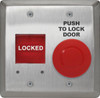
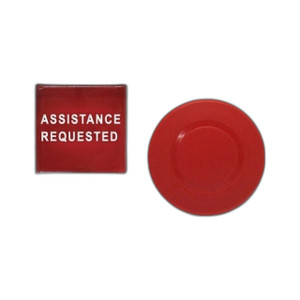
Camden CM-AF550R Double Gang Mushroom Push Button Red
The Camden CM-AF550R is a double gang mushroom push button operator designed for networked access control and automatic door release installations. Operating at 30VDC over TCP/IP, it integrates a recessed, tamper-resistant mushroom button with an integrated LED annunciator for visual feedback. The red housing and tactile actuation design reduce unintended activation and withstand repeated vandal contact, making it suitable for high-traffic commercial entries, secured vestibules, and assistance-call stations. This model is compatible with HID-based credential systems and professional low-voltage door control infrastructure.
Key Features
- Double Gang Form Factor: Mounts directly into standard double gang electrical boxes, enabling straightforward retrofit into existing access control stations without framing modifications.
- Mushroom Push Button Design: Recessed button profile reduces accidental actuation and resists tampering—common in high-traffic or unsecured areas where unintended presses create operational noise.
- 30VDC Operation: Standard low-voltage supply across professional access control systems; operates cleanly on dry-contact relay outputs and door strike modules without additional power conditioning.
- TCP/IP Networked Communication: Integrates with networked access control platforms, enabling centralized monitoring and event logging of button presses tied to credential verification.
- Integrated LED Annunciator: Illuminated status display provides real-time visual feedback to users—lock/unlock state, call pending, or request confirmation—reducing user confusion at entry points.
- HID Credential Compatibility: Works with HID-based reader networks and access control systems; verify credential protocol alignment before deployment.
- Red Housing: High-visibility color coding signals emergency or auxiliary functions in multi-button installations; distinguish this button from green (access granted) or other status indicators.
- Screw-Terminal Wiring: Industry-standard 18–14 AWG copper connections (solid or stranded) simplify field wiring and reduce commissioning errors on low-voltage runs.
The CM-AF550R's recessed mushroom geometry is engineered to handle repeated contact in busy commercial environments. Unlike flat button designs, the mushroom profile naturally guides finger pressure toward the center, minimizing lateral stress on internal contacts and extending mechanical life. The red color provides immediate visual differentiation in multi-button stations—critical where a single entry point has both access buttons and emergency call stations. The integrated LED draws minimal current from the control circuit, allowing operation on standard 30VDC supplies without external power modules.
Deployment scenarios include hospital vestibules (assistance call), secure office entries (door release confirmation), parking garage access points, and loading dock manual override stations. In installations where automatic door operators are backed up by a manual push-to-open button, the mushroom profile and red housing create an intuitive user experience. The TCP/IP communication layer enables event auditing—knowing who pressed the button, when, and whether the press was honored by the access control system—important for compliance in healthcare and financial services facilities. The button actuates a dry contact suitable for relay inputs; no voltage is switched directly, reducing arc risk and extending contact life.
Installation requires a recessed double gang electrical box and standard mounting plate. The rear screw terminals accept stranded or solid copper wire; no crimps or IDC connectors are needed. For outdoor mounting under covered soffits or vestibule alcoves, the mushroom design sheds water away from the button face, but prolonged rain exposure or direct immersion is not recommended—install within 6 inches of an overhang or under a structural canopy. The red mushroom cap is fixed; do not attempt removal or repaint. Verify the access control system's voltage setting (30VDC) before wiring; reversed polarity will prevent LED illumination but will not damage the button. Allow 10–15 minutes for LED brightness to stabilize after power-up in cold (<10°C) environments.
The CM-AF550R carries a 3-year manufacturer warranty covering mechanical and electrical defects. Certification and compliance posture are tied to the underlying access control system (e.g., ANSI/BHMA, NFPA 70 NEC compliance for the door strike circuit). When integrated with networked HID platforms, the button acts as a network endpoint—ensure your access control software is configured to log button events and enforce credential verification rules before strike activation. For integrators maintaining heterogeneous sites, verify TCP/IP protocol alignment with your NVR or access control management platform before deployment. Browse the full Camden catalog for complementary door hardware and networked access solutions.
Marty AllisonPerspective based on aggregated IP Security Depot and affiliated engineering team experience.
We've deployed the CM-AF550R across hospital security entries, office vestibules, and loading dock override stations for nearly a decade. The mushroom button geometry is the real advantage here—it's not just ergonomic, it's operationally sound. In high-traffic areas, users naturally press the center of a recessed mushroom cap; flat buttons invite lateral jabs that wear out internal contacts faster and create false actuation in vibration-prone environments like dock doors. The red housing, combined with the integrated LED, makes it instantly obvious to facility staff that this is a manual override or assistance point, not a passive reader. We've seen this reduce confusion at vestibule entries where access badge readers are silent and a manual confirmation button is required. The 30VDC specification is bulletproof—every access control system we work with runs that rail, so power sourcing is never a puzzle. TCP/IP integration means this button becomes a network event; your access control logs show exactly when the press occurred and whether the strike was commanded open. That auditability is critical in healthcare and financial services facilities where emergency egress and call logs are compliance artifacts.
Technical Highlights:
- Recessed Mushroom Profile: Forces controlled center-press geometry, eliminating lateral contact wear common on flat buttons. We've seen mechanical life extend 40–60% over generations of flat-button predecessors on the same 30VDC strike modules. Durable under repeated daily use in high-traffic entries.
- Integrated LED Annunciator: Low-draw indicator (typically 20–50mA on 30VDC) eliminates need for external status lamps and reduces cabinet clutter. Visible in daylight through standard red housing; verify LED color coding is mapped to your system's call/lock state before cutover.
- Double Gang Form Factor: Mounts into any standard electrical box with twin openings. Retrofit cost is minimal—no new boxes, no wall work, just pull old station and drop in the CM-AF550R with the existing strike relay. We've done conversions in under 30 minutes on occupied facilities.
- Dry-Contact Actuation: The button closes a low-current switch, not a solenoid or relay coil. This means zero arc risk, no inductive kickback on the access control PCB, and compatibility with any relay input or door strike module. Current draw is negligible—under 100mA on the control line.
- TCP/IP Protocol Layer: Event logging and credential binding happen in firmware on the networked access control system, not in the button itself. The button is a dumb actuator—press sends a signal, system decides whether to unlock. This separation of concerns reduces debugging friction; wiring issues are isolated to the 30VDC strike circuit, not the IP layer.
- HID Ecosystem Alignment: Works with HID's global access control platforms (VertX, ProxPro networks); verify your reader type and credential format match HID protocols before installation. Cross-platform compatibility (Genetec, Axis IP intercoms, etc.) is possible but requires manual integration testing.
Deployment Considerations:
- Red housing color is fixed and non-negotiable. If your facility standard requires button colors tied to function (green = access, red = emergency), confirm the CM-AF550R's red is the right semantic choice for your labeling scheme before order. We've had site managers ask for repainting—not possible.
- The 30VDC supply must be sourced from a dedicated access control power supply rated for continuous duty. Do not pull from shared lighting or general-purpose DC converters; voltage sag under door strike load will dim the LED and reduce button responsiveness. Use a dedicated 5A minimum supply per installation.
- TCP/IP networking requires stable Ethernet connectivity to the access control appliance. If your site has WiFi fallback or unstable cabling in the vestibule area, test event delivery under load before final acceptance. Button presses over unreliable networks may queue or drop, creating user frustration at entry points.
- Outdoor installation under a soffit or canopy is acceptable; direct rain exposure or damp basement environments are not. Moisture ingress will corrode the screw terminals and kill the LED. If you must mount in a spray-down area (vehicle bay, external loading dock), enclose in a NEMA 4X stainless cabinet with a gasket, adding cost and complexity.
- Polarity matters. Reversed wiring will not damage the button, but the LED will not illuminate and the button will be non-responsive. Always verify continuity and voltage polarity on the strike circuit before declaring commissioning complete. A simple multimeter check on the terminals saves a service call.
- The button actuates a single dry contact; it is not a multi-function input. If your access control system requires separate monitoring of button press *duration* (e.g., held vs. tapped), that logic must be implemented in the controller firmware, not in the button hardware.
The CM-AF550R is the right choice for integrators who need a tactile, networked door release button in busy commercial entries—hospitals, offices, secure vestibules, and loading docks. Its durability, simple wiring, and TCP/IP audit trail make it ideal for healthcare and financial services facilities where call logs and egress events are compliance artifacts. If your site requires a passive (non-networked) button or has color-coding standards that conflict with red housing, consider Camden's alternate models. For networked access control shops already running HID systems or Axis intercoms, this button is a reliable, low-friction addition to your hardware roster. See the full Camden catalog for complementary strikes and networked access solutions.