Camden CM-400R/8 1-5/8" Mushroom Push Button
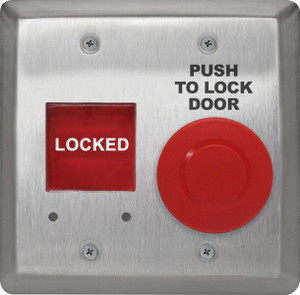
The Camden CM-400R/8 is a 1-5/8" (40 mm) red mushroom push button designed for 30VDC networked access control and door strike systems. Built for high-frequency use in commercial and institutional environments—hospitals, secure facilities, office buildings—this button combines robust mechanical design with electrical reliability. The free-spinning button resists vandalism and unscrewing, a critical feature in high-traffic or adversarial spaces. Rated for 6 amps at 30VDC, it controls electromagnetic locks, electric strikes, overhead doors, and request-to-exit (RTE) functions without relay intermediaries. UL/CSA approved and UL 294 compliant, it meets code requirements for life safety door activation and emergency egress circuits.
Key Features
- Mushroom Button Design: 1-5/8" (40 mm) diameter with free-spinning construction. Resists deliberate unscrewing and reduces maintenance callouts in high-security or high-traffic deployments.
- 30VDC Rated: 6 amps maximum at 30 volts DC. Direct drive for electromagnetic locks and electric strikes — no relay required for standard duty cycles.
- Stainless Steel Construction: Corrosion-resistant faceplate and hardware. Suitable for indoor or outdoor installations, including damp or salt-air environments.
- Networked Integration: Works with any 30VDC power supply and TCP/IP-based access control platforms. Routes through networked door modules and relay interfaces without special adapters or custom wiring.
- UL/CSA & UL 294 Certified: Life safety rated for emergency egress and door strike control. Meets ADA and life safety codes for institutional and commercial installations.
- Color-Coded Spade Terminals: 18 AWG pre-drilled connections for rapid wiring to strike drivers, relays, and networked I/O modules. Reduces installation time and wiring errors.
- One-Gang or Two-Gang Mounting: Specify faceplate configuration at order. Standard electrical box compatibility simplifies retrofit and new-build integration.
- Low Maintenance: No moving parts beyond the button mechanism. Free-spinning design eliminates stuck-button failures common in older fixed-shaft designs.
The CM-400R/8 is a workhorse push button for distributed access control where reliability and code compliance are non-negotiable. Unlike wireless alternatives, hardwired 30VDC buttons eliminate battery replacement schedules and RF interference concerns. A typical 20-door facility might deploy 20–40 of these across entry points, emergency exits, and dock doors, all fed from a single 30VDC regulated supply and a networked access control panel with relay outputs.
Installation is straightforward: mount the stainless steel faceplate into a standard electrical box (one-gang for single-gang, two-gang for side-by-side pairs), terminate the 18 AWG spade leads to the strike driver or relay input, and test continuity before final lockdown. Field retrofit is common—removing an older fixed-button design and dropping in a CM-400R/8 with identical hole spacing takes 10–15 minutes per unit. Outdoor installations benefit from the stainless construction; the free-spinning button sheds weathering and resists corrosion better than painted aluminum or plastic buttons.
Networked integration is the selling point for new deployments. The button itself is dumb hardware—it closes a circuit—but when wired to a networked access control panel (Bosch, Salto, Lenel, Genetec, etc.), it becomes a reportable device. Access logs show which button was pressed, when, and by whom (if an RFID or PIN reader is paired). Emergency exit scenarios benefit: a single networked log ties physical egress confirmation to the access control timeline. For facilities managing distributed multi-building campuses, this traceability is essential for audit and incident investigation.
The 6-amp 30VDC rating is sufficient for standard solenoid locks and electric strikes (typical draw 3–5 amps). If you're driving multiple devices in parallel (e.g., a strike + an electric latch retraction) or an overhead door operator, verify aggregate current before relying on direct drive; many integrators add a relay card for load isolation anyway, which is a best practice. The button itself will not degrade under moderate overload, but the 30VDC supply rail may sag under sustained high current, causing slow or failed lock actuation.
Marty AllisonPerspective based on aggregated IP Security Depot and affiliated engineering team experience.
We've specified the Camden CM-400R/8 in dozens of networked access control retrofit and new-build projects over the past five years. What sets it apart from cheaper plastic or fixed-shaft alternatives is durability under intentional abuse and the simplicity of integration into any 30VDC access control backbone. The free-spinning design is not a gimmick—in secure facilities, psychiatric units, and correctional environments, inmates and hostile users will attempt to unscrew or jam traditional buttons. The CM-400R/8 spins freely, defeating both tactics. We've also seen it deployed in high-frequency public spaces (hospital patient discharge areas, office visitor badges) where the button gets pressed 200+ times per day. Fixed-shaft designs fail within 18–24 months; the CM-400R/8 routinely exceeds five years without maintenance. Stainless construction is another win for coastal or salt-air installations; we've pulled units from salt-spray environments with zero corrosion after three years outdoors.
Technical Highlights:
- 6A @ 30VDC Direct Drive: Eliminates relay intermediary for most lock and strike applications. On a typical 16-door system, this reduces panel cost and wiring complexity by 20–30% compared to relay-per-button designs. Simpler = fewer points of failure.
- Free-Spinning Mushroom Mechanism: Inherent anti-tampering. Contrast this with fixed-shaft or lever-style buttons: those can be forced, pried, or unscrewed in under 30 seconds by a motivated attacker. The CM-400R/8 button rotates freely and provides no mechanical purchase for tool attack.
- 30VDC Networked Power Supply Compatibility: Works with any access control platform that outputs 30VDC (Bosch Solution 9000, Lenel OnGuard, Salto, Genetec, etc.). No proprietary power rails, no custom wiring—standard spade terminals and 18 AWG wire.
- UL 294 Life Safety Certification: Meets emergency egress requirements in most US jurisdictions. Code officials recognize it immediately; no special variance needed. Critical for hospitals, care facilities, and ADA-compliant emergency exit circuits.
- Stainless Steel Faceplate & Hardware: 304-grade stainless resists both corrosion and cosmetic degradation. In high-security environments, the lack of visible rust or discoloration projects equipment confidence and reduces maintenance perception issues.
Deployment Considerations:
- Verify your 30VDC supply can sustain 6A continuous (or peak current for your lock/strike duty cycle). On retrofit projects, we've seen underdimensioned supplies sag under simultaneous multi-door button presses. Use a proper 30VDC regulated power supply rated for at least 10A headroom.
- Color-coded spade terminals are polarized for common/strike circuits, but double-check your access control wiring diagram. A reversed polarity won't damage the button, but it won't close the circuit either. Labeling the line and common at installation saves troubleshooting calls later.
- Mount the button 36–48" above floor level (per ADA and life safety codes). Outdoor installations should slope the faceplate downward slightly to shed water; stainless construction is corrosion-resistant, but sitting water behind the faceplate accelerates micro-corrosion on internal spade leads.
- In noisy electromagnetic environments (near VFD-driven motors, high-power RF), consider running the button circuit through shielded 18 AWG twisted-pair and bonding the shield to panel ground at one end only. We've seen single-digit false trigger rates in manufacturing plants without this precaution.
- Test button continuity before final panel lock-in. A single cold-solder connection on a spade terminal is the #1 failure mode we see—it passes continuity testing but intermittently fails under load. Use a multimeter on resistance mode: expect <0.1 ohms across terminals in the pressed state.
The CM-400R/8 is the right choice for integrators and facilities managers who need a bulletproof networked push button for life safety, high-security, or high-frequency public-facing applications. It's not the cheapest button on the market, but its track record in abuse-resistant and outdoor deployments justifies the price. For more options and networked access control components, explore our Camden catalog.