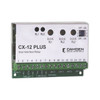
Camden CX-12Plus TCP/IP Door Interface Relay
Overview
The Camden CX-12Plus is a TCP/IP-based door interface relay engineered to manage access control across up to two doors simultaneously. This device sits between your access control system and magnetic lock hardware, converting network commands into physical lock and strike activation without requiring local panel dependencies. For integrators deploying access control systems across multi-tenant facilities, distributed warehouses, or enterprise campuses, the CX-12Plus eliminates the need for proprietary controllers at each door — control flows over standard TCP/IP instead.
Key Features
- Two-Door Capacity: Manages two independent door strikes or magnetic locks in a single relay unit, reducing panel clutter and installation points. Useful for entry vestibules, twin access points, or staged access where both doors need coordinated control from one network point.
- TCP/IP Network Integration: Communicates via standard TCP/IP protocol, meaning it plays well with any modern access control platform that speaks standard network commands — no vendor lock-in or proprietary gateway required. Your existing network infrastructure can route commands without additional hardware.
- Magnetic Strike Type Support: Designed specifically for electromagnetic strike locks, the most common door hardware in commercial installations. Properly sized to handle the inrush and hold currents of standard 12V or 24V strike mechanisms without relay chatter or nuisance drops.
- Network-Based Activation: Removes local panel dependencies. Instead of hardwiring a control panel next to each door, one CX-12Plus unit can be mounted in a central location or equipment room, with network cabling running to the door hardware. Simplifies cabling runs and centralizes troubleshooting.
- Integration with Standard Access Control Platforms: The CX-12Plus integrates into systems that support TCP/IP-enabled hardware, including cloud-connected and on-premises access management platforms. Verify your VMS or access control software supports open TCP/IP relay commands before specifying.
- Suitable for Distributed Facility Environments: Multi-tenant buildings, warehouse entry points, and distributed facility networks benefit from centralized lock control without per-door local logic. Reduces support overhead compared to traditional hardwired relay panels scattered throughout a facility.
Integration & Compatibility
The CX-12Plus is compatible with access control systems that support TCP/IP-based hardware integration and standard magnetic strike installation practices. Integrators should confirm that the target access control platform — whether on-premises or cloud-based — supports TCP/IP relay commands or has published API documentation for third-party hardware control. Many modern platforms do; older proprietary systems may not. This is a compatibility gate that must be verified during the design phase.
Installation assumes standard 12V or 24V DC power availability near the relay unit and proper wiring gauge to each strike mechanism. Consult the access control planning guide to right-size power supplies and ensure adequate current delivery for simultaneous strike activation.
For environments where redundancy or failover is required — such as life-safety exits — pair the CX-12Plus with secondary relay logic or an uninterruptible power supply (UPS) to maintain unlock capability during mains power loss. The unit itself is not a failsafe relay; it requires active power to release strikes.
Frequently Asked Questions
Q: Does the CX-12Plus work with cloud-based access control platforms?
A: Yes, provided the cloud platform supports TCP/IP relay commands or has published API documentation for third-party hardware. Verify compatibility with your specific platform during design.
Q: Can I use the CX-12Plus for failsafe (emergency unlock) applications?
A: The CX-12Plus requires active power to de-energize and unlock strikes. For life-safety or emergency scenarios, consult your local code and integrate an uninterruptible power supply or secondary failsafe relay logic.
Q: What voltage do the strike mechanisms need to be?
A: Standard 12V or 24V DC magnetic strikes are compatible with the CX-12Plus. Confirm the voltage rating of your strike hardware matches your power supply specification before installation.
Q: Is the CX-12Plus suitable for outdoor or high-moisture environments?
A: Refer to the product datasheet for environmental operating specifications. For wet or outdoor locations, ensure proper enclosure protection and consult your integrator on weatherproofing requirements.
Q: How is the CX-12Plus powered?
A: The CX-12Plus requires 12V or 24V DC power via standard power supply connections. It does not support PoE or mains AC input directly.
Q: Can I integrate the CX-12Plus with existing door controllers or panels?
A: Yes, if your existing access control system supports TCP/IP relay integration or can interface via open standards (ONVIF, HTTP, REST API). If your system uses only proprietary hardwired inputs, an integration bridge may be required.
Ted PerryPerspective based on aggregated IP Security Depot and affiliated engineering team experience.
The CX-12Plus is a straightforward networked relay — no analytics, no frills, just TCP/IP command-to-strike translation. What makes it useful is the absence of local panel logic. If you're deploying access control across multiple buildings or floors and don't want to hardwire a relay panel at every door, the CX-12Plus lets you centralize activation logic on your access control server and push commands over your network.
Technical Highlights:
- Two-Door Capacity: Handles two independent strikes per unit. Reduces the number of relay points you need to install and maintain; one device covers a vestibule or twin entry scenario.
- TCP/IP Protocol Support: Standard network communication means no proprietary gateway or translation hardware. Any access control platform that speaks TCP/IP or standard HTTP/REST APIs can drive it — check your VMS documentation first.
- 12V / 24V DC Strike Compatibility: Sized for standard electromagnetic strike locks used in 99% of commercial door hardware. Confirm voltage matching before wiring; mismatched voltage will either chatter the relay or fail to unlock.
Deployment Considerations:
- Power Supply Sizing: Strike inrush current can spike on initial activation. Oversizing the power supply prevents nuisance brownouts if two strikes fire simultaneously. A 5A 24V supply is usually sufficient; check your strike spec sheets.
- Failsafe vs. Fail-Secure: The CX-12Plus locks when power is lost. If you need emergency unlock capability, you must add UPS or a secondary failsafe relay. This is not a design flaw — it's intentional security — but you must account for it in your architecture.
- Network Latency and Loss: Command delivery depends on your network. If the access control server loses connectivity, the CX-12Plus won't receive unlock commands. Deploy on a dedicated or highly reliable network segment.
Use the CX-12Plus when you're deploying centralized TCP/IP access control and want to eliminate per-door relay panels. It's a good fit for multi-tenant or distributed-building scenarios where network infrastructure is already in place. If you have only one or two doors and a traditional hardwired panel nearby, a conventional relay is simpler and cheaper.