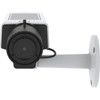
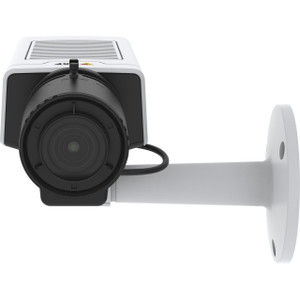
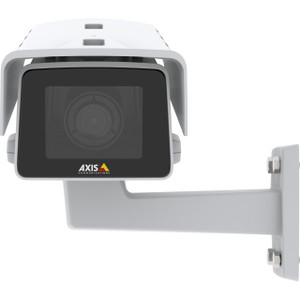
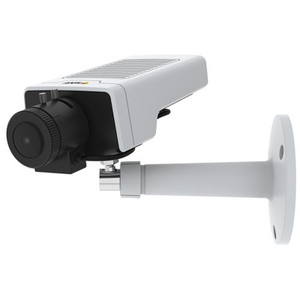
Axis 02484-001 5MP Box IP Camera with Lightfinder
The Axis 02484-001 is a 5MP fixed indoor box camera designed for installations where image detail and low-light performance matter — retail loss-prevention, office lobbies, warehouse receiving areas, and similar confined-space deployments. The 5-megapixel sensor (3072 x 1728 resolution) delivers enough pixel density that you can identify faces and read signage from typical indoor distances without wasting bandwidth on overscan. At 30 fps maximum frame rate, motion is smooth without the storage overhead of higher frame rates.
Box cameras like the 02484-001 excel when you need flexibility: the modular lens design means you can swap optics to suit your coverage angle without replacing the entire unit. This matters on retrofit jobs where site conditions change after initial survey. Power comes via standard PoE (802.3af), eliminating the need for a separate 12VDC supply or AC outlet near the camera head—one Ethernet cable handles both data and power, simplifying cabling runs and reducing switch port strain.
Key Features
- Lightfinder Technology: Axis' proprietary low-light enhancement preserves color and detail even in near-darkness. This matters in warehouses, basements, and retail backrooms where ambient light is marginal; you'll capture usable color footage without IR washout or thermal bloom.
- Wide Dynamic Range (WDR): Handles scenes with bright windows and dark shadows in the same frame—typical in retail storefronts and office glass entrances. WDR balances exposure so faces near glass and interior details remain visible, reducing the need for multiple cameras to cover the same space.
- 5MP Resolution (3072 x 1728): Sufficient detail for facial identification at 6–8 feet and license plate capture at closer range. More useful than 2MP or 3MP for investigative footage; less overkill than 8MP or 12MP in confined spaces where you don't need panoramic coverage.
- H.264 Video Compression: Standard codec ensures compatibility with virtually any VMS. Bitrate is moderate—typical deployments consume 2–4 Mbps per stream depending on motion and scene complexity, manageable on commodity gigabit networks and NVRs.
- Zipstream Technology: Intelligently reduces bitrate by up to 50% in static zones while preserving detail in moving objects. On 24/7 recording across multiple cameras, this compounds quickly—meaningful savings on storage and bandwidth, especially when NVR capacity is shared across a site.
- Interchangeable Lens Mount: Box form factor allows lens swaps without camera replacement. Typical focal lengths range 2.8mm to 8mm fixed, or varifocal motorized options; select the angle that fits your coverage map rather than settling on a fixed wide or narrow view.
- Audio I/O and Tamper Detection: Built-in microphone and audio line-out support interactive audio monitoring or alarm triggers on voice events. Tamper detection alerts if the camera is reoriented, obstructed, or removed, useful for drift detection in high-risk areas.
- ONVIF Profiles S and T: Full ONVIF Profile S support ensures plug-and-play integration with any IP camera-compatible VMS (Milestone, Axis Camera Station, etc.). Profile T adds metadata support for edge analytics if you deploy them later.
- Edge Storage Capability: microSD card slot (up to 512GB typical) allows local recording if the NVR fails or network drops, preventing blind spots during outages. Useful for compliance-heavy environments where 24/7 continuity is mandated.
- Compact Form Factor: Smaller physical envelope than turrets or domes, fits tight mounting spaces and doesn't protrude visibly in executive or retail environments where aesthetics matter.
Integration & Compatibility
The 02484-001 integrates into standard IP camera infrastructure without special setup. Power delivery via 802.3af PoE means any managed gigabit switch with basic power budgeting will support it (typical consumption under 13W). If your switch lacks sufficient PoE capacity, a small injector or dedicated PoE module costs far less than running new power circuits. Network bandwidth is modest—5MP at 30 fps with H.264 typically consumes 2–4 Mbps per stream under normal conditions, leaving headroom on typical corporate or industrial networks. ONVIF compatibility means the camera works with open-architecture VMS platforms; you're not locked into Axis proprietary software, though network video recorders and storage appliances often work seamlessly with Axis cameras via native drivers.
When to Choose a Different Model
If you need outdoor all-weather mounting, select a higher IP-rated variant in the Axis box line or consider a weatherized outdoor model. If the scene requires PTZ capability (pan-tilt-zoom for tracking or wide area sweeps), a PTZ camera is necessary—a box with fixed optics cannot rotate. If your site demands extreme low-light performance (near-zero ambient light), investigate Axis Lightfinder variants with higher sensor sensitivity or pair this camera with external IR illumination. For high-bandwidth, high-frame-rate applications (fast machinery, sports, aviation), consider 8MP or 12MP options with higher megapixel density and 60 fps support, though storage and bandwidth costs climb sharply.
Frequently Asked Questions
Q: What lens options are available for the Axis 02484-001?
A: The box form factor supports a range of interchangeable C-mount or CS-mount lenses (depending on the specific version). Common fixed focal lengths are 2.8mm, 4mm, 6mm, and 8mm; varifocal motorized 2.8–12mm options are also available. Check the specific SKU to confirm mount type and available lens range.
Q: Does the 02484-001 support remote focusing or iris adjustment?
A: With a fixed-lens installation, focus is set once during commissioning. If you select a motorized varifocal lens variant, remote zoom and focus adjustment are possible via the VMS or Axis web interface, allowing you to dial in framing without returning to site.
Q: Can I record continuously on the microSD card if the network fails?
A: Yes. The microSD slot supports local recording as a fallback. If network connectivity drops, the camera continues recording to the card (up to 512GB capacity) until either the card fills or network is restored. Retrieve the card manually or wait for network recovery to sync to the NVR.
Q: Is the 02484-001 NDAA compliant?
A: Axis products sold in the United States are generally subject to standard export and federal procurement rules. Verify the specific NDAA or TAA compliance status with your authorized supplier before committing to a restricted-use contract.
Q: What is the typical PoE power consumption?
A: The 02484-001 draws under 13W at nominal operation (varies slightly with IR usage and processing load), well within the 15.4W budget of standard 802.3af PoE. No high-power PoE+ or PoE++ connection is required.
Q: How does Zipstream compression work, and will it affect video quality?
A: Zipstream uses adaptive bitrate encoding: static background areas are compressed heavily while motion areas preserve full detail. In practice, you see 30–50% bitrate reduction on typical indoor scenes (desks, corridors, shelves) without visible quality loss. On highly dynamic scenes (crowded retail floors), compression gain is lower but quality remains acceptable.
Marty AllisonPerspective based on aggregated IP Security Depot and affiliated engineering team experience.
The Axis 02484-001 is a pragmatic workhorse for indoor fixed-view surveillance where you need reliable 5MP detail and low-light color fidelity without over-engineering. The combination of Lightfinder and WDR is genuinely useful: Lightfinder preserves usable color in dim retail backrooms or warehouse receiving bays, and WDR stops you from losing either bright exterior detail or shadowed interior information when you have mixed lighting. At 5MP (3072 x 1728) and 30 fps, you're getting enough resolution for facial detail and text legibility at typical 6–8 foot viewing distances without the storage and bandwidth penalty of 8MP or higher.
Technical Highlights:
- Lightfinder + WDR Pairing: Lightfinder boosts color saturation and visibility in <0.5 lux scenes; WDR prevents highlight washout when you have bright windows or skylights in the same frame. Together they reduce the number of supplemental lights or secondary cameras needed to cover difficult mixed-lighting scenes—a real cost factor on large deployments.
- PoE under 13W: Standard 802.3af PoE delivery means no special switch ports, no injectors, minimal power budget impact. A 48-port gigabit PoE switch can power dozens of these cameras without strain—important when you're retrofitting an older network with limited electrical infrastructure.
- Zipstream Bitrate Reduction: H.264 + Zipstream typically drops bandwidth 30–50% compared to vanilla H.264 on static scenes (warehouse shelves, office desks, retail shelving). On a 24/7 multi-camera install, that translates to real savings: a 10-camera system recording continuously might drop from 50 Mbps to 30–35 Mbps, reducing NVR storage pressure and network load.
Deployment Considerations:
- Lens Flexibility is Real, But Plan Ahead: The box form factor's interchangeable lens mount is a strength—you can deploy with a 4mm fixed lens for general area coverage, then swap to 8mm if your investigation demands zoom detail, all without replacing the camera head. However, lens swaps require return to site or remote technician visit; plan your initial lens choice carefully, especially in hard-to-access ceiling mounts.
- Network Outage Fallback Works, But Isn't Transparent: The microSD card slot provides local recording failover, which is valuable for compliance-driven environments. That said, you must manually retrieve the card or rely on network recovery to sync footage to the primary NVR. In high-availability deployments, this is acceptable; in low-latency incident response scenarios, plan for dual NVR recording or dedicated failover paths instead.
- ONVIF Compatibility is Genuine, But Firmware Maturity Varies: ONVIF Profiles S and T support means any modern VMS will ingest the stream. Real-world experience: basic video and motion detection work across platforms, but Axis-specific metadata features (scene change, tampering) may not export cleanly to third-party systems. Test your specific VMS+camera combination before full rollout.
Deploy the 02484-001 in retail environments (loss prevention, register monitoring), office common areas (lobbies, hallways, break rooms), warehouse receiving and QA zones, and smaller buildings where fixed indoor coverage and low light handling are more valuable than outdoor weathering or PTZ tracking. The 5MP resolution is sufficient for most investigative work, and Lightfinder's color fidelity beats thermal IR or higher-gain amplification when you need to identify people or read documentation. Skip this model if you need outdoor rated protection (IP66+) or PTZ motion—pivot to a weatherproof bullet or a PTZ variant instead.