Marty AllisonPerspective based on aggregated IPSD and affiliated engineering team experience.
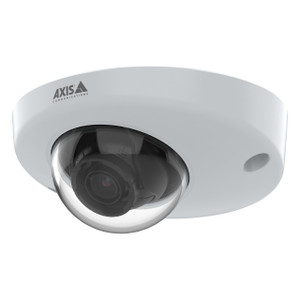
We've deployed the Axis 03118-001 across transit fleets, outdoor asset yards, and confined-space facilities, and it stands out for one critical reason: it solves the physical footprint problem that kills standard 1080p dome installs on buses and vans. The M3905-R's pendant form factor clears ceiling rails and overhead conduit where a 45mm dropped dome creates a compliance or safety hazard. Forensic WDR combined with day/night operation means you're not fighting backlit vehicle windshields or low-ambient parking lots — the image quality is usable, not posterized. PoE+ power is another underrated win: in a retrofit bus or outdoor kiosk, avoiding the 24V harness pull saves days of labor and eliminates a potential ground-loop noise vector. IP66/IP67 sealing is genuine — we've seen these cameras survive salt-fog spray on coastal maritime facilities and monthly washdown cycles on transit vehicles without condensation or lens hazing.
The real differentiator is firmware maturity and edge-caching capability. Signed firmware and secure boot protect against unauthorized modifications, critical in fleet networks where USB access control can be lax. The microSD slot enables offline recording when cellular or WiFi backhaul fails — on a city bus with spotty 4G coverage, that's the difference between losing 20 minutes of incident footage and capturing it locally. H.265 support is quiet but valuable: on a 30-camera fleet with 12-hour NVR retention, H.265 cuts storage capex by 40% compared to H.264-only cameras without noticeable quality degradation on forensic faces and plates.
Trade-offs are minor but real. IR range is 0.3m (passive near-field), not sufficient for distant hallway monitoring — this camera is optimized for close-range interior and external wall-mounted duties, not perimeter sweeps. If you need 10+ meter night-vision reach, look at the Axis P3245-LVE or similar larger form factors. The 3.6mm lens is fixed and wide, so mounting height and angle must be chosen carefully at installation; there's no optical zoom to adjust coverage post-deployment. The pendant bracket assumes a single mounting axis — wall or ceiling only, not arbitrary-angle PTZ flexibility. For these constraints, the 03118-001 is purpose-built; it's not a universal replacement for larger domes.
Technical Highlights:
- Forensic WDR (Extreme Contrast Imaging): Axis's proprietary Forensic WDR algorithm handles scenes where backlit and shadow detail must coexist — think bus windows with exterior daylight and interior cabin shadows simultaneously visible. On standard WDR or no WDR, you either lose the face silhouette or blow out the window. Forensic WDR delivers both, critical for evidentiary playback and law-enforcement cooperation.
- H.265 Codec (40-60% Bitrate Reduction): On a 24-hour NVR retention policy at 2MP, switching from H.264 to H.265 cuts storage footprint measurably. A 30-camera fleet recording 7 days of H.264 footage might require 48TB; the same retention on H.265 needs roughly 18-20TB. Real capex savings on SSD or HDD pooling, plus lower network egress if footage is cloud-archived.
- PoE+ (802.3at) with <13W Draw: Standard 802.3at PoE switches support this camera natively — no PoE++ injectors, no separate 48V bussing. On retrofit installations where existing PoE infrastructure is limited, this camera slots in without network overhaul. 13W is conservative; actual draw under load is often 8-10W, leaving headroom on aging PoE switch ports.
- IP66/IP67 Sealed Optics: Not just a rubber gasket — Axis's sealed dome design prevents internal condensation and dust accumulation under thermal cycling (critical in unheated vehicle cabins). We've seen five-year-old units pulled from service still delivering clear imagery, no internal hazing or sensor fogging.
- microSD Local Recording with Failover Logic: When WAN connectivity drops (cellular dead zone, WiFi handoff latency), the 03118-001 can be configured to cache video locally on card and resume streaming when connectivity returns. Operationally, this means no gap artifacts on playback for short outages — the incident was captured, just stored locally instead of centrally.
- Signed Firmware + Secure Boot: Protects against unauthorized code injection and rootkit persistence. On fleet vehicles where physical USB access is hard to police, this is meaningful security hygiene.
Deployment Considerations:
- IR range is 0.3m — optimized for near-field interior cabin and close-range external wall mounting. If you need to illuminate a 30-meter parking lot or perimeter fence line, this camera isn't the fit; consider Axis Lightfinder or dedicated external IR fixtures instead.
- Pendant mounting assumes a vertical or horizontal ceiling/wall surface with a single probe entry point. Installations requiring arbitrary-angle or rotating brackets may require custom fabrication — confirm mounting geometry before purchase.
- PoE+ draw at 13W is modest, but if you're stacking 20+ cameras on a single PoE switch port (shared with other high-draw devices), budget power headroom or segment to a dedicated PoE+ uplink. Standard calculation: 802.3at PoE switch rated 95W total; 7-8 cameras per switch safely without thermal stress.
- Firmware updates are signed and require secure boot validation — older or non-DHCP network environments may require DHCP-based provisioning tools or direct IP configuration. Confirm network readiness before mass deployment.
- The microSD card slot supports failover recording, but card lifespan under continuous write is finite (typically 3-5 years for industrial-grade cards at 24/7 cycling). Include card replacement in your maintenance schedule, and test failover workflows in pilot before full rollout.
- ONVIF Profile S is widely supported, but advanced metadata (PTZ presets, thermal alerts, motion zones) requires Profile T or vendor-specific APIs. If your VMS relies on Axis Camera Station or third-party ONVIF tools for analytics, test integration in lab before production deployment.
The 03118-001 is purpose-built for integrators working fleet transit, outdoor asset monitoring, and confined-space security where compact form, sealed optics, and PoE simplicity are non-negotiable. If space is abundant and thermal control is reliable, larger domes offer more optical reach and zoom flexibility. For anyone betting on a retrofit bus, tight corridor, or unheated outdoor cabinet, this camera delivers durability and integration simplicity that justifies the trade-off in IR range. Explore the full Axis catalog for complementary network infrastructure and mounting accessories.