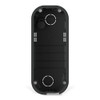
Axis 02941-001 Flush Installation Box
The Axis 02941-001 is a flush-mount installation enclosure designed for wall-mounted deployment of 2N IP One intercoms in indoor access control and building entry applications. This accessory transforms surface-mounted intercom hardware into an integrated wall-cavity solution, eliminating visible wiring and creating a finished, professional appearance in reception areas, secure entryways, and office lobbies while preserving full call and access-control functionality.
Key Features
- Flush-Mount Form Factor: Wall-cavity installation eliminates surface-mounted appearance and reduces visual clutter in professional building entries.
- Multi-Model Compatibility: Works with Axis 02933-001, 02934-001, and 02935-001 2N IP One intercom models, enabling standardized deployment across mixed intercom configurations.
- Concealed Wiring: Integrated cable management routes network and power connections behind the wall face for a clean, seamless finish.
- Indoor Rated: Environmental protection suitable for climate-controlled building interiors, lobbies, and reception areas.
- Compact Footprint: 7.6 × 4.8 × 3.3 inch dimensions fit standard wall cavities without requiring structural modification.
- PoE 802.3af Powered: Draws standard PoE power from existing network infrastructure; no supplemental power supply required.
- White Housing: Neutral color finish blends into drywall, plaster, and light-colored interior wall surfaces.
The 02941-001 transforms 2N IP One intercoms from functional hardware into an architecturally integrated access-control component. Integrators install the intercom into the flush box cavity, route cabling through the wall, and mount the assembly to standard wall studs or cavity anchors. The enclosed design isolates intercom electronics from dust and minor contact damage while maintaining PoE power delivery and full network connectivity.
This mounting approach is standard practice in new-construction access-control rollouts where building finish quality and aesthetics are contractual requirements. In retrofit scenarios, routing cable through existing wall voids (between studs, through plenum space, or conduit runs) eliminates the need for surface-mounted cable trays or raceway conduit. The result is a professional appearance indistinguishable from intentional architectural hardware.
Deployment contexts include corporate office visitor screening, hospital and clinic main entrances, secure lab or server-room entry, multitenant building lobbies, and any access point where end users interact with intercoms during normal business operations. When paired with an Axis access-control manager or third-party ONVIF-compatible VMS handling SIP call routing, the 02941-001 becomes part of a unified identity-and-access infrastructure without adding visual or spatial overhead.
The 02941-001 is manufactured in Czechia by Axis and carries Manufacturer Warranty coverage. It integrates with Axis access-control platforms, Genetec Security Center, Milestone XProtect, and any VMS supporting ONVIF intercom profiles, allowing call events and access-control triggers to flow into unified security workflows.
Marty AllisonPerspective based on aggregated IP Security Depot and affiliated engineering team experience.
We've installed dozens of 2N IP One intercoms across mixed corporate and healthcare environments, and the flush-box approach consistently wins points with facilities and design teams. The 02941-001 eliminates the inevitable pushback on surface-mounted intercom hardware in visible spaces — lobbies, main entry doors, clinic reception areas. Once you've mounted one of these correctly, integrators understand why the upfront labor cost pays dividends: the finished look is indistinguishable from a standard wall-mounted access reader or buzzer. Cable management behind the wall means no exposed RJ45 or power runs to manage aesthetically. The real differentiator versus surface mounting is that you're routing all cabling vertically through the wall stud cavity or horizontally through a ceiling plenum — not zip-tied to the surface. On new construction projects with architectural review processes, this is often a non-negotiable requirement. We've also seen it specified retroactively in office renovations where aesthetic standards tightened mid-project.
Technical Highlights:
- PoE 802.3af Compliance: The intercom draws power from any standard PoE-enabled network switch; no additional 24V supply or wall transformer clutter. This keeps the installation footprint minimal and eliminates a second failure point.
- Wired Intercom Integration: The box supports audio (microphone) and network connectivity simultaneously. SIP call signaling and audio codec negotiation (G.711, G.722) happen transparently once the intercom boots on the network.
- Multi-Model Compatibility Matrix: The 02933-001 (basic door station), 02934-001 (variant), and 02935-001 (variant) all fit the same cavity. This flexibility reduces SKU proliferation if you're deploying mixed models across a large campus.
- Lightweight Mounting: At 0.42 lb, the enclosure and installed intercom are well within the load capacity of standard drywall anchors or wall-cavity fasteners, eliminating need for reinforcement or structural framing.
Deployment Considerations:
- Wall-cavity depth is the critical constraint: measure your wall construction (2×4 stud with drywall, 2×6 with insulation, etc.) before ordering. The 3.3-inch depth fits standard wall pockets, but if your site has brick-veneer or lath-and-plaster, you may need surface mounting instead.
- Cabling logistics matter. Route all network and intercom wiring through the wall cavity, conduit, or plenum before securing the box. Retrofitting cable after installation is extremely difficult and voids the clean aesthetic.
- Power sourcing: verify your network switch is PoE-capable and provisioned for the intercom's power draw. Most modern switches support 802.3af; older managed switches may require a PoE injector or upgrade.
- Audio quality depends on ambient room noise and wall materials. Flush-mounted intercoms perform best in quiet lobbies and entry vestibules; high-noise industrial or parking-garage environments may require external speakers or a different hardware choice.
- SIP call routing: the intercom connects to a call manager (Axis access-control system, PBX, or third-party VoIP platform). Confirm your VMS or access platform supports SIP-based intercom signaling before deployment.
The 02941-001 is the right choice for organizations prioritizing architectural fit and professional appearance in indoor access-control rollouts. If your project requires seamless wall integration and you have standard wall-cavity construction, this accessory becomes non-optional. For additional 2N IP One configurations and Axis intercom solutions, visit our Axis catalog.