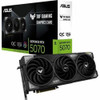
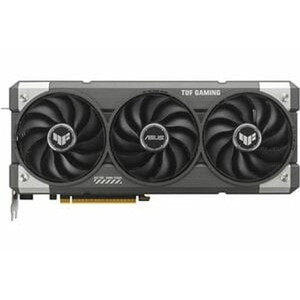
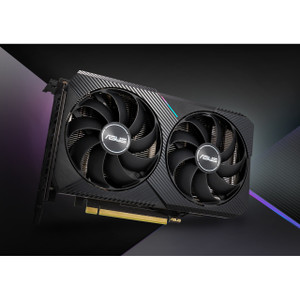
ASUS TUF-RTX5070-O12G-GAMING TUF Gaming GeForce RTX 5070 12GB OC Edition Graphics Card
Overview
The ASUS TUF-RTX5070-O12G-GAMING is a full-fat discrete GPU built around NVIDIA's GeForce RTX 5070 silicon — 6,144 CUDA cores, 12GB of GDDR7 memory running at 28 Gbit/s on a 192-bit bus, and a factory overclock that pushes the boost clock to 2,640 MHz in OC mode. At 3.60 × 16.70 × 8.90 inches and 4.95 lb, this is a 3.125-slot card engineered for sustained workloads: military-grade components, a protective PCB coating, and ASUS's Axial-Tech fan array are all aimed at thermal headroom under continuous load — whether that's a gaming marathon or a GPU-accelerated compute task.
The RTX 5070 generation moves to PCIe 5.0 graphics cards and HDMI 2.1b plus DisplayPort 2.1b outputs, making this card relevant for both high-refresh gaming rigs and workstations that push 8K display pipelines. If you're sourcing for a custom AI-inference workstation, a rendering node, or a high-performance gaming build, read the specs below before deciding whether the 12GB GDDR7 frame buffer fits your workload.
Key Features
- 6,144 CUDA Cores at 2,640 MHz (OC Mode): The RTX 5070 die delivers 6,144 parallel compute units with the factory OC ceiling set at 2,640 MHz — 30 MHz above the base boost spec. For rendering and AI-inference tasks, more cores at higher clocks translate directly to shorter job times. For gaming, this headroom keeps you above 2,600 MHz even under sustained thermal load.
- 12GB GDDR7 at 28 Gbit/s on a 192-bit Bus: GDDR7 at 28 Gbit/s on a 192-bit interface gives this card a peak memory bandwidth well above what previous GDDR6X mid-range cards delivered. The practical effect: large texture sets, high-resolution shadow maps, and AI model weights load faster and stay resident longer without spilling to system RAM.
- PCIe 5.0 Interface: PCIe 5.0 x16 doubles the theoretical slot bandwidth over Gen 4. This matters most for GPU-direct workflows (NVMe-to-GPU data pipes, AI inference pipelines) where the CPU-GPU interconnect is a real bottleneck. In a standard gaming rig the headroom is future insurance rather than a day-one gain.
- 2× HDMI 2.1b + 3× DisplayPort 2.1b — Up to 4 Displays at 7680×4320: Five physical outputs, four active simultaneously, all certified for 8K/60Hz or 4K/240Hz depending on the downstream display. A four-monitor surveillance-style analytics workstation or a high-density trading display wall can be driven from a single card slot without a hub or splitter.
- 3.125-Slot, Military-Grade Component Build: The 3.125-slot footprint is thicker than a standard 2-slot card — plan your chassis spacing accordingly, especially in 4U rack servers or dense workstation towers. Military-grade capacitors and chokes are specified for extended operational life under thermal cycling, which matters if the machine runs 24/7.
- Protective PCB Coating: The conformal-style PCB coating is a practical durability measure in environments with humidity variation or occasional dust ingress — think server rooms without full climate control or workstations near industrial floors.
- Axial-Tech Fan Array: ASUS's Axial-Tech fan design uses a smaller hub and longer blades to increase static pressure against the heatsink fins. Under sustained GPU-compute loads — the kind that plateau at 90–95% utilization — higher static pressure keeps junction temperatures lower than a standard axial design at the same noise level.
- 4.95 lb / 3.60 × 16.70 × 8.90 in Form Factor: At nearly 5 lb and 16.70 inches long, this card requires a full-ATX or E-ATX chassis with a GPU support bracket. Do not drop it into a mid-tower without measuring available GPU clearance first — 16.7 inches will not fit in many compact enclosures.
Integration and Compatibility
The TUF-RTX5070-O12G-GAMING connects via PCIe 5.0 x16 and is backward-compatible with PCIe 4.0 and 3.0 slots at reduced bandwidth. DisplayPort 2.1b and HDMI 2.1b outputs are compatible with any DP 1.4 or HDMI 2.0 display at their respective native resolutions — you won't need to upgrade monitors to use this card, but you will need a 2.1-capable display to hit the 8K ceiling. For workstation GPU deployments, verify that your power supply delivers sufficient PCIe power connectors; a card of this class typically requires two 8-pin or one 16-pin (12VHPWR) connector — confirm against ASUS's installation guide for this SKU. Driver support is through NVIDIA's standard GeForce driver stack; for compute workloads, CUDA 12.x and later versions support the RTX 5070 architecture. Refer to the GPU selection guide for matching card class to workload type. For builds requiring multiple GPUs or NVLink configurations, verify ASUS TUF series NVLink support separately — not all TUF-family cards support NVLink bridges.
Frequently Asked Questions
Q: What is the boost clock speed of the TUF-RTX5070-O12G-GAMING in OC mode?
A: In OC mode, the TUF-RTX5070-O12G-GAMING reaches a factory-set boost clock of 2,640 MHz. The standard boost clock is 2,610 MHz.
Q: How many monitors can the TUF-RTX5070-O12G-GAMING drive simultaneously?
A: Up to 4 displays simultaneously, selectable from 5 physical outputs: 2× HDMI 2.1b and 3× DisplayPort 2.1b. Maximum resolution supported is 7680×4320 (8K).
Q: Does the TUF-RTX5070-O12G-GAMING fit in a standard mid-tower case?
A: At 16.70 inches (424mm) in length and a 3.125-slot width, this card requires a full-ATX or E-ATX chassis with verified GPU clearance of at least 430mm. Many mid-tower cases will not accommodate this length — measure before ordering.
Q: What memory type and speed does the TUF-RTX5070-O12G-GAMING use?
A: The card uses 12GB of GDDR7 memory running at 28 Gbit/s on a 192-bit bus, providing significantly higher bandwidth than the GDDR6X used in prior-generation mid-range cards.
Q: Is the TUF-RTX5070-O12G-GAMING compatible with PCIe 4.0 motherboards?
A: Yes. PCIe 5.0 is backward-compatible with PCIe 4.0 and 3.0 slots. The card will operate at reduced bandwidth in older slots, which has minimal impact on gaming workloads but may be a consideration for high-throughput GPU-compute pipelines.
Q: What is the weight of the TUF-RTX5070-O12G-GAMING?
A: The card weighs 4.95 lb (approximately 2.25 kg). A GPU support bracket is strongly recommended in any chassis to prevent PCIe slot stress over time.
The TUF-RTX5070-O12G-GAMING is the card I'd spec into a mid-to-high-tier AI inference workstation or a multi-display analytics node where you need real GPU compute headroom without stepping up to a data-center-class board. The 192-bit GDDR7 bus at 28 Gbit/s is the number I keep coming back to — that memory interface is fast enough to keep the 6,144 CUDA cores fed on larger model inference batches where GDDR6X cards started bottlenecking.
Technical Highlights:
- 2,640 MHz OC Boost Clock: Factory-validated at 2,640 MHz — 30 MHz above rated boost. That margin means you're not running at the thermal ceiling out of the box, which matters for sustained 24/7 workloads more than the peak number itself.
- 12GB GDDR7 @ 28 Gbit/s / 192-bit: The combination of GDDR7 speed and a 192-bit bus gives this card bandwidth headroom that its predecessor GDDR6X mid-range cards couldn't match. Practical benefit: larger AI model weights or texture atlases stay in VRAM rather than triggering expensive system-RAM spills.
- 5-Output Display Array (HDMI 2.1b × 2 + DP 2.1b × 3): Four simultaneous outputs at up to 8K is a legitimate differentiator for multi-monitor surveillance analytics workstations or trading floor display walls — a use case where most mid-range cards cap at two or three useful outputs.
Deployment Considerations:
- The 3.125-slot, 16.70-inch footprint is non-negotiable — full-ATX minimum, and verify GPU clearance before the build. A 4.95 lb card without a support bracket will stress the PCIe slot within months of 24/7 operation.
- Military-grade components and PCB coating extend operational life in variable-humidity environments, but this card still requires active airflow. It is not rated for fanless or passively cooled enclosures.
If you're building a dedicated video analytics server that runs NVIDIA CUDA-accelerated VMS plugins across multiple camera streams — the kind of workload that pins GPU utilization continuously — the TUF-RTX5070-O12G-GAMING's sustained clock stability and GDDR7 bandwidth make it a more defensible choice than a lower-tier card that throttles under load.