


Product images are provided for reference and may not represent the exact model, configuration, or included
components.
Build Your Complete System
Manufacturer-verified compatible cameras, recorders, mounts, accessories, and licenses for this product. Adjust quantities and add the entire bundle to your cart in one click.
Item
Qty
Status
Price
Mounts & Accessories recommended
Recorders, NVRs & Storage recommended
Licenses & Software where applicable
Services & Training optional
No Bots, Just Experts
Questions about this product? Free pre-sales support from a senior specialist — product questions, compatibility checks, BOM quotes, price confirmation — typically answered within one business day. Need camera placement or system design work? Engineering time is $175 per hour (qty 1 = 1 hour). Hardware buyers get up to one hour ($175) credited back on their order.
Description

ASUS PRIME-RTX5060TI-16G SFF-Ready GeForce RTX 5060 Ti 16GB GDDR7 Graphics Card
Overview
The PRIME-RTX5060TI-16G is ASUS's small-form-factor-ready entry in the GeForce RTX 5060 Ti lineup — pairing NVIDIA's Blackwell-generation GPU with 16GB of GDDR7 memory on a PCIe 5.0 interface, all in a 2.5-slot, 15.94-inch card that fits constrained chassis where a triple-slot behemoth won't. With 4,608 CUDA cores clocked up to 2572 MHz (boost), this card targets workstation-class compute and multi-display visualization workloads — edge AI inference, video analytics server builds, and dense multi-monitor operator stations are the natural fit in security and automation environments. Vendor EOL status means stock is finite; if this configuration suits your deployment, procurement timing matters.
For buyers evaluating the broader ASUS graphics card catalog, the PRIME series sits in the practical middle of the lineup: Axial-tech cooling, Dual BIOS for recovery flexibility, and a measured factory OC (2602 MHz in OC mode) without the premium of higher-tier models.
Key Features
- 16GB GDDR7 at 28 Gbit/s on a 128-bit bus: 16GB of frame buffer is the threshold that separates cards that handle multi-stream 4K AI inference from those that don't. GDDR7 at 28 Gbit/s delivers the bandwidth needed for parallel deep-learning workloads — relevant if you're running on-card video analytics or edge inferencing pipelines alongside display output.
- 4,608 CUDA Cores / 2572 MHz Boost: The core-count and clock combination determines throughput on parallelizable workloads. At 2572 MHz boost (2602 MHz in OC mode via Dual BIOS), this card handles dense matrix operations without the cost floor of the tier above — practical for analytics servers that don't need flagship compute but can't afford a bottleneck.
- PCIe 5.0 Interface: PCIe 5.0 doubles the theoretical bandwidth of PCIe 4.0. In GPU-compute workloads that stream large datasets between host memory and VRAM, this headroom prevents the CPU-to-GPU bus from becoming the constraint — relevant as NVR and AI-analytics platform builds move to current-gen server boards.
- 4 Simultaneous Display Outputs (1x HDMI 2.1b + 3x DisplayPort 2.1b): Four independent outputs at up to 7680×4320 (8K) resolution per display. For operator stations running 4-monitor video wall layouts or command-center dashboards, this eliminates the need for a second GPU or an auxiliary display adapter — one card, four screens, no compromise on resolution.
- SFF-Ready 2.5-Slot Form Factor (15.94 × 9.17 × 3.48 in): The 2.5-slot profile and SFF designation mean this card is validated for compact workstation and small-form-factor server chassis where a full 3-slot design physically won't mount. At 3.27 lb, it's not a featherweight, but the dimensional envelope is what matters for constrained rack or desktop deployments.
- Dual BIOS: A physical switch selects between the standard BIOS (2572 MHz boost) and OC BIOS (2602 MHz). In a server or analytics appliance context, the primary value is recovery — if a firmware update goes wrong, you flip the switch and boot from the backup BIOS rather than returning the card for service.
- Axial-Tech Fan Design: The Axial-tech fans are engineered for higher static pressure in confined chassis — exactly the airflow challenge in compact workstations and 1U/2U-adjacent small-form-factor builds where turbulence from adjacent components degrades cooling. Thermal stability under sustained compute load matters more than peak clock in 24/7 analytics deployments.
Integration and Compatibility
The PRIME-RTX5060TI-16G connects via PCIe 5.0 x16, backward-compatible with PCIe 4.0 and 3.0 slots at reduced bandwidth. For AI inference and video analytics platform builds, verify that your host platform provides a PCIe 5.0 slot to realize full bus bandwidth. The card supports up to four simultaneous displays via its HDMI 2.1b and three DisplayPort 2.1b outputs — DisplayPort 2.1b supports the bandwidth for 8K/60Hz or multiple 4K/144Hz streams, relevant for high-resolution operator console builds.
The Ethernet interface listing in the distribution attributes suggests network connectivity capability beyond the standard GPU profile — verify with your system integrator whether this reflects an onboard NIC or a platform-level attribute in the distribution data, as the primary connectivity for this card class is PCIe. For workstation graphics deployments in video surveillance management, AI-assisted monitoring, or warehouse automation visualization, confirm driver compatibility with your VMS or analytics platform before procurement — NVIDIA publishes driver support matrices for GeForce vs. professional Quadro/RTX series that affect certified application support.
At 15.94 inches in length, chassis clearance is the installation constraint to verify first — measure your target system's GPU clearance before ordering, particularly in compact workstation or industrial PC builds. Power delivery requirements for a card in this class typically demand an appropriately rated PSU; confirm your system's power budget accommodates the RTX 5060 Ti's TDP alongside other installed components. Pair with a capable workstation or server platform for sustained 24/7 compute loads.
Frequently Asked Questions
Q: What display outputs does the PRIME-RTX5060TI-16G provide, and what resolutions are supported?
A: The PRIME-RTX5060TI-16G includes one HDMI 2.1b port and three DisplayPort 2.1b ports, supporting up to four simultaneous displays. Maximum resolution is 7680×4320 (8K) per the manufacturer specification.
Q: Is the PRIME-RTX5060TI-16G compatible with small-form-factor (SFF) chassis?
A: Yes. ASUS designates this card SFF-Ready. Its physical dimensions are 15.94 × 9.17 × 3.48 inches with a 2.5-slot profile. Verify your chassis GPU length clearance (minimum ~16 inches recommended) and slot clearance before installing.
Q: How much VRAM does this card have, and what memory type?
A: The card carries 16GB of GDDR7 memory on a 128-bit bus, running at 28 Gbit/s data transfer rate. This 16GB frame buffer is well-suited for multi-stream video analytics, AI inferencing, and multi-display visualization workloads.
Q: What PCIe version does the PRIME-RTX5060TI-16G require?
A: The card uses a PCIe 5.0 x16 interface. It is backward-compatible with PCIe 4.0 and 3.0 slots at reduced bandwidth. Use a PCIe 5.0 slot to maximize GPU-to-host bandwidth for compute-intensive workloads.
Q: What is the boost clock speed of the PRIME-RTX5060TI-16G?
A: The standard boost clock is 2572 MHz. Switching to OC mode via the Dual BIOS raises this to 2602 MHz. Both modes are selectable via the physical BIOS switch on the card.
Q: What is the vendor EOL status, and does that affect availability?
A: The PRIME-RTX5060TI-16G carries a vendor end-of-life designation, meaning ASUS has discontinued active production of this specific SKU. Stock is drawn from remaining distribution inventory. If this model fits your deployment requirements, procure sooner rather than later — replenishment is not expected.
Karl Wilson
The PRIME-RTX5060TI-16G is the card I'd specify when a client needs a capable edge-compute or multi-display GPU in a chassis that physically can't take a 3-slot card. The 2.5-slot SFF-ready profile with 16GB GDDR7 at 28 Gbit/s hits a practical threshold — enough frame buffer for multi-stream AI inferencing, enough display outputs (four, all at up to 8K) to drive a real operator console, without requiring a full tower workstation to house it.
Technical Highlights:
- 16GB GDDR7 / 128-bit / 28 Gbit/s: The 16GB mark is where serious multi-stream analytics workloads become feasible on a single card. GDDR7 at 28 Gbit/s keeps the memory bus from being the bottleneck when you're running parallel inference across several camera feeds simultaneously.
- 4,608 CUDA Cores at 2572 MHz boost: This core count handles the matrix math in AI-assisted video analytics without demanding data-center GPU pricing. The Dual BIOS lets you push to 2602 MHz in OC mode — modest, but the more useful feature is the backup BIOS for 24/7 deployments where card downtime costs real money.
- PCIe 5.0 interface: On an analytics or NVR build using a current-gen platform, PCIe 5.0 eliminates the host bus as a constraint for GPU-compute workloads that move large datasets between system RAM and VRAM. Pair this with a PCIe 5.0-capable CPU platform to realize the full bandwidth advantage.
Deployment Considerations:
- At 15.94 inches, length clearance is the first thing to verify in any compact workstation or industrial PC chassis — measure before you order, especially in SFF builds where GPU bay clearance is often the tightest constraint.
- Vendor EOL means no production replenishment: if your deployment requires multiple units or you're specifying for a multi-site rollout, allocate your full quantity now — do not plan on reordering against this SKU 6–12 months out.
The PRIME-RTX5060TI-16G is the right call for a compact analytics workstation or four-monitor operator station build where chassis space is limited, the frame buffer requirement is at or above 16GB, and the budget doesn't justify moving up to a professional-grade Quadro-class card.
Specifications
Weight:
3.27 lb
Dimensions:
15.94 x 9.17 x 3.48 in (L x W x H)
Interface:
PCIe, Ethernet
Unspsc Code:
43201401
CUDA:
Yes
CUDA cores:
4608
Graphics processor family:
NVIDIA
Graphics processor:
GeForce RTX 5060 Ti
Processor boost clock speed:
2572 MHz
Processor frequency (OC mode:
2602 MHz
Maximum resolution:
7680 x 4320 pixels
Parallel processing technology support:
Not supported
Maximum displays per videocard:
4
Discrete graphics card memory:
16 GB
Graphics card memory type:
GDDR7
Memory bus:
128 bit
Data transfer rate:
28 Gbit/s
Interface type:
PCI Express 5.0
HDMI ports quantity:
1
HDMI version:
2.1b
DisplayPorts quantity:
3
DisplayPort version:
2.1b
Form Factor:
Small Form Factor (SFF)
Compare with similar
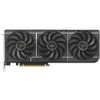
ASUS PRIME-RTX5060TI-16G 16GB GDDR7
$640.99

Send Laura a Message
Senior Specialist · Typically replies within 1 business dayBuild Your Complete System
Manufacturer-verified compatible cameras, recorders, mounts, accessories, and licenses for this product. Adjust quantities and add the entire bundle to your cart in one click.
Item
Qty
Status
Price
Mounts & Accessories recommended
Recorders, NVRs & Storage recommended
Licenses & Software where applicable
Services & Training optional
RELATED PRODUCTS

ASUS PRIME-RTX5060TI-O8G 8GB GDDR7
Factory-overclocked GeForce RTX 5060 Ti built around NVIDIA's Ada-successor Blackwell architecture, packing 4,608 CUDA cores and 8GB of GDDR7 memory
In stock · Ships same business day
Free shipping over $499
$673.99

ASUS PRIME-RTX5060TI-8G Graphics Card
GeForce RTX 5060 Ti graphics card built around NVIDIA's Blackwell architecture, pairing 4608 CUDA cores with 8GB of GDDR7 memory on a 128-bit bus — a
In stock · Ships same business day
Free shipping over $499
$618.99
$618.99
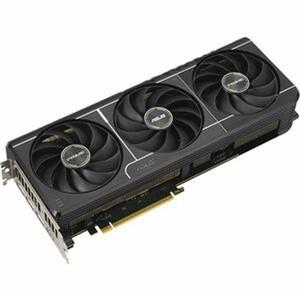
ASUS PRIME-RTX5080-16G GeForce
Full-performance discrete graphics card built around NVIDIA's GeForce RTX 5080 GPU, delivering 10,752 CUDA cores, 16GB of GDDR7 memory on a 256-bit
In stock · Ships same business day
Free shipping over $499
$1,760.99
$1,760.99
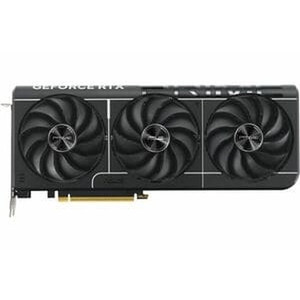
ASUS PRIME-RTX5070TI-16G Graphics Card
In stock · Ships same business day
Free shipping over $499
$1,233.99
$1,233.99
Looking for more ASUS products? Shop the full ASUS catalog →
System Design, Deployment & Technical Support
Support services and planning resources for commercial surveillance, access control, and infrastructure deployments.
Fixed scope • Fixed price
System Design Assistance
- Get help validating product compatibility
- Coverage requirements
- Storage planning and deployment architecture before you buy.
Deployment & Configuration Support
- Access fixed-scope support for rollout planning
- User setup guidance
- Migration and system standardization across single-site or multi-site deployments
Guides, Tools & Calculators
- PoE requirements
- Storage retention
- Camera selection and deployment methodology