Product images are provided for reference and may not represent the exact model, configuration, or included
components.
Build a complete system in one click
Manufacturer-verified compatible cameras, recorders, mounts, accessories, and licenses for this product.
Build Your Complete System
Manufacturer-verified compatible cameras, recorders, mounts, accessories, and licenses for this product. Adjust quantities and add the entire bundle to your cart in one click.
ItemQtyStatusPrice
Mounts & Accessories recommended
Recorders, NVRs & Storage recommended
Licenses & Software where applicable
Services & Training optional
$0.00$0.00$0.00$0.00$0.00$0.00
No Bots, Just Experts
Questions about this product? Free pre-sales support from a senior specialist — product questions, compatibility checks, BOM quotes, price confirmation — typically answered within one business day. Need camera placement or system design work? Engineering time is $175 per hour (qty 1 = 1 hour). Hardware buyers get up to one hour ($175) credited back on their order.
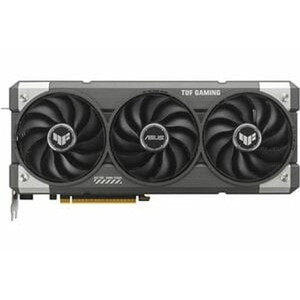
ASUS DUAL-RTX5060-O8G-WHITE Dual GeForce RTX 5060 White OC Edition Graphics Card
Overview
The ASUS DUAL-RTX5060-O8G-WHITE is a factory-overclocked GeForce RTX 5060 graphics card built around NVIDIA's Ada-successor architecture, featuring 3840 CUDA cores and 8GB of GDDR7 memory on a 128-bit bus. The White OC Edition applies thermal engineering from ASUS's flagship GPU lines — including dual Axial-tech fans — to a mid-range form factor designed for broad case compatibility. Whether you're provisioning a GPU-accelerated workstation for AI inference, video processing, or high-density display output, this card's GDDR7 memory bandwidth and PCIe 5.0 interface make it a practical fit where the previous generation's GDDR6X cards are hitting throughput ceilings.
Key Features
3840 CUDA Cores at up to 2565 MHz (OC Mode): The GPU boosts to 2565 MHz in OC mode versus the standard 2535 MHz boost clock — a modest but real frequency gain over reference spec. More relevant is the CUDA core count itself: 3840 cores handle parallel compute workloads (AI inferencing, video transcoding, simulation) that would otherwise require server-class hardware or cloud offload.
8GB GDDR7 at 28 Gb/s on a 128-bit Bus: GDDR7 at 28 Gb/s delivers meaningfully higher bandwidth than GDDR6 on the same bus width. The 128-bit bus is a real ceiling for extremely large texture sets, but for 1080p and 1440p workloads — or AI models with sub-8GB parameter footprints — this configuration avoids the cost premium of wider-bus alternatives.
PCIe 5.0 Interface: PCIe 5.0 doubles the lane bandwidth of Gen 4, which matters primarily when the GPU is doing sustained high-throughput data movement (NVMe-to-GPU direct transfers, AI training pipelines). For display-only or gaming workloads, Gen 4 and Gen 5 perform identically — but future-proofing against bottlenecks on upcoming workloads is a real argument here.
Dual Axial-Tech Fan Cooling: ASUS adapted the fan geometry from its higher-tier DUAL and TUF lines. The Axial-tech design uses a smaller hub with more blade surface area, which increases static pressure and keeps the cooler effective in tighter case airflow environments — relevant if this card is going into a compact chassis or a workstation with limited front-to-back airflow.
4 Display Outputs — 1x HDMI 2.1b + 3x DisplayPort 2.1b: HDMI 2.1b and DisplayPort 2.1b both support up to 7680×4320 (8K) at the interface level, and the card's maximum resolution spec confirms 7680×4320. Running four displays simultaneously at 1080p or 1440p is well within reach; 8K single-display output is supported for content-creation monitoring use cases.
Maximum 4 Simultaneous Displays: Four outputs without a hub or splitter simplifies multi-monitor workstation builds. Security operations centers, trading floors, or command-and-control stations that need 4-screen coverage can do it from a single card and a single PCIe slot.
White OC Aesthetic with Broad Compatibility Focus: The White Edition finish is a product differentiator for deployments where the workstation chassis is visible (executive suites, public-facing production areas). More practically, ASUS engineered this for broad case compatibility — shorter board length than enthusiast-class alternatives keeps it usable in mid-tower and some compact workstation builds.
Integration & Compatibility
The DUAL-RTX5060-O8G-WHITE connects via PCIe 5.0 x16 (backward-compatible with PCIe 4.0 and 3.0 slots at reduced bandwidth). GDDR7 memory runs on-board at 28 Gb/s — no host configuration required. The four display outputs (HDMI 2.1b, three DisplayPort 2.1b) are directly compatible with current-generation monitors, projectors, and video walls without active adapters. NVIDIA's CUDA platform is supported for workloads that can leverage it; note that the specs confirm parallel processing technology (non-CUDA) is not supported, so OpenCL-first or ROCm workloads should be evaluated separately before specifying this card. Driver support follows NVIDIA's standard GeForce driver cadence, compatible with Windows and Linux environments. For AI inference workloads, the 8GB VRAM ceiling is the primary sizing constraint — models exceeding 8GB will require quantization or multi-GPU configurations not available on this single-card spec.
Frequently Asked Questions
Q: What is the maximum display resolution supported by the DUAL-RTX5060-O8G-WHITE?
A: The DUAL-RTX5060-O8G-WHITE supports a maximum resolution of 7680×4320 pixels (8K) via its HDMI 2.1b and DisplayPort 2.1b outputs.
Q: How many monitors can I connect to the DUAL-RTX5060-O8G-WHITE simultaneously?
A: Up to 4 displays simultaneously — 1 via HDMI 2.1b and 3 via DisplayPort 2.1b.
Q: What PCIe slot does the DUAL-RTX5060-O8G-WHITE require?
A: It uses a PCIe 5.0 x16 interface, and is backward-compatible with PCIe 4.0 and 3.0 motherboard slots at reduced bandwidth.
Q: How much VRAM does the DUAL-RTX5060-O8G-WHITE have, and what type?
A: 8GB of GDDR7 memory on a 128-bit bus, running at a data transfer rate of 28 Gb/s.
Q: What is the boost clock speed of the DUAL-RTX5060-O8G-WHITE in OC mode?
A: 2565 MHz in OC mode (the standard boost clock is 2535 MHz).
Q: Does the DUAL-RTX5060-O8G-WHITE support CUDA for compute workloads?
A: Yes — it features 3840 CUDA cores. However, parallel processing technologies outside of CUDA (such as OpenCL-only or AMD-specific compute stacks) are listed as not supported per the product specifications.
ASUS DUAL-RTX5060-O8G-WHITE Dual GeForce RTX 5060 White OC Edition Combines Powerful Thermal
$342.99
Save
Send Laura a Message
Senior Specialist · Typically replies within 1 business day
Message sent!
A representative will reply to your email within one business day.
Build a complete system in one click
Manufacturer-verified compatible cameras, recorders, mounts, accessories, and licenses for this product.
Build Your Complete System
Manufacturer-verified compatible cameras, recorders, mounts, accessories, and licenses for this product. Adjust quantities and add the entire bundle to your cart in one click.