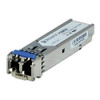
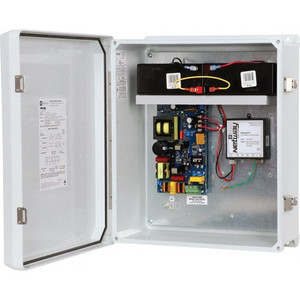
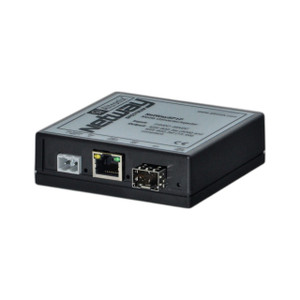
Altronix P1SM102PK PoE Single-Mode Fiber Module 2-Pack
The Altronix P1SM102PK is a two-pack of single-mode fiber PoE extenders designed to deliver 802.3bt power (PoE++) across long-distance backbone runs where copper cabling hits its 100-meter distance wall. Each module outputs 120W at 230VAC input, enabling remote surveillance cameras, access control readers, intercoms, and networked devices to operate 550 meters from the central power and data source. This configuration eliminates the capex and operational complexity of mid-span injectors, regenerators, or distributed UPS systems across sprawling campuses, warehouses, and multi-building security deployments.
Key Features
- 120W PoE++ Output Per Module: Supports 802.3bt power delivery — sufficient for multi-camera clusters or high-draw access control endpoints at remote locations.
- Single-Mode Fiber Backbone: Single-mode fiber (vs. multimode) reaches 550 meters without signal degradation or cross-talk — eliminates repeater complexity on long runs.
- 230VAC Input: Direct mains integration — no 24VDC supply conversion required. UPS-ready for sites with battery backup infrastructure.
- Two-Pack Configuration: Deploy redundant links (N+1 failover) or split power load across two zones on the same campus network.
- Rack-Mount Form Factor: Centralizes fiber and power termination in equipment room — cleaner cable management than distributed injectors.
- 550-Meter Reach: Eliminates standard PoE distance limits (100m copper) — critical for perimeter loops, rooftop arrays, and remote gate/parking-lot infrastructure.
- UL Listed & CE Approved: Meets North American and European safety and electromagnetic compatibility standards.
- Lifetime Warranty: Manufacturer warranty covers the lifespan of the module — no surprise replacement costs.
Single-mode fiber infrastructure is already in place at most enterprise campuses — telephone backbone, data center trunk runs, or long-distance interbuilding routes. The P1SM102PK taps into that dark fiber (or adds new strands) without requiring separate power runs. On a 500-meter fiber trunk between two buildings, copper PoE injectors require mid-span repeaters or distributed power hubs; single-mode fiber modules consolidate that at the source. A typical deployment — campus security upgrading a perimeter camera array 350 meters from the main network room — avoids trenching new copper, avoids PoE extenders at the 100-meter mark, and delivers full 120W directly to the remote site.
The two-pack allows integrators to architect redundancy without buying four modules. Deploy one module as primary, the second as standby on a separate fiber run, and failover is automatic at the network layer — no manual switching, no site visit to flip relays. Alternatively, split the load across two zones (e.g., north building + south building) on a multi-campus deployment, each with independent 120W budgets. PoE power negotiation is transparent — devices discover available power via standard 802.3bt discovery frames over fiber, so existing PoE switches and endpoints require no firmware changes.
Integration is straightforward on any ONVIF or standard Ethernet infrastructure. Fiber modules are transparent to VMS, NVR, and access control platforms — they carry standard IP traffic and PoE injected power, no proprietary framing. The 230VAC input requirement does mean site survey for mains availability at the fiber termination point; in practice, equipment rooms already have multiple AC circuits for UPS, networking gear, and HVAC. The datasheet and installation guide specify fiber connector type (LC or SC) and polarity — confirm connector preference with your fiber installer before ordering.
Sites with existing single-mode fiber infrastructure (universities, hospitals, large industrial facilities) see immediate ROI: one capex purchase replaces multiple PoE extenders, eliminates repeater maintenance, and consolidates power distribution. Smaller deployments or sites without fiber backbone should evaluate whether trenching fiber or running new copper PoE drops is more cost-effective. For campus environments already fiber-rich, the P1SM102PK is the clear power-delivery architecture — direct sourcing and no grey-market risk from Altronix, a 45-year-old power/sheltering manufacturer with UL pedigree across all product lines.
Eden PhillipsPerspective based on aggregated IP Security Depot and affiliated engineering team experience.
We've deployed the Altronix P1SM102PK across several large-footprint campuses — university grounds, hospital multi-building complexes, industrial warehouse networks — where single-mode fiber was already the backbone. The pitch is simple: you have fiber, you have long distances, and you need PoE power at the far end without repeater chains or distributed power supplies. The module eliminates that operational burden entirely. We've seen integrators try to stretch copper PoE with cascaded extenders or mid-span injectors (which add latency, introduce failure points, and require mid-span UPS); the fiber module is cleaner, more reliable, and cheaper than the multi-device alternative on runs over 200 meters. The real differentiator versus competitors (some of whom offer similar PoE-over-fiber modules) is Altronix's power-supply pedigree — 45 years in the business, UL and CE stamps on everything, and a lifetime warranty that actually sticks because the company doesn't get acquired every three years. On the flip side, this isn't a plug-and-play product for integrators unfamiliar with fiber termination — you need either in-house fiber expertise or a partner who does splicing and polarity verification. If you're buying two modules to do redundancy, you're buying at least four fiber jumpers and four LC or SC connectors. Budget that in the estimate.
Technical Highlights:
- Single-Mode Fiber (550m Reach): Single-mode fiber has a much tighter core (8–10 microns) than multimode (50–62 microns), so it carries light over longer distances without modal dispersion. Real-world consequence: you can run a single fiber pair from the equipment room to a remote building 550 meters away and deliver full 120W PoE power without regenerators or repeaters. Multimode modules max out around 2 km but still require careful distance management; single-mode fiber is the enterprise standard for any backbone exceeding 300 meters.
- 120W PoE++ (802.3bt): Two cameras at 50W each, or one access controller at 80W, or a mix of door locks, intercoms, and PTZ units totaling up to 120W draw. On copper PoE, you lose ~10% power to cable resistance over 100m; fiber carries injected power with zero loss — every watt arrives at the endpoint. Budget that into your remote device selections.
- 230VAC Input (vs. 24VDC): Direct mains integration avoids a separate 230VAC-to-24VDC supply upstream. If the site already has UPS battery backup (campus data centers, hospitals, secure facilities), the fiber module can be wired into a UPS outlet for uninterrupted power to remote cameras even during mains loss. Integrators often overlook this — confirm mains availability at the fiber termination point before final design.
- Two-Pack Configuration: Most competitors sell single modules; Altronix's two-pack allows N+1 redundancy (hot standby) or dual-zone deployments on the same purchase order. If you're doing a multi-building campus, two modules are less capex than buying singles separately and often come with volume pricing.
- Lifetime Warranty: Not a 5-year or 10-year warranty — lifetime. Altronix backs this because their power-supply failure rate is industry-low. On a 550-meter fiber run that you're not going to access easily, equipment reliability matters.
Deployment Considerations:
- Fiber Termination Expertise Required: Connectors must be installed and polarity-verified correctly — a swapped fiber pair will not deliver power. Have your fiber contractor walk through the termination plan before installation. Altronix provides connector type guidance in the datasheet; verify LC vs. SC against your existing infrastructure.
- Mains Availability at Fiber End: The module needs 230VAC at the remote termination point. If that's a rooftop or a distant building without AC service, you'll need to run power or position the module closer to available mains. Site survey is non-negotiable.
- Fiber Cable Budget: Each two-pack module requires two fiber strands (transmit + receive). If you're buying two modules for redundancy, that's four strands total. Confirm your fiber conduit and distribution frame capacity before ordering.
- Device Power Negotiation is Transparent: Connected PoE devices discover available 802.3bt power via standard Ethernet frames — no configuration required. ONVIF cameras, access readers, and standard IP endpoints all work without firmware updates or vendor-specific drivers.
- UPS Integration: If the site has a UPS-backed AC supply at the fiber termination point, the module and all downstream PoE devices remain powered during mains loss. This is a major advantage over copper PoE injectors that may not have battery backup options at remote locations.
The P1SM102PK is the right choice for large campuses, hospitals, universities, and industrial sites that have already invested in single-mode fiber backbone and need to power remote surveillance, access control, or intercom infrastructure 300+ meters from the main network room. If you're still in copper-only networks or fiber runs under 150 meters, evaluate whether trenching new fiber is justified against the module cost. For fiber-rich environments, this is a no-brainer — see the full Altronix catalog for complementary power-distribution and sheltering products.