Aiphone NHR-8C Bedside Call Cord for Healthcare Intercoms
Overview
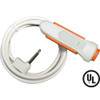
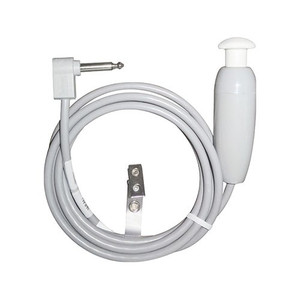
The Aiphone NHR-8C is a 7-foot bedside call cord designed for healthcare and institutional intercom installations. This accessory enables patients or residents to signal for assistance directly from their bedside — button activation triggers a routine call at the master station, while cord-out activation (cord pulled or disconnected) generates an urgent call signal. The NHR-8C is UL 1069 listed, meeting compliance requirements for healthcare communication systems where life-safety signaling is critical. One call cord is required per bedside substation jack.
Key Features
- Dual-activation design: Button press sends a routine call; cord-out triggers urgent notification. This two-tier signaling reduces alert fatigue at the master station while ensuring critical requests receive immediate attention.
- 7-foot cord length: Reaches from most bedside mounting positions to patient reach without excessive slack. Allows flexibility in substation placement without requiring additional wiring or extension cords.
- UL 1069 listed: Healthcare communication standard compliance ensures the cord meets electrical safety and signal reliability requirements for institutional settings where intercom integrity is non-negotiable.
- Compatible with single and dual-jack substations: Works with Aiphone NH-1SA/A (single-jack) and NH-2SA/A (dual-jack) bedside audio substations. Each jack requires one NHR-8C cord, so dual-jack installations support two independent call paths.
- Integrates with Aiphone master stations: Designed to pair with Aiphone master stations including the NHX-50M 50-call audio master and compatible central control systems. The routine/urgent distinction is recognized natively — no additional configuration required.
- Reduces infrastructure burden: Bedside call cords eliminate the need for hardwired push buttons or wireless pagers, simplifying installation in retrofit scenarios and reducing maintenance complexity.
Integration & Compatibility
The NHR-8C (often searched as NHR 8C) is a direct accessory for Aiphone healthcare intercom systems. Deploy one cord per substation jack. The routine vs. urgent signaling mechanism is built into compatible Aiphone master stations — no additional modules or configuration needed. Installations mixing single and dual-jack substations simply require one NHR-8C per active jack. For multi-floor or multi-zone healthcare facilities using intercom system planning, the cord-out urgent signal provides a secondary notification path when primary communication channels are busy, reducing call blocking.
Why This Matters for Healthcare Deployments
In hospitals, assisted living, and long-term care facilities, bedside call systems must be intuitive and reliable. Patient hesitation or confusion about how to signal for help introduces latency risk. The NHR-8C's button-activated routine call and cord-pull urgent activation align with established patient behavior — familiar interaction patterns reduce cognitive load and errors. UL 1069 compliance signals to compliance officers and architects that this component meets healthcare-specific electrical and safety standards, simplifying approvals and audits.
Frequently Asked Questions
Q: Can I use the NHR-8C with non-Aiphone substations?
A: No. The NHR-8C is designed specifically for Aiphone NH-1SA/A and NH-2SA/A bedside substations. Use with other systems may result in signal loss or unreliable urgent/routine distinction.
Q: What happens if the cord is accidentally pulled during normal operation?
A: Cord-out triggers an urgent call at the master station. This is intentional design — it supports accidental activation as a safety feature (e.g., patient falls and pulls the cord).
Q: Do I need one cord per bed or one per jack?
A: One cord per active substation jack. If you have a dual-jack substation (NH-2SA/A) and use both jacks, you need two NHR-8C cords.
Q: Is the NHR-8C weatherproof or suitable for wet environments?
A: No. The NHR-8C is designed for indoor healthcare bedside use. It is not rated for moisture-heavy environments like bathrooms or outdoor areas. Do not install in wet locations.
Q: Does the cord length come in other sizes?
A: The NHR-8C is fixed at 7 feet. For shorter reaches, check if your substation can be repositioned; for longer distances, consult Aiphone or your integrator about alternative mounting strategies.
Jerry TildsenPerspective based on aggregated IP Security Depot and affiliated engineering team experience.
The Aiphone NHR-8C is a deceptively simple accessory that carries real deployment weight in healthcare environments. At 7 feet, the cord length is carefully chosen to span from typical bedside furniture to patient reach without encouraging excessive slack that could be tangled or damaged. The UL 1069 listing isn't marketing — it's evidence that this cord has been tested for electrical safety and signal reliability under healthcare-specific stress, which matters when your intercom system is part of the life-safety chain.
Technical Highlights:
- Dual-activation signaling: Button and cord-out triggers separate alert levels at the master station. This isn't a gimmick — it filters noise from accidental activation while reserving high-priority signaling for genuine emergencies or patient falls.
- UL 1069 compliance: Meets healthcare communication electrical safety standards. Simplifies sign-off for facility audits and insurance reviews that require documented compliance with healthcare intercom requirements.
- Single-point of failure mitigation: Because one cord is required per jack, dual-jack substations can support two independent patient call paths — useful when one cord fails or requires replacement without shutting down the entire bedside substation.
Deployment Considerations:
- Cord length is fixed: 7 feet is standard for most acute-care and long-term care bed layouts, but if your substation is mounted more than 7 feet from patient reach, repositioning the substation or using an extension strategy is necessary — you cannot simply order a longer NHR-8C.
- Routine vs. urgent distinction requires compatible master station: The cord-out urgent signal is only useful if your Aiphone master station (NHX-50M or equivalent) is configured to differentiate routine from urgent calls. Verify master station capability before deploying multiple NHR-8C units expecting different alert priorities.
- Not suitable for wet environments: Bathrooms, showers, and outdoor spaces are out of scope. If a patient needs bedside calling in a wet or high-moisture area, discuss alternative technologies with your integrator.
The NHR-8C is the right choice for standard bedside intercom deployments in hospitals, assisted living, and memory care units where patient-initiated routine and urgent signaling must coexist without adding complexity. Its simplicity and UL 1069 standing make it a reliable baseline for healthcare call-cord infrastructure.