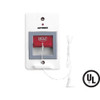
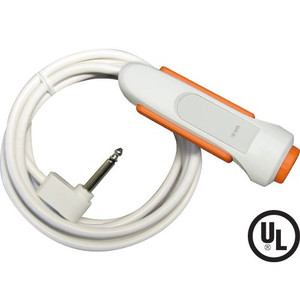
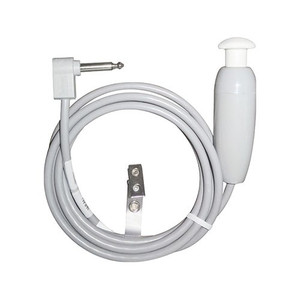
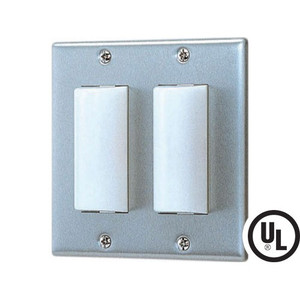
Aiphone NHR-7A Bathroom Pull Cord Call Station
Overview
The Aiphone NHR-7A is a waterproof pull cord emergency call station purpose-built for bathroom deployments in healthcare facilities. This IP67-rated device combines durable construction with straightforward operation: pull the cord to summon assistance, and an integrated LED confirms the call has been registered. The NHR-7A integrates with compatible Aiphone intercom systems and can function standalone with optional sub-station signaling equipment. Whether you're retrofitting existing bathrooms or specifying new construction, the NHR-7A handles wet-area environments without compromising reliability.
Key Features
- IP67 waterproof rating: Direct spray and brief submersion won't disable the unit — critical in bathrooms where splashing and cleaning hose runoff are routine. Skip this only if your facility requires full dunking capability (which would require industrial immersion housing).
- PoE (Power over Ethernet): Single cable delivers both power and data. No separate 12VDC supply or wall outlet required, simplifying installation in retrofit scenarios and reducing clutter in wet spaces.
- Latching call switch: Prevents accidental re-triggering once activation is confirmed. Matters in high-traffic bathrooms where bumping against the cord shouldn't flood your staff with duplicate alerts.
- LED call-placed indicator: User sees immediate visual feedback that help has been summoned. Reduces anxiety and repeat-pulls in genuine emergencies.
- Durable nylon pull cord with pendant design: The cord is replaceable and designed for daily use in healthcare settings. Pendant mount keeps the activation point accessible without wall cutouts that weaken structural integrity.
- Flush 1-gang box mounting: Mounts into standard electrical boxes, allowing retrofit into existing bathroom infrastructure without structural modifications.
- UL 1069 compliance: Meets emergency signaling standards for healthcare facilities, supporting compliance verification during accreditation audits.
Integration & Compatibility
The NHR-7A pairs with Aiphone NHX-series master stations and sub-station configurations. For standalone deployments or enhanced visual signaling, pair the NHR-7A with the optional NHR-3TS dual corridor light sub-station — the lights flash at staff stations when a pull-cord call is activated, creating a secondary notification path without relying on audio alone.
Because the NHR-7A uses standard Aiphone intercom protocol, it integrates cleanly into existing healthcare communication infrastructure. If your facility already runs an Aiphone system for nurse call or intercom, the NHR-7A extends that same network without additional control panels or separate wiring runs.
Typical Deployment Scenarios
Healthcare integrators commonly deploy the NHR-7A in patient bathrooms within assisted living, memory care, and hospital wings where fall risk and bathroom-related emergencies are highest. The waterproof design and latching switch make it reliable in high-humidity environments where moisture and repeated activation are expected. Pull-cord call stations also appear in public restrooms within senior centers and long-term care facilities where staff presence isn't constant.
When to Choose a Different Approach
If your facility requires wireless pull-cord activation (to avoid ceiling or wall wiring in finished bathrooms), explore wireless emergency call buttons in the Aiphone portfolio. If you need integration with a third-party VMS or fire alarm system beyond Aiphone's native intercom, confirm NHX compatibility with your system integrator before specifying — the NHR-7A is a dedicated Aiphone accessory and does not export to ONVIF or IP-based alerting systems independently.
Frequently Asked Questions
Q: Does the NHR-7A work without an Aiphone master station?
A: The NHR-7A requires at minimum an Aiphone NHX-series master station or compatible sub-station to process and display the call. It cannot function as a standalone button that sends email or SMS alerts.
Q: Is the pull cord replaceable if it wears out?
A: Yes, the nylon cord is a replaceable component. Contact Aiphone or your professional service provider for replacement cord assemblies.
Q: What is the IP67 rating and why does it matter for a bathroom?
A: IP67 means the device is protected against dust and immersion in water up to 1 meter for 30 minutes. In bathrooms, this protects against spray from showers, cleaning hoses, and accidental splashing. The latching switch keeps the call active even if water briefly contacts the mechanism.
Q: Can I mount the NHR-7A at a fixed height, or does it need to be at patient reach?
A: Mounting height depends on your facility's standards for accessibility. The pendant design allows flexible positioning. Work with your integrator to ensure compliance with ADA accessibility guidelines for your specific deployment.
Q: Is the NHR-7A HIPAA-compliant on its own?
A: The NHR-7A itself does not transmit or store protected health information. Your broader Aiphone system deployment (master station, network, recording, audit logging) must meet HIPAA requirements. Work with your IT security and compliance teams to audit the full system.
Q: What power does the NHR-7A draw?
A: The NHR-7A draws minimal current via PoE and operates within standard 802.3af power budgets, meaning a typical PoE switch port handles the device without strain.
Ted PerryPerspective based on aggregated IP Security Depot and affiliated engineering team experience.
The NHR-7A (often searched as NHR 7A) is a no-nonsense pull cord that does one job well: summoning help from a bathroom. It's not a wireless button, not a motion sensor, and not a video camera — it's a hardwired emergency activation point built for wet environments. In 15+ years of healthcare facility deployments, I've seen pull cords fail because installers ignored the IP rating or because the cord mounting got damaged by cleaning crews. The NHR-7A's latching mechanism and durable nylon cord eliminate most of those failure modes, and the IP67 rating means you don't have to baby the installation.
Technical Highlights:
- IP67 waterproof enclosure: Protects against spray, splash, and brief submersion — exactly what happens in bathrooms during routine cleaning and emergency scenarios. The latching switch remains tactile even if water momentarily contacts the mechanism.
- PoE power delivery: Runs on standard 802.3af, drawing negligible current. One cable to the wall outlet or bathroom junction box; no separate 12V or 24V run required. Retrofit-friendly and reduces clutter in tight spaces.
- Pendant design with replaceable cord: The cord itself is user-replaceable, not a proprietary module. In a 10-year facility lifecycle, that cord will see thousands of pulls. Replaceable components reduce service calls and total cost of ownership.
Deployment Considerations:
- The NHR-7A is system-dependent — it requires an Aiphone NHX master station to function. If you're integrating into an existing non-Aiphone intercom or nurse call system, you'll need a gateway or separate Aiphone deployment. Don't assume backward compatibility with older Aiphone equipment.
- Install the pull cord at a height compliant with ADA accessibility standards for your facility (typically 36-48 inches from floor). Work with your architect or facility manager on final positioning before rough-in.
- Pair the NHR-7A with the optional NHR-3TS sub-station for visual alerting in corridors. Audio-only alerts miss staff who are in noisy areas or wearing hearing protection; dual-mode (audio + light) dispatch is more reliable.
Specify the NHR-7A when you're upgrading bathroom safety in senior living, assisted living, or hospital patient wings. It's not flashy, but it's the device most likely to be still working reliably 10 years from now because it does wet-environment emergency signaling without trying to be smart or connected.