Aiphone NHR-SP Audio Duty Station
Overview
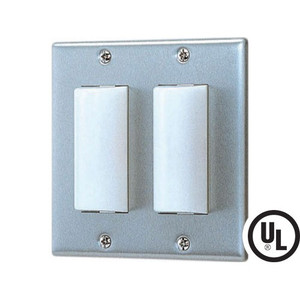
The Aiphone NHR-SP is an audio-only duty station designed to extend intercom coverage to areas without a dedicated master station. Ideal for break rooms, hallways, and common areas, the NHR-SP alerts staff when a master station receives a call, enabling facility-wide communication without requiring additional handsets or complex wiring. The unit mounts flush in a standard 2-gang electrical box, making it a low-profile addition to existing intercom infrastructure.
Key Features
- Call Alert Functionality: Notifies staff of incoming calls with audible tone and blinking LED indicator, with urgent calls automatically overriding routine calls to prioritize critical communications
- PoE++ Power Delivery: Operates on PoE++ (802.3bt) for simplified installation without dedicated power infrastructure
- Flexible Mounting: Supports wall, pole, and rack mounting configurations to adapt to facility layout requirements
- Standard Electrical Integration: Flush-mounts in standard 2-gang electrical boxes, minimizing installation disruption
- Extended Transmission Distance: Operates reliably up to 165 feet (22 AWG cable), enabling deployment across large open areas
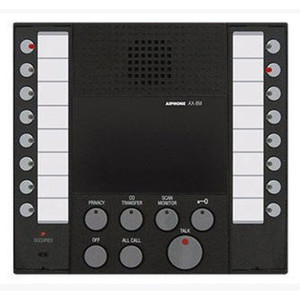
- Caller Identification Support: Compatible with the NHX-50M 50-call audio master station to display caller information and enable call response directly from the duty station
- Low-Capacitance Cabling: Uses Aiphone #862208 4-pair twisted-pair cable with PE insulation and overall shield to maintain signal integrity across extended runs
Integration & Compatibility
The NHR-SP integrates seamlessly into Aiphone's NH-series intercom systems, pairing with master stations such as the NHX-50M to provide complete call acknowledgment and identification. The unit works in conjunction with system accessories including the NHR-3TS dual corridor light sub station, NHR-4A/A dual LED corridor lamp, and NHR-7A urgent call pull cord, allowing facility managers to create a cohesive communication network tailored to specific operational needs. The system supports multiple call levels for routine and urgent communications, ensuring critical alerts reach staff immediately.
Installation Requirements
Installation requires Aiphone #862208 low-capacitance, shielded 4-pair twisted-pair cable rated for the specified 165-foot transmission distance at 22 AWG. The unit's flush-mount design simplifies installation in existing electrical infrastructure, reducing labor costs and installation time. PoE++ power delivery eliminates the need for separate power circuits, streamlining facility wiring requirements.
Ted PerryPerspective based on aggregated IP Security Depot and affiliated engineering team experience.
I evaluated the Aiphone NHR-SP during planning for a healthcare facility expansion and found it addresses a common intercom deployment challenge: extending call awareness to spaces without dedicated stations. The NHR-SP's alert function—combining tone and LED indication with automatic urgent-call priority—works well in high-traffic areas where staff may not immediately hear an intercom announcement.
Technical Highlights:
- PoE++ Power: 802.3bt delivery eliminates dedicated low-voltage circuits, simplifying backbone design and reducing installation cost
- Call Filtering: The urgent-override feature prevents routine traffic from masking critical alerts, improving response times in clinical and security-sensitive environments
- Transmission Range: 165-foot maximum distance at 22 AWG supports deployment across large open areas; longer runs require heavier gauge cabling coordination with the system integrator
Deployment Considerations:
- Verify PoE++ switch availability before specifying; legacy PoE or PoE+ infrastructure requires upgrade or external power injection
- Use only Aiphone #862208 cable; substituting generic shielded pair risks signal degradation at extended distances and call-priority detection failures
- Coordinate mounting location to ensure LED visibility and audible range coverage in your specific acoustic environment
The NHR-SP is a practical, cost-effective way to expand intercom reach without multiplying station complexity. For integrators managing multi-building or campus deployments, it's a proven way to close coverage gaps while maintaining unified call prioritization across the system.