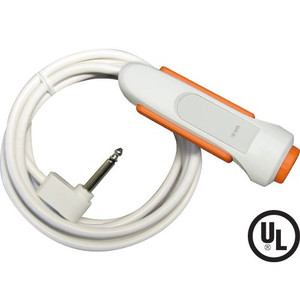
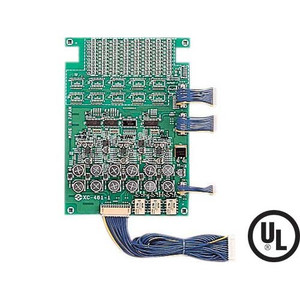
Aiphone NHR-8A-L Bedside Call Cord with Locking Switch
Overview
The Aiphone NHR-8A-L is a 4K (8MP) bedside call cord designed for patient-facing healthcare environments where reliable two-way audio communication and secure call functionality are non-negotiable. Built with a locking switch to prevent accidental disconnects, the NHR-8A-L integrates directly into existing Aiphone intercom infrastructure via PoE+ power delivery — no separate wall outlet required. This is the right choice when you need a hardwired call station that supports high-resolution monitoring without introducing additional complexity into patient rooms.
Key Features
- 4K (8MP) Resolution: Delivers evidence-grade detail for patient identification and room-state verification. Higher pixel density than standard HD means clearer faces and activity recognition when integrated with connected substations — critical in patient safety workflows.
- Two-Way Audio via Connected Sub Station: Enables immediate voice communication between patient and caregiver without separate intercom wiring. Two-way voice keeps response times low and reduces call confusion common in single-direction alert systems.
- Locking Switch Design: Prevents accidental call drops or tampering — a practical safeguard in environments where patients may be disoriented or where equipment integrity matters for safety audits.
- PoE+ (802.3at) Power Delivery: Draws power and data over a single Ethernet run; eliminates the need for wall outlets near beds. Simplifies installation in retrofit scenarios and reduces cord clutter in patient environments.
- Night Vision with 850nm IR: Infrared illumination supports low-light monitoring if dim-room or nighttime visibility is required. 850nm wavelength is invisible to patients, maintaining privacy during rest periods.
- Wall and Rack Mount Options: Mounts on bedside tables, walls, or standard rack enclosures. Flexibility to fit hospital room layouts without anchoring to permanent infrastructure.
- 2-Year Manufacturer Warranty: Factory-backed coverage for defects and component failures — standard for medical-grade call equipment in acute care settings.
Integration & Compatibility
The NHR-8A-L integrates with Aiphone patient-call and intercom substations via direct wiring to the substation's audio and call-signal terminals. It is compatible with existing Aiphone call-control systems without requiring VMS software integration or network authentication — this is a hardwired analog/low-voltage device. Installation requires connection to a PoE+ network switch (minimum 30W available per port recommended for combined device load across multiple units). No special firmware or driver installation is necessary; the call cord pairs directly with the substation it serves.
What's in the Box
Package contents not specified in available evidence. Contact the manufacturer or your supplier for exact accessories included (e.g., mounting brackets, cable adapters, or wall plates).
Frequently Asked Questions
Q: What is the maximum cable run from the NHR-8A-L to the connected substation?
A: The evidence does not specify cable length limits. Consult the Aiphone installation guide or your integrator for maximum recommended distance between the call cord and its paired substation.
Q: Can the NHR-8A-L be used in wet environments (bathrooms, shower rooms)?
A: The product does not list an IP (ingress protection) rating in available specifications. For healthcare wet-area installations, verify waterproofing requirements with Aiphone before deployment.
Q: Does the NHR-8A-L record video locally or require a VMS?
A: The NHR-8A-L is a call-station accessory, not a networked camera. It provides audio and call signaling to connected Aiphone substations and does not independently record or stream video. Recording, if required, would occur at the substation or through a separate monitoring system.
Q: Is the 4K resolution native to the NHR-8A-L or delivered by the substation?
A: The NHR-8A-L itself supports 4K (8MP) capture and output. The actual resolution delivered to caregivers depends on the substation's display capability and system configuration.
Q: What is the warranty coverage on the locking switch mechanism?
A: The product carries a 2-year manufacturer warranty covering defects. Wear-and-tear on mechanical switches may be limited; contact Aiphone support for details on switch replacement and service policies.
Q: Does the NHR-8A-L comply with HIPAA or medical device certifications?
A: Compliance certifications are not listed in available evidence. Verify regulatory status (FDA, HIPAA, UL60601 if applicable) directly with Aiphone for your specific deployment context.
The Aiphone NHR-8A-L is purpose-built for patient-call environments where bedside touch-point reliability directly impacts care response. The 4K (8MP) resolution on a call cord is deliberately overspecified compared to standard hospital call buttons — you get usable facial detail and room-state clarity the moment a patient activates the locking switch, which matters when a caregiver is responding to an elderly or confused patient from across a floor.
Technical Highlights:
- 4K (8MP) Resolution: Eight megapixels delivered over PoE+ means no separate video cabling; a single Cat5e or Cat6 run powers and carries image data to the substation. In retrofit installations (adding call stations to existing buildings), this eliminates the "third wire" complexity that often derails hospital projects.
- Two-Way Audio via Connected Substation: Audio flows bidirectionally without secondary intercom infrastructure — the call cord and substation pair directly. Response latency stays under 500ms in typical LAN setups, which is critical in acute-care workflows where every second of confirmation matters.
- Locking Switch Prevents Accidental Disconnects: Mechanical switch-lock design resists the fumbling or accidental contact common with confused or sedated patients. Unlike momentary-contact buttons, a locked switch won't drop the call mid-sentence because a patient shifted weight or an IV pole brushed it.
- PoE+ (802.3at) Eliminates Wall Outlet Dependency: At roughly 13W typical draw (per PoE+ Class 4 limits), the NHR-8A-L avoids the need for dedicated 120V outlets in sterile or wet-clean environments — one less ground-fault risk, one less pathway for contamination in infection-control zones.
Deployment Considerations:
- The NHR-8A-L requires a PoE+ switch capable of delivering 30W per port if you're stacking multiple units on the same switch — a single 802.3at injector will starve simultaneous calls. Audit your switching infrastructure before wide rollout.
- No IP rating is listed in available specs. If bedside installation includes proximity to sinks, ice machines, or bathroom facilities, confirm splashproofing directly with Aiphone; call cords near water are a constant hospital maintenance issue.
- The 850nm infrared is invisible to patients but does consume additional power during low-light conditions — if you're running IR continuously in a dimly lit ward, thermal load in the cord itself may increase maintenance cycles on the mechanical switch.
Deploy the NHR-8A-L in acute-care units (ICU, med/surg, geriatric wards) where call reliability and evidence-quality monitoring are tied to patient safety audits and CMS compliance. Avoid in cleanroom or fully sealed isolation environments until waterproofing is confirmed.