
Exit Buttons
Showing Results for Exit Buttons
-

Camden
SKU: CM-1030
Camden Surface Mount Key Switch SPDT N/O \& N/C - CM-1030
- SPDT maintained contacts provide simultaneous N/O and N/C circuits on one switch.
- 30VDC rating aligns with standard access control panel voltages for direct integration.
- 1/4-inch die-cast aluminum housing supports surface mount in demanding door applications.
In stock · Ships same business day$155.00 $94.99 Save $60.01 -

Camden
SKU: CM-47SER
Camden Surface Round Extra Deep for Kinetic(tm) - CM-47SER
- Surface-mount round profile eliminates mortising, cutting retrofit labor on existing frames.
- Extra-deep 2-3/8" enclosure fits switch backplates and field wiring without cavity prep.
- ABS flame- and impact-resistant polymer handles commercial indoor environments reliably.
$63.00 $38.99 Save $24.01 -
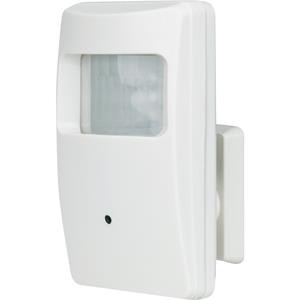
Camden
SKU: CM-47S
Camden Surface Round Standard Depth provision for - CM-47S
- Surface-mount ABS enclosure houses CM-40 series switches without in-wall rough-in.
- Flame- and impact-resistant black polymer construction suits high-traffic door frames.
- UL/CSA approval on compatible switch series supports compliant access control builds.
$52.00 $33.99 Save $18.01 -

Camden
SKU: CM-69S
Camden Surface Round Standard Depth provision for - CM-69S
- Black ABS enclosure resists flame and impact for demanding commercial deployments.
- Compatible with CM-60 series heavy-duty switches (UL/CSA) and CM-331/42R-SGLR SureWave™.
- Surface-mounts to standard-depth door frames with no frame modification required.
$60.00 $39.99 Save $20.01 -

Camden
SKU: CM-59S
Camden Surface Round Standard Depth. Heavy gauge - CM-59S
- Heavy gauge stainless steel resists corrosion in damp, coastal, or industrial environments.
- Surface-mount round profile installs on standard-depth frames without mortising the door frame.
$120.00 $77.99 Save $42.01 -
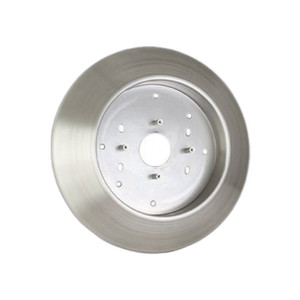
Camden
SKU: CM-89S
Camden Surface Round Standard Depth. Heavy gauge - CM-89S
- Heavy gauge stainless steel body withstands physical stress in high-traffic commercial installs.
- Accepts 12V or 24V DC control signals, fitting directly into most existing access control panels.
- Surface mount design enables retrofit deployments without cutting or modifying the door frame.
$135.00 $88.99 Save $46.01 -

Camden
SKU: CM-69SER
Camden Surface, Round, Extra Deep, for Kinetic(tm) CM-60K Series Pu...
Surface-mount strike for Kinetic CM-60K, round extra-deep profile
- TCP/IP network communication integrates with existing access control infrastructure
- HID card reader compatible for standard credential-based door access
- Extra-deep profile accommodates thicker door frames and varied installations
$72.00 $44.99 Save $27.01 -

Camden
SKU: CI-1050CP
Camden Surface, single gang mortise key switch, enclosure and cover...
Surface-mount key switch with enclosure for access control retrofits
- Single gang mortise key switch eliminates need for mortise cavity prep
- Includes enclosure housing and cover plate for complete installation
- Mechanical key operation pairs with door strike and access systems
$209.00 $127.99 Save $81.01 -
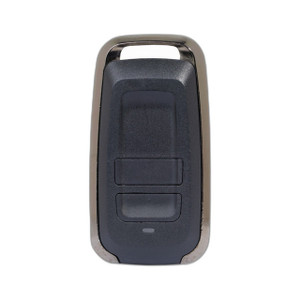
Camden
SKU: CV-WTX2-H26-B
Camden Two Channel Wiegand Key Fobs + HID Prox. Package of 10
Two-channel proximity reader with HID 125kHz support for multi-door access
- Dual-channel design reads credentials simultaneously across 4 doors per unit
- Supports up to 250,000 users with HID Proximity cards and key fobs
- OSDP and Wiegand output for flexible integration with existing systems
$480.00 $293.99 Save $186.01 -

Camden
SKU: CM-RX-90
Camden V2 Kinetic/Lazerpoint Advanced 1 Relay Receiver - CM-RX-90
- 915 MHz RF cuts through walls and metal studs with less multipath interference.
- Stores up to 40 mixed Lazerpoint and Kinetic transmitter codes in one receiver.
- Form C relay supports 12/24V AC/DC loads with 1–15 s delay, momentary, or latch mode.
In stock · Ships same business day$95.00 $58.99 Save $36.01 -

Camden
SKU: CM-221M/46
Camden ValueWave™ SS 1 Gg faceplate 12/24VDC 1 - CM-221M/46
- Adjustable 2–8 in sensing range and 0.5–20 s time delay tune to any traffic flow.
- Relay contacts (1A @ 30VDC, C/NO/NC) interface directly with standard access control panels.
- IP65-rated stainless steel housing withstands washdown in food service or clinical settings.
In stock · Ships same business day$140.99 -

Camden
SKU: CM-221M/46N
Camden ValueWave™ SS Narrow faceplate 12/24VDC 1 - CM-221M/46N
- Active IR microburst sensor enables hands-free exit triggering without physical contact.
- Dry-contact N.O./N.C. relay (1A @ 30VDC) integrates with strikes, operators, and panels.
- Narrow 4.5"×1.75" jamb-mount profile fits tight frames where single-gang boxes won't seat.
In stock · Ships same business day$144.99 -

Camden
SKU: CM-221/A42N
Camden ValueWave™ Touchless Switch Narrow (Jamb) - CM-221/A42N
- IP65-rated enclosure withstands dust, rain, and washdown without degradation.
- Form C relay (NO/NC/COM, 1A) integrates directly with EM locks and access relays.
- Sensor range adjusts 2–8 in. and time delay spans 0.5–20 sec for site tuning.
In stock · Ships same business day$120.00 $73.99 Save $46.01 -

Camden
SKU: CM-8010R/13
Camden Vandal Resistant 1\" Red Push Button Single - CM-8010R/13
- Aluminum NEMA-rated enclosure resists impact and vandalism in high-traffic institutional areas.
- 24VDC N/C contact integrates directly with access control panels and electronic strike circuits.
- Single-gang wall-mount fits standard electrical boxes for flush installation at desks or counters.
$119.00 $72.99 Save $46.01 -

Camden
SKU: CM-324
Camden Wired Touchless Switch economical 1 Relay no - CM-324
- Onboard Form C relay (5A @ 30 VDC) drives strikes and solenoids directly—no add-on modules.
- Adjustable 1–26" sensing range with 100 ms response minimizes nuisance triggers at each door.
- Runs on 12–24 VDC across −4°F to +153°F, suiting retrofit and new-build commercial installs.
In stock · Ships same business day$240.00 $146.99 Save $93.01 -
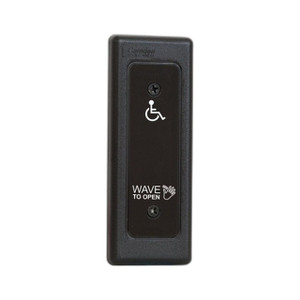
Camden
SKU: CM-331
Camden Wired Touchless switch w/ built-in door control - CM-331
- Built-in Form C relay (3A @ 30VDC) controls up to 3 doors without external modules.
- Line-powered 12–24 VAC/DC operation eliminates battery replacement and legacy 30VDC issues.
- IR sensing detects motion from 1–28 in. standard, up to 72 in. in auto-range mode.
In stock · Ships same business day$240.00 $146.99 Save $93.01
Exit Buttons
Exit buttons, also known as request-to-exit (REX) devices, allow occupants to safely unlock doors from the secured side. Proper selection ensures reliable operation, life-safety compliance, and smooth integration with your access control system.
Plan Your Deployment
- Fail-safe vs fail-secure door configuration
- Door type and mounting location
- Integration with controller inputs and timing rules
- Local fire and life-safety code compliance
- Durability and vandal-resistant requirements
Exit Buttons — Engineering-Grade Door Hardware for Commercial Deployments
This category covers 105 working models of exit buttons sourced manufacturer-direct or through channel-direct US distribution. Build the rest of your system around the architectural choices below — compatibility, environmental rating, and lifecycle decisions made here propagate through every downstream component you specify.
What to Look For
Fail-safe versus fail-secure determines what happens during power loss. Fail-safe locks unlock on power loss (used on egress doors where life safety dominates); fail-secure locks remain locked (used on storage, server rooms, and exterior doors where security dominates). Code typically mandates fail-safe on stairwell and egress doors. Confirm with the AHJ before specifying — misapplied lock mode is a common code violation.
Strike, mortise, magnetic lock, and electrified panic hardware each have distinct installation, current draw, and code implications. Electric strikes work with most mechanical locksets and are easiest to retrofit. Magnetic locks (maglocks) provide high holding force on glass and wood doors but require dedicated REX and panic-bar interfaces for egress compliance. Verify the door's existing prep before choosing.
Power draw and inrush current dictate power supply sizing. A 5-door system with 1A peak per lock can exceed an undersized 12VDC supply at simultaneous lock-down events. Account for accessories — REX motion sensors, door-position switches, electrified levers — when sizing the supply and the battery backup required for code compliance.
Tamper switches, door-position monitoring, and request-to-exit sensors generate the audit trail your security team needs. Mechanical contact switches are cheaper; magnetic reed switches resist tampering better. Pair each door with a position switch and a REX sensor at minimum — without door-position monitoring, you can't distinguish 'authorized entry' from 'door held open after authorized entry,' which is a common compliance gap.
Key Specs in This Category
| Spec | Available Options |
|---|---|
| Power | AC/DC |
| Type | Lock/Strike, Reader, Switch, Accessory, Credential, Controller, Diecast Aluminum Enclosure, 3-Button Control Station |
Top Brands in This Category
Frequently Asked Questions
Fail-safe or fail-secure for stairwell doors?
Fail-safe is mandatory on most stairwell doors and other code-designated egress paths — the lock must release on fire alarm or power loss to allow evacuation. Fail-secure on those doors is a code violation. Confirm the local fire code and AHJ requirements; commercial buildings in the U.S. follow NFPA 101 and the International Building Code, both of which detail egress lock behavior in detail.
What current draw should I plan for electrified locks?
Typical 12VDC electric strikes draw 200-500 mA continuous, with inrush spikes of 1-2A at engagement. Magnetic locks rated for 1,200 lbs holding force draw around 500 mA continuous at 24VDC. Power supplies need to handle simultaneous lock-down current — emergency lockdown events activate all locks at once. Size the supply with at least 25% headroom and confirm battery backup runtime requirements.
Do I need a request-to-exit (REX) sensor?
Most code-compliant electrified door installations require a REX sensor to shunt the alarm during authorized egress. Without REX, every egress event registers as a forced-door alarm. PIR motion sensors are the common choice and integrate with the door controller's REX input. Mechanical push-bar REX is also acceptable for hardware that includes that switch natively.
Can I use one lock for both card and mechanical key entry?
Yes — most electrified strikes and locks allow mechanical key override on the same door. Maintaining a master key for emergency mechanical access is required by code in many jurisdictions and recommended in all. Document the master key holders carefully; an uncontrolled master key program undermines the electronic audit trail.
What's the lifespan of a magnetic lock?
Quality maglocks (Securitron M62, HES, von Duprin) typically last 15-20 years with no mechanical wear. Failure points are the connector, the armature plate-to-lock alignment, and contamination of the magnetic face. Plan for armature replacement at year 10 as a hedge against alignment drift. Strike-type locks with mechanical parts last 5-10 years before strike-plate wear becomes a reliability issue.
Need help choosing? Talk to a Senior Specialist — direct line 877-277-7147 or request a quote.