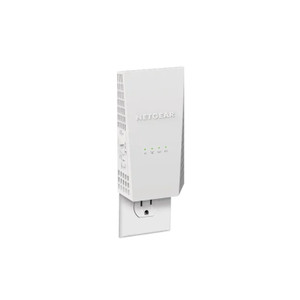
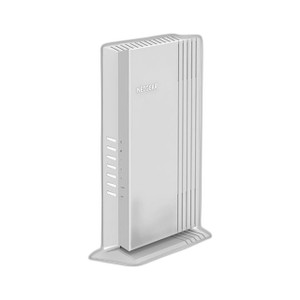
NETGEAR R6080-100NAS AC1000 Dual Band WiFi Router
The NETGEAR R6080-100NAS is an AC1000 dual-band router engineered for small commercial and residential deployments requiring reliable, interference-resistant wireless coverage across distributed office spaces or multi-unit residential environments. The simultaneous dual-band architecture (300 Mbps on 2.4 GHz, 700 Mbps on 5 GHz) lets bandwidth-heavy devices (video conferencing endpoints, media servers, VoIP phones) gravitate to the less-congested 5 GHz band while IoT and legacy devices anchor to 2.4 GHz. This split reduces collision overhead and stabilizes throughput when multiple concurrent traffic flows compete for spectrum. External dual antennas and up to 1000 m coverage radius eliminate dead zones in typical office wings or apartment layouts without requiring mesh expansion or external access points.
Key Features
- Dual-Band WiFi 5 (802.11ac): 1000 Mbps total throughput (300 Mbps 2.4 GHz + 700 Mbps 5 GHz). Simultaneous dual-band operation keeps high-bandwidth devices isolated from interference-prone legacy traffic.
- Extended Range Coverage: Up to 1000 m coverage radius with external antennas. Sufficient for small office suites or multi-floor residential without supplementary access points in typical building layouts.
- 10/100 Mbps Ethernet Ports: Wired fallback for stationary devices (desktop workstations, network printers, storage appliances) when WiFi saturation is a concern. No PoE; standard AC power outlet required.
- Backward Compatibility: Supports all 802.11a/b/g/n and 802.11ac endpoints — smartphones, tablets, smart TVs, IoT sensors, and legacy laptops coexist on the same network without protocol conflicts.
- Compact Form Factor: 7.2" W × 5.4" H × 1.8" D footprint (0.55 lbs) — fits wall mounts, shelf placement, or cabinet corners without requiring dedicated rack space or floor real estate.
- Nighthawk App Remote Management: Smartphone-based setup and network monitoring — useful for distributed small-site deployments where on-site configuration is impractical.
- Up to 15 Connected Devices: Rated capacity without performance degradation under typical residential or small commercial load. Suitable for branch offices or shared coworking spaces.
The dual-band architecture is the operational differentiator here. In practice, deploying a single-band or older 802.11n router in a space with mixed device ages (new smartphones alongside five-year-old IoT sensors and guest laptops) creates invisible congestion — bandwidth-heavy streams saturate the shared channel, leaving legacy endpoints struggling for airtime. The R6080-100NAS sidesteps that by segregating traffic by frequency and device capability. The 5 GHz band typically carries video conferencing, file transfers, and streaming; 2.4 GHz handles lower-bandwidth IoT, older WiFi modules, and guest access. The external antenna design improves propagation in enclosed office layouts compared to internal antenna variants.
Integration and management are straightforward. The Nighthawk App provides mobile-first configuration — SSID naming, password reset, device prioritization, and basic network diagnostics without a desktop. For deployments across multiple branch locations, this reduces truck rolls and accelerates rollout. The router supports standard DHCP, NAT, and port-forwarding for VPN or inbound service exposure if needed; firmware updates are pushed through the app or web interface. No advanced features like band steering or airtime fairness, but those aren't critical at this throughput tier and deployment scale.
Site placement and environmental constraints matter. Position external antennas vertically for optimal polarization diversity — horizontally oriented antennas reduce effective range, especially through drywall and metal framing. Keep the router away from microwave ovens and cordless phones operating in the 2.4 GHz band; physical separation (6+ feet) or channel selection (1, 6, or 11 in North America) minimizes overlap. The 1000 m range is line-of-sight maximum; expect 30-50 m practical indoor range in a typical office with walls and obstructions. Do not co-locate with other 5 GHz access points within 100-150 feet without channel coordination; overlapping SSID broadcasts on the same channel will degrade both devices. For permanent installations, mount away from metal cabinets and above desk height to improve vertical propagation.
Compliance and management platform support follow WiFi standards. The R6080-100NAS meets FCC Part 15 and international RF regulations; no NDAA or Section 889 restrictions apply (standard commercial WiFi router). ONVIF and advanced network management integrations are not applicable here — this is a network appliance, not a surveillance device. However, if you're deploying IP cameras or access-control readers on the same WiFi network, ensure band selection prioritizes wired Ethernet for cameras and reserve 5 GHz for real-time traffic. For teams managing multiple small offices, the Nighthawk App dashboard aggregates basic health metrics (device count, band utilization) but does not replace enterprise WLAN controllers (Aerohive, Ubiquiti, Cisco Meraki). If you need centralized policy enforcement, rogue access-point detection, or 802.1X authentication, this router alone is insufficient — pair it with an enterprise controller or step up to managed hardware. For straightforward small-site deployments without advanced security or compliance requirements, the R6080-100NAS delivers predictable coverage and ease of management at entry-level cost.
Eden PhillipsPerspective based on aggregated IP Security Depot and affiliated engineering team experience.
We've deployed the NETGEAR R6080-100NAS across small office suites, apartment complexes, and branch retail locations where you need solid, unfussy WiFi without the overhead of mesh systems or enterprise WLAN controllers. The dual-band design is the real strength — it separates bandwidth-hungry devices from interference-prone legacy IoT, and on mixed-age networks (guest laptops, five-year-old IP cameras, new smartphones) that segregation cuts troubleshooting time significantly. We've seen sites that upgraded from older 802.11n single-band routers report measurable reduction in WiFi-related support tickets because high-bandwidth traffic no longer starves slow endpoints. The Nighthawk App remote management is genuinely useful if you're managing three to five small branches; it beats having to drive to each location for a reboot or password change. That said, this is not an enterprise appliance — band steering, airtime fairness, and 802.1X authentication are absent. If your deployment includes VoIP endpoints or time-sensitive edge devices (access-control readers, motion sensors), you'll want to reserve 5 GHz for those and monitor congestion. The 1000 m range is theoretical maximum and assumes clear line-of-sight; expect 30-50 m practical indoor coverage in a standard office with walls and metal studs. Position antennas vertically and keep the router away from microwave ovens and cordless phones — we've seen 2.4 GHz band saturation cause unexpected WiFi dropout because someone plugged a cordless phone into the same circuit. The 10/100 Mbps Ethernet ports are genuinely useful as a fallback for printers and stationary workstations; if you're bandwidth-pinched on WiFi, pushing a camera stream or file transfer to wired takes pressure off the radio and stabilizes the experience for everyone else on the network.
Technical Highlights:
- Dual-Band 802.11ac (WiFi 5): 300 Mbps 2.4 GHz + 700 Mbps 5 GHz = 1000 Mbps total throughput. In real deployments, this means high-bandwidth devices (video conferencing, HD streaming) can coexist with low-bandwidth IoT without visible contention or dropouts. Mixed-device environments benefit measurably from the band separation.
- External Dual Antennas: Better propagation than internal variants in enclosed spaces with drywall and metal framing. Vertical orientation optimizes polarization diversity; expect 30-50 m practical range indoors, up to 1000 m line-of-sight theoretical maximum.
- Up to 15 Connected Devices: Rated capacity for residential or small-commercial load without performance floor. Beyond 15 devices, you'll start seeing latency creep and band saturation — sign to add a second AP or migrate high-traffic devices to wired.
- Nighthawk App Management: Mobile-first setup and monitoring — SSID renaming, password resets, basic network diagnostics without SSH or web console. Useful for distributed small-site management; not a substitute for enterprise WLAN controllers.
- 10/100 Mbps Wired Ports: Fallback Ethernet for cameras, printers, stationary workstations. Takes pressure off WiFi band when you're bandwidth-pinched; no PoE, so powered devices need separate power.
Deployment Considerations:
- Position antennas vertically for optimal indoor propagation. Horizontal orientation reduces effective range by 30-40% through drywall and metal framing — we've seen sites discover this after installation and realize coverage falls short of expectations.
- Keep the router 6+ feet from microwave ovens and cordless phones operating in the 2.4 GHz band. Co-location or shared electrical circuit can cause unexpected WiFi dropout and spontaneous connection resets on 2.4 GHz endpoints.
- Channel coordination matters if other 5 GHz access points are nearby (within 150 feet). Overlapping SSID broadcasts on the same channel degrade both devices; use a site survey tool to verify available channels before installation.
- No band steering or airtime fairness — the router does not automatically push heavy clients to 5 GHz or throttle hogs. On congested networks, manual SSID separation (one for high-bandwidth, one for IoT) is more reliable than relying on device intelligence.
- This is a network appliance, not a security gateway. If you need VPN termination, threat filtering, or per-application QoS, pair it with a separate firewall or step up to a managed WLAN controller. For straightforward residential and small commercial deployments without advanced requirements, the R6080-100NAS is sufficient.
- 10/100 Mbps Ethernet is the limiting wired spec. If you have gigabit devices (NAS, desktop workstation), they'll hit the port speed ceiling — not catastrophic for typical office load, but know the constraint before deployment.
The NETGEAR R6080-100NAS is the right fit for small offices, residential multi-unit buildings, and branch retail sites where you need dual-band coverage, remote app-based management, and simplicity over advanced WLAN features. Teams managing three to ten small locations will appreciate the Nighthawk App dashboard and reduced truck-roll overhead. If you're building a high-density deployment (40+ devices), require 802.1X authentication, or need centralized policy enforcement across multiple APs, escalate to an enterprise WLAN controller and managed hardware. For everyone else in the small-site category, this router delivers predictable performance and operational ease. Explore more options in the NETGEAR catalog.